Ateneo Global’s EmbLEM Series features UNHCR Head Atty Valdeavilla-Gallardo for TALAB 2025
21 Oct 2025 | Ateneo Global

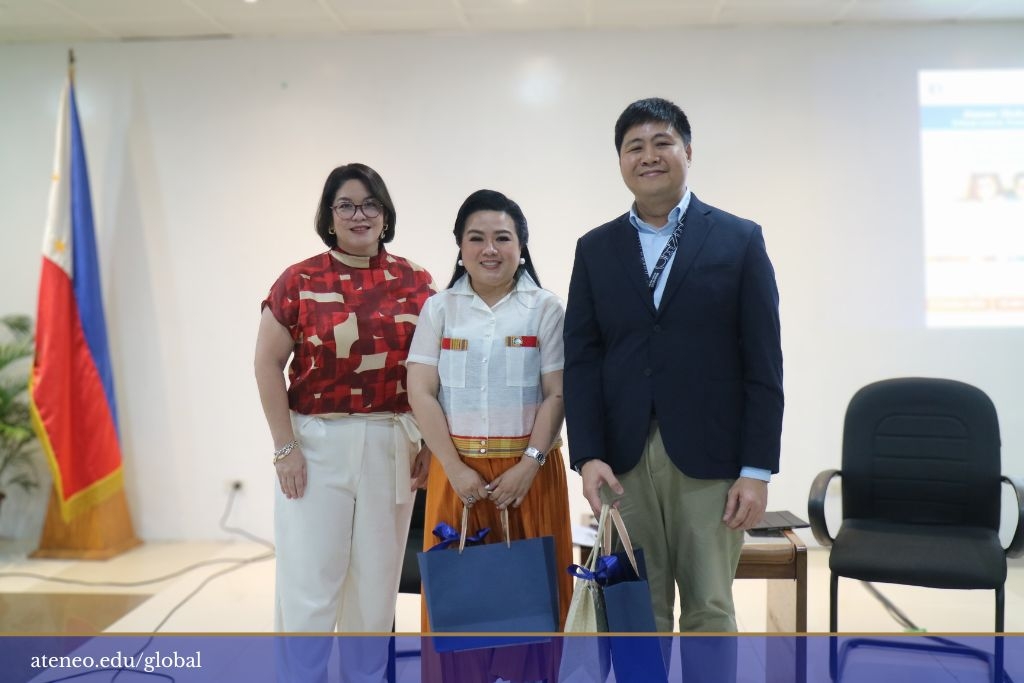
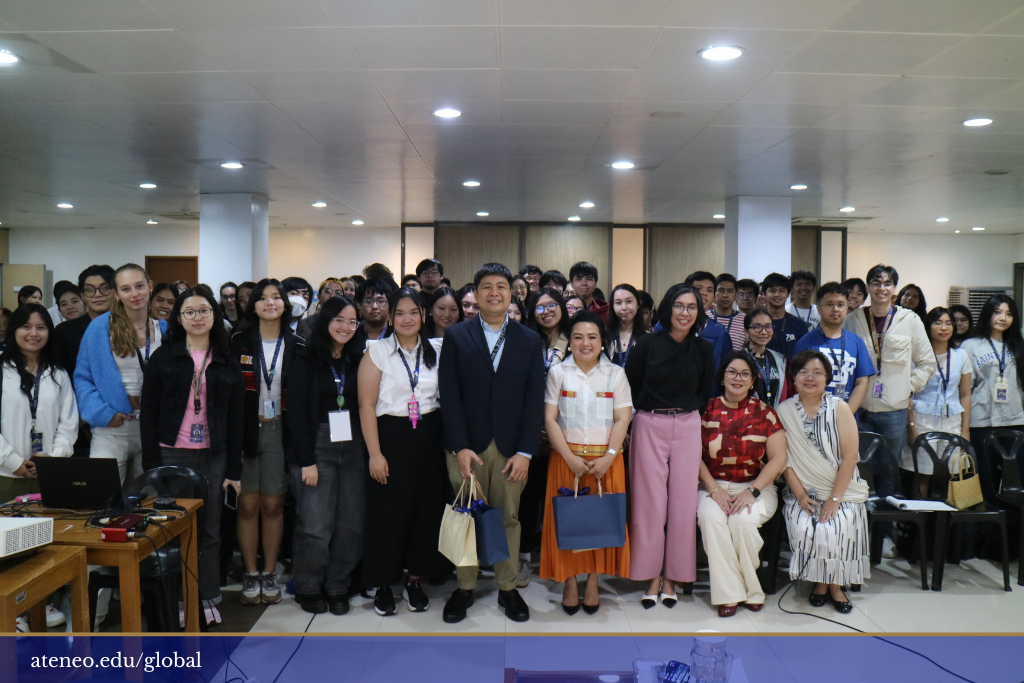
On 14 October 2025, the Office of the Assistant Vice President for University Partnerships and Internationalization (OAVP-UPI), also known as Ateneo Global, organized a special lecture by Atty Maria Ermina Valdeavilla-Gallardo, Head of the United Nations High Commissioner for Refugees (UNHCR) Philippines entitled “A Dialogue with the UN-HCR: The Global Refugee Crisis and the Role of Higher Education.”
The session was moderated by Fr Chester A Yacub SJ, PhD, Assistant Professor from the Department of Political Science. Atty Francis Tom F Temprosa, Faculty of the Ateneo Law School and expert in refugee law, also provided inputs through a video recording.
In her lecture, Atty Valdeavilla-Gallardo shared some of her experiences, having worked over a decade in the Protection Unit for refugees and stateless persons in Manila before becoming the Head of the UNHCR in the Philippines in 2021. She relayed the challenges of a young female refugee who had been displaced thrice by the time she reached the Philippines. Alone, tired, persecuted, wanting only to study and have a home, Atty Valdeavilla-Gallardo recalled her words had the weight of loss, resilience and hope.
Within this context, Atty Valdeavilla-Gallardo went on to discuss the important global framework that exists to protect refugees, asylum seekers and stateless persons. Starting from the mandate of UN-HCR, she went on to elaborate on relevant laws and criterias, the rights of asylum and refugee protection. She then highlighted that the Philippine government has signed all relevant conventions, citing that eight out of the nine core international human rights conventions and that the Philippines “is also a state party to the Refugee Convention, to the 1967 Protocol. It also is the first country to have signed both the 1954 statelessness Conventions as well as the 1961 Convention on the Reduction of Statelessness.” In addition to this, she mentioned that the Philippines is highly active in promoting the Sustainable Development Goals (SGDs) 2030 and strongly upholds the principle of “leaving no one behind.”
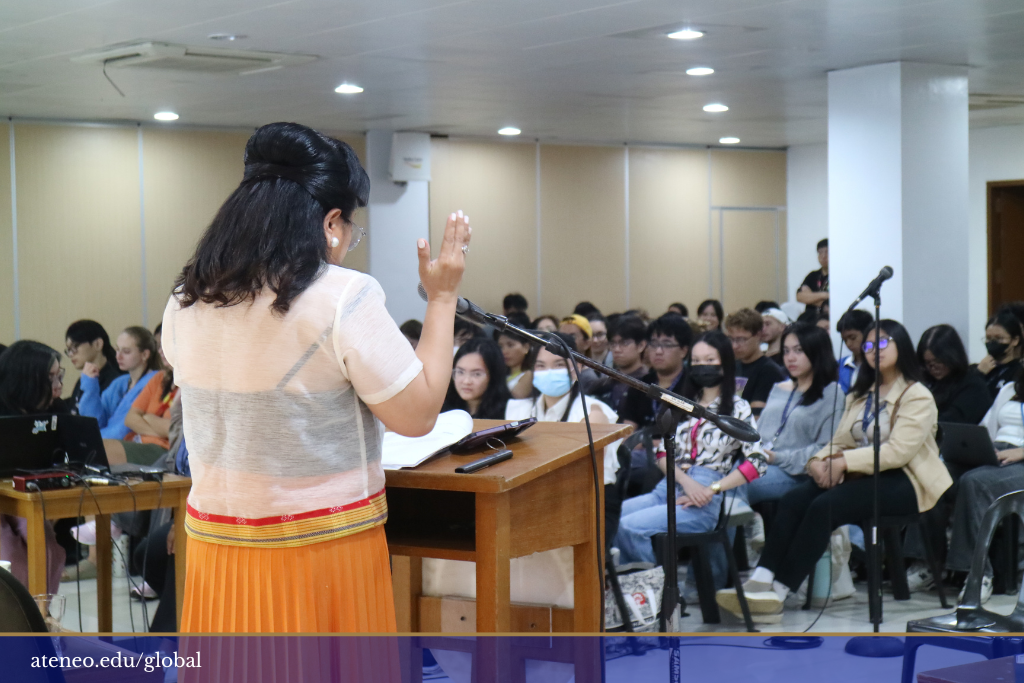
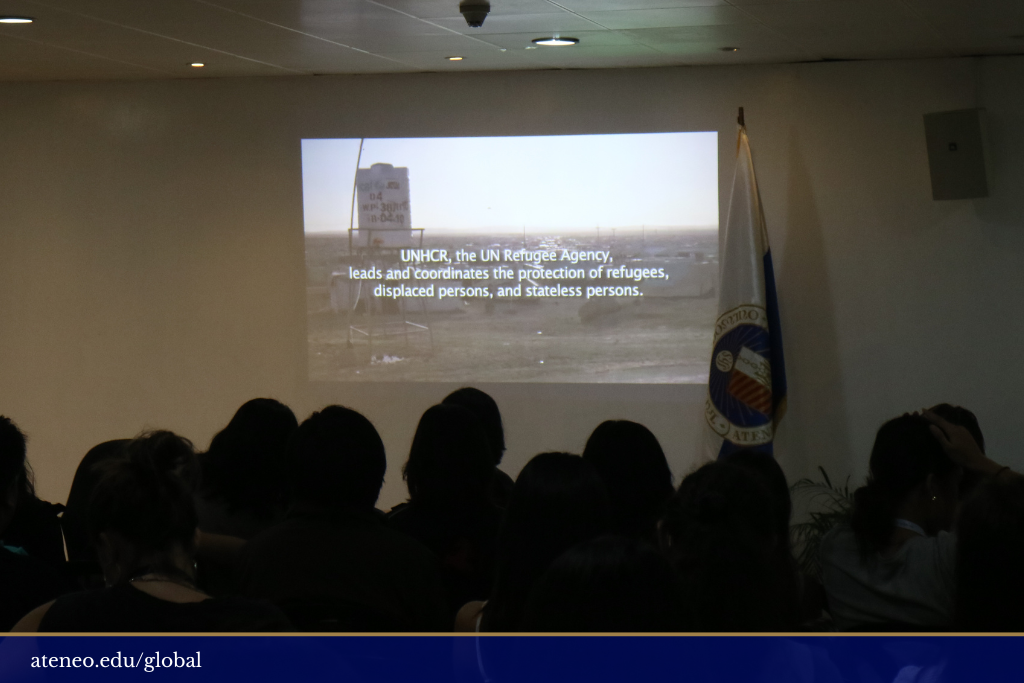
On top of the aforementioned signed conventions, Atty Valdeavilla-Gallardo emphasized that the Philippines also endorsed the Global Compact on Refugees in 2018, allowing the “most predictable and equitable principled responsibility sharing among states in responding to the refugee crisis…through assistance, innovative solutions, as well as diversifying partnerships.” When looking at the bigger picture, Atty Valdeavilla-Gallardo says, the frameworks complement each other in a way that ensures that individuals that the UNHCR works with such as the forcibly displaced and the stateless are not left behind in development processes and that displacement is addressed through inclusive and comprehensive approaches.
After the lecture, Fr Yacub moderated a forum where participants were able to share their questions and concerns with Atty Valdeavilla-Gallardo. Several students stood in line for a chance to engage and discuss, asking insightful questions regarding policies for safer refugee movement, the situation of stateless persons in contested territories, the impact of climate disasters on displacement, and issues surrounding non-ratification of conventions on migrant workers.
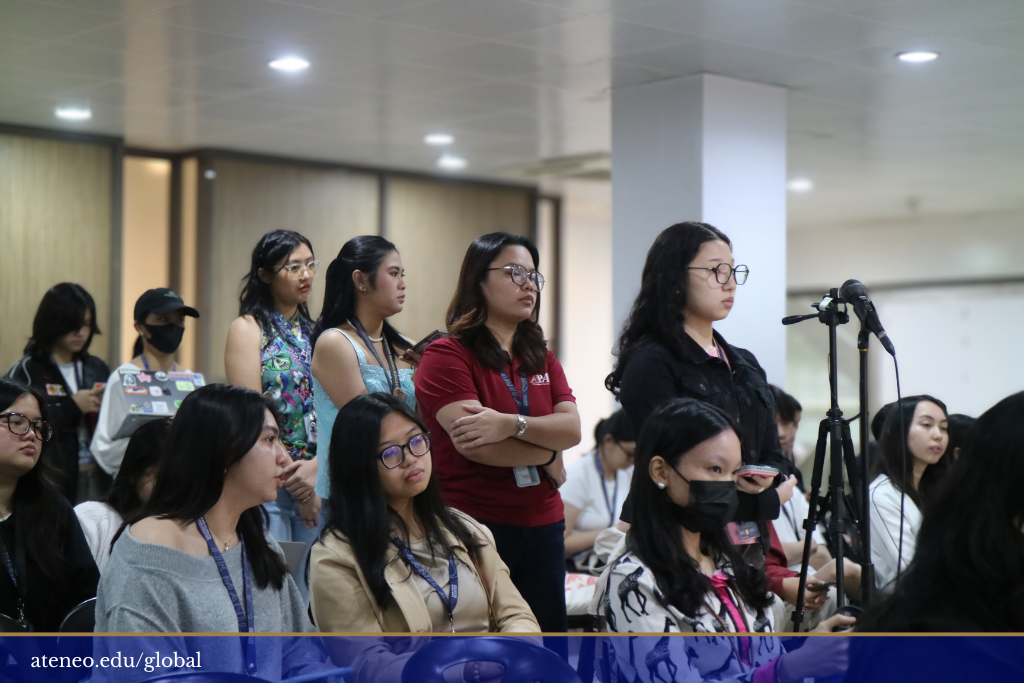
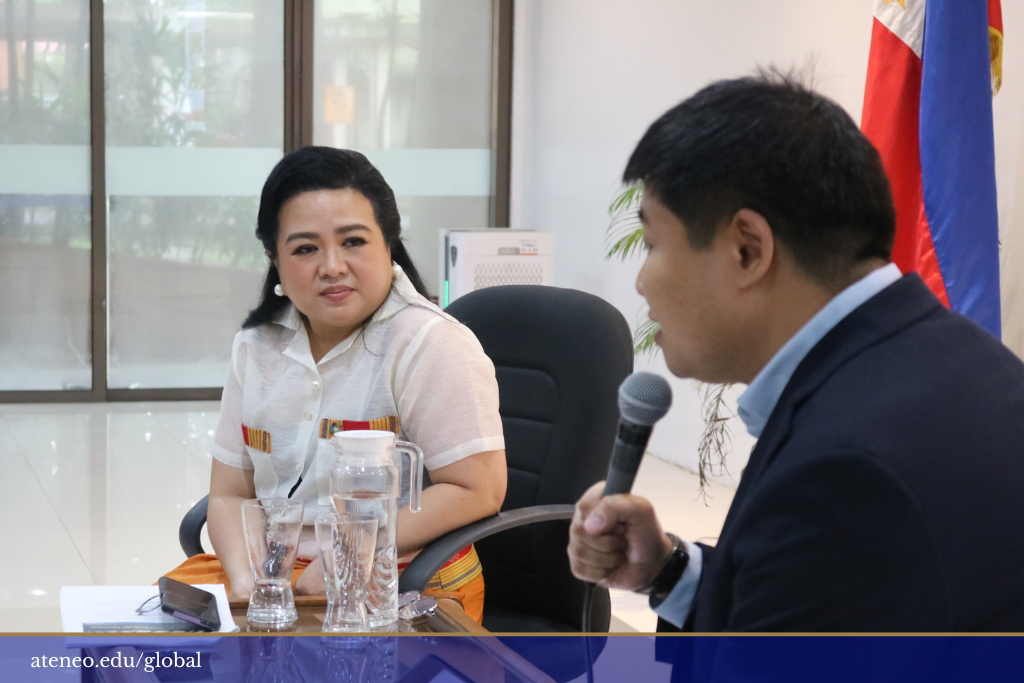
Given the rich subject matter and volume of questions, after nearly 2 hours of engagement, Atty Valdeavilla-Gallardo stayed on to have one on one discussions with students who still wanted to continue a conversation with her.
Ateneo Global’s EmbLEM special lecture comes at an especially meaningful moment, coinciding with the 80th anniversary of the United Nations’ founding this October, whilst also facing strong head winds as a multilateral, inter-governmental organization in the time of rising autocracies and isolationism around the world. Despite these head winds, the United Nations continues to strive to uphold peace, protect human rights, and promote development for all. In the area of protecting refugees, the persistence of forced displacement reminds us that in the pursuit of the UN’s founding vision, there is much to do before full realization.
Ateneo Global, in facilitating engagement with voices from the diplomatic and international community – people who offer firsthand insight into global challenges and the shared human struggles that shape the world – aims to equip students with the knowledge and empower them with ethical grounding needed to make informed decisions that contribute to the overall betterment of society. Merging with the many offerings of Talakayang Alay sa Bayan (TALAB) 2025, in the theme “Walking with the Excluded,” this year’s EmbLEM-TALAB collaboration invites global perspectives to be applied to the lived reality of exclusion.
Recent News
You may also like these articles

[Hot Off the Press] Arkipelago
New book from the Ateneo Press Arkipelago provides a fascinating and fantastical twist on Philippine politics and history Our country is an archipelago of stories
Protecting Creativity: AIPO and Rizal Library Host Copyright Awareness Session for the Ateneo Community
On March 18, 2026, the Ateneo Intellectual Property Office (AIPO), in collaboration with the Rizal Library, successfully conducted a Copyright Awareness Session held on the
Holy Week 2026 Holidays (Memo # UHR2526-038)
Memo # UHR2526-038 31 March 2026 TO: All Employees FROM: [Sgd] Maria Victoria T Cortez, PhD Vice President for University Human Resources SUBJECT: Holy Week
ASOG’s Tobacco Control initiatives spotlighted in DOH National Technical Working Group for Tobacco Prevention and Control
On March 10 to 12, 2026, the Ateneo School of Government (ASOG), through its research and public policy unit, the Ateneo Policy Center, participated in
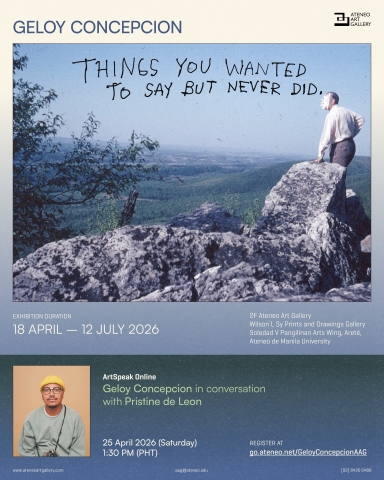
Things You Wanted to Say But Never Did: Geloy Concepcion’s six-year project makes Its exhibition debut at the Ateneo Art Gallery
Geloy Concepcion’s Things You Wanted To Say But Never Did comes to the Ateneo Art Gallery this 18 April 2026. After receiving almost 300,000 messages

[Hot Off the Press] Love If I'm Pretty
New YA Release from the Ateneo Press Love If I’m Pretty tackles the nuances of growing up through complex characters and straightforward prose What do