[Ateneo Press Review Crew] “Lost Graves Found Lives:” Unearthing Filipino Identity Through One’s Family’s Ancestry
27 Nov 2025 | Dids Veneracion



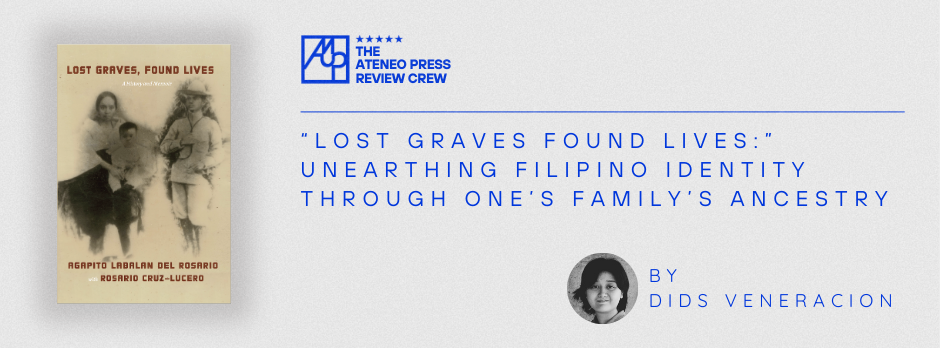
Lost Graves, Found Lives is a historical yet personal account of a well-known lineage of Kapampangans, notably including Vicente Abad Santos, Agapito Abad Santos del Rosario, and Pedro Abad Santos. The author’s account is personal as he retells the stories of his own grandparents, aunts, uncles, and other relatives. The style in which he narrates his family’s true stories is unique because he delicately balances an intimate point of view without sappy biases. It is a sincere and candid retelling of true events in their most raw form. Although the book is based on one family line, it parallels the stories of countless Filipinos.
The book feels like a compilation of heroic Filipino stories parents might tell their children about their ancestors—the kind that makes children wonder how much of the story is true and how much was dramatized. It is an easy read, with chapters divided into digestible segments, each focusing on different members of Agapito’s family. What makes it gripping is the way these stories unfold: there are plot twists, suspenseful moments, and heart-wrenching endings that keep readers deeply engaged. It is nearly hard to believe that these stories are not fiction. Interwoven into these memoirs are lessons on Philippine politics as well as the realities of the American and Japanese occupations.
From its title, Lost Graves, Found Lives already signals its structure and tone. Its first half, “Book 1: Lost Graves,” recounts the tragedies of the family’s ancestors, often grim and sobering. The second half, “Book 2: Found Lives,” shifts toward a lighter, more reflective mood. Here, the author emphasizes the resilience of younger generations, weaving in his own perspective and experiences. This contrast highlights how legacies of loss coexist with stories of survival, renewal, and personal growth.
What makes the book stand out is the way it bridges the distance between history and the present. In today’s political climate, most Filipinos are aware of the terrors endured in the fight for independence. We learn about the brutality of war and occupation, and we hear about the sacrifices of heroes in classrooms or commemorations. Yet for younger generations, these events often remain abstract, we know of these happenings merely in theory. Lost Graves, Found Lives resists that detachment. It reminds us that these injustices were not suffered by distant, nameless figures but by our very own Lolos, Lolas, Titas, and Titos. By grounding the history of the nation in the bloodline of one family, the book rehumanizes the past and makes it feel closer, even uncomfortably so.
Another strength of the book is how it engages questions of identity. Agapito’s family is specific in its details but symbolic in its meaning. Their lives stand in for countless Filipino families fractured by colonization, war, and dictatorship. Reading their stories can prompt readers to reflect on their own ancestry, on forgotten or half-remembered narratives, and on how those stories continue to shape personal and national identity. This reflective quality is part of what makes the book resonate so strongly.
Stylistically, the author achieves a balance between memoir and history. His prose is accessible, making the book suitable not only for academics or history enthusiasts but also for general readers. At times, the storytelling carries the tone of a cautionary tale, reminding us of the cyclical nature of injustice and the fragility of freedom. At the same time, it affirms the resilience of Filipinos—the capacity to rebuild, to preserve identity, and to carry memory forward despite the threat of erasure.
Agapito’s work, then, can be referred to as an active recounting of Filipino life stories. It is “active” because it does not leave the past to gather dust in archives but instead revives it in living memory. The book lingers with readers, prompting them to contemplate their own identities as Filipinos, to ask which “lost graves” of their families might still shape their “found lives” today.
I would strongly recommend Lost Graves, Found Lives to anyone who wants to better understand Philippine history, to anyone who is Filipino, and to anyone who has an interest in humanity more broadly. It is not simply a family chronicle; it is a reminder of how the struggles, losses, and triumphs of the past ripple into the present. Through its stories, the book makes history both intimate and alive.
Grab your copy in paperback: Website | Shopee and Lazada
Dids Veneracion is an avid reader who enjoys exploring diverse genres, from fiction to nonfiction. A graduate of Arts Management from The De La Salle College of Saint Benilde, she aspires to study law, with hopes of contributing to the field in the future.
Recent News
You may also like these articles
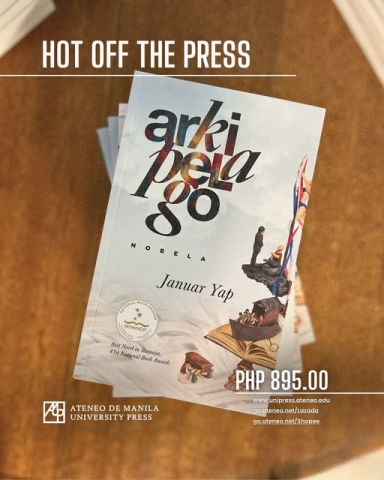
[Hot Off the Press] Arkipelago
New book from the Ateneo Press Arkipelago provides a fascinating and fantastical twist on Philippine politics and history Our country is an archipelago of stories
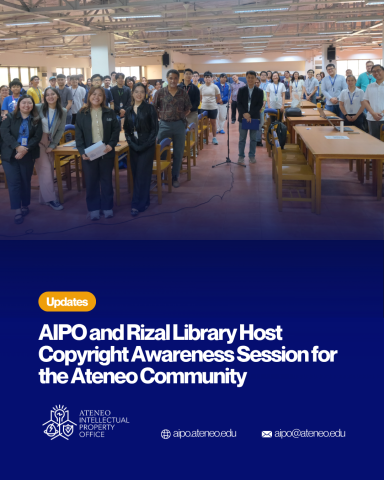
Protecting Creativity: AIPO and Rizal Library Host Copyright Awareness Session for the Ateneo Community
On March 18, 2026, the Ateneo Intellectual Property Office (AIPO), in collaboration with the Rizal Library, successfully conducted a Copyright Awareness Session held on the

Holy Week 2026 Holidays (Memo # UHR2526-038)
Memo # UHR2526-038 31 March 2026 TO: All Employees FROM: [Sgd] Maria Victoria T Cortez, PhD Vice President for University Human Resources SUBJECT: Holy Week
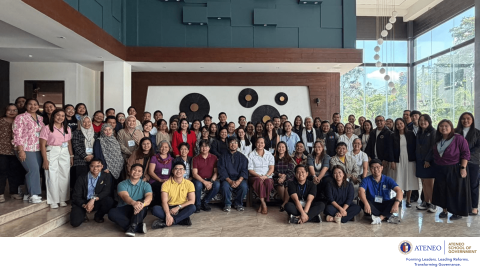
ASOG’s Tobacco Control initiatives spotlighted in DOH National Technical Working Group for Tobacco Prevention and Control
On March 10 to 12, 2026, the Ateneo School of Government (ASOG), through its research and public policy unit, the Ateneo Policy Center, participated in
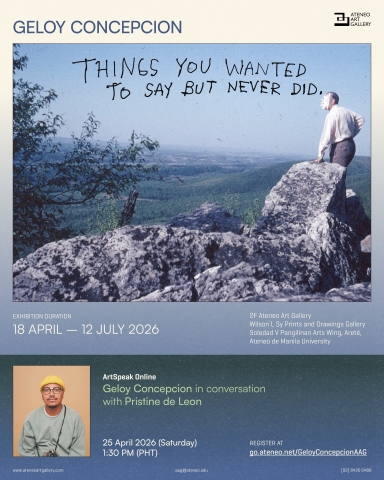
Things You Wanted to Say But Never Did: Geloy Concepcion’s six-year project makes Its exhibition debut at the Ateneo Art Gallery
Geloy Concepcion’s Things You Wanted To Say But Never Did comes to the Ateneo Art Gallery this 18 April 2026. After receiving almost 300,000 messages
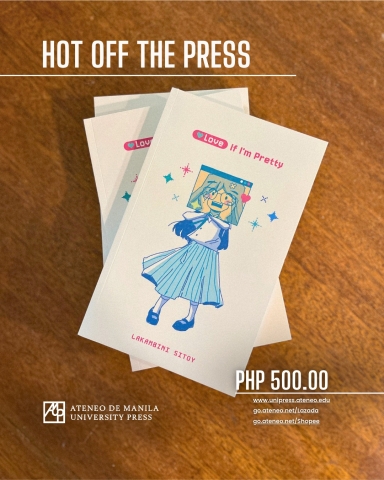
[Hot Off the Press] Love If I'm Pretty
New YA Release from the Ateneo Press Love If I’m Pretty tackles the nuances of growing up through complex characters and straightforward prose What do