[Ateneo Press Review Crew] The Worthwhile Trance of Mark Anthony Cayanan’s Narcissus
07 Jan 2026 | Dean Gabriel Amarillas

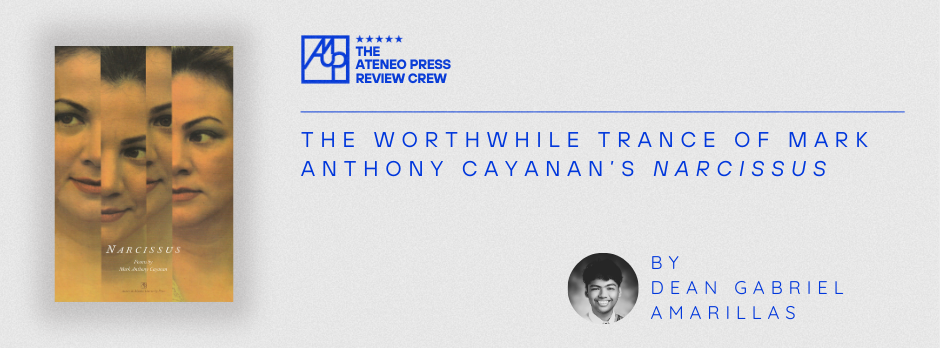
I would like to believe that I read this book in the best of conditions: October rain slightly introducing itself to me just outside my window, with its drops in rhythmic unison with the author’s alliterations, full of affection. Guided by colorful cadence, I read the book’s first stanza:
“Then Life must have screamed Now, now—
the mouth a plastic compulsion, propulsion, the mouth
must have opened, pronounced—thought? how to define
what precedes definition?—submarine sounds, the body
must have pulsed in its desire for—that
must have been it: amniotic ambition—aggressive
and askance, inattentive and without antecedent—desire
originary, original.”
That’s when I knew that I was in for a treat, in the form of intimate introspections of desire in Mark Anthony Cayanan’s Narcissus (2011).
Unapologetically cerebral, poems by Cayanan in this collection demand attention. But once given, the reader is then rewarded with great pleasure. Cayanan explores different fragmentations of the self, beauty, and placelessness, divided each to its own parts, and ends the book with a four-paged poem about Narcissus being in the city, in which by the end of it, we also become “inconsolable” just like him.
In an attempt to make sense of these fragmentations of the self, the writer resorts to acting as different vital female figures in their life, be it: Dina Bonnevie, Anne Sexton, Snooky Serna, or even Cayanan’s own mother, Emma. Conchitina Cruz said it best in her introduction, “Where the I who is he performs the actress performing the role, there is, at most, a perpetual state of becoming, the personnae neither fully absorbed nor fully distinct—much like the drag queen who, in donning a woman does not delete the man, and whose self consequently, is an act exposing its pretense.”
In lieu of this perpetual state of becoming, a highlight for me is the second “Dear Tormentor” where the persona grapples with their complex relationship with their “constant companion” who was there through their “evolution from gabardine school shorts / to skinny jeans”. Tension rises as you go along the poem through masterfully crafted annotated line endings: “On a jeep, the shadow of your legs / strokes mine. In a public urinal, the promise / of your promise is inked on the tile: you are hungry / for my stare.” The poem will end with a heartbreaking stanza:
“Lalake ka ba?, you ask, like God, via satellite. You peddle
macho shampoo and show me how real men box
with water, their hair lustrous but not too fancy.
If I were younger, I would have said Yes.
If I were brave, I would have raised a brow—or both—
and my More than you would have Mae West
proud. Both as permutations of No.”
Treating the self as a site of investigation reminds me of Lauren Berlant’s idea of impasse, which is “a holding station that doesn’t hold securely but opens out into anxiety, that dogpaddling around a space whose contours remain obscure.” A historical present that can be seen in Cayanan’s “Placelessness” poems, which is largely made up of permutations of the same poem, seemingly invoking a limbo-like experience of “transitions and transactions,” as Berlant puts it. In these poems, “nothing happens”, yet, introspections remain vital as it is haunting: “Something can no longer be retrieved / when to look back is to commission, / memory so communal it is vapor”. To which, Cayanan reminds us, “This is what the living do: deliberate.”
The collection as a whole is filled with annotated line endings, which James Longenbach defines as cuts against the syntax of a line. This creates such an anticipatory feel that makes it seem representative of the Butlerian precarity experienced by a queer individual. We see this in “Narcissus in the City” where Cayanan adopts a postmodern lyric to sway the reader into different directions, through what I would consider an inventive use of language, all related to their first two lines: “The day discards night like a used / dress”. Motion created by these line endings mesmerizes the reader and draws them into the city Cayanan crafts, no matter how grim it can be with its “neon lights” that “admit / the onslaught of the morning”. The reader now deep into the city, then realizes that the danger itself shapes the queer individual, “You look down, and you are stricken / in the way you would be with a disease / or disuse”, but then again, “The surface of the lake / just as much an allegory / as myself / and of course:”
Thus, the magic of Cayanan in this collection: simulating a perpetual sense of motion through lyric in a precarious world designed to never be defined. It is a feeling, which I believe, is very much unique to this book and is impressively verbalized: Theoretical grounding in both literature and queer studies is not required for the reader to discern what kind of world exists in Narcissus. Personae attempt to free themselves through multiple permutations in such a suffocating city—and perhaps through this very investigation of the self—we are reminded of the things we do in order to survive.
Just as Ovid’s Narcissus becomes transfixed by the image in the pool, the reader is drawn into these poems’ investigations of desire. Just like how he bent closer to the water’s surface, one drifts deeper and deeper into the book without noticing time slipping away. And yet, unlike our tragic protagonist, the reader ultimately emerges from this brief trance altered—reflections from hereon remain the same, but they sense something within them has shifted.
Get your copy in paperback: Website | Shopee and Lazada
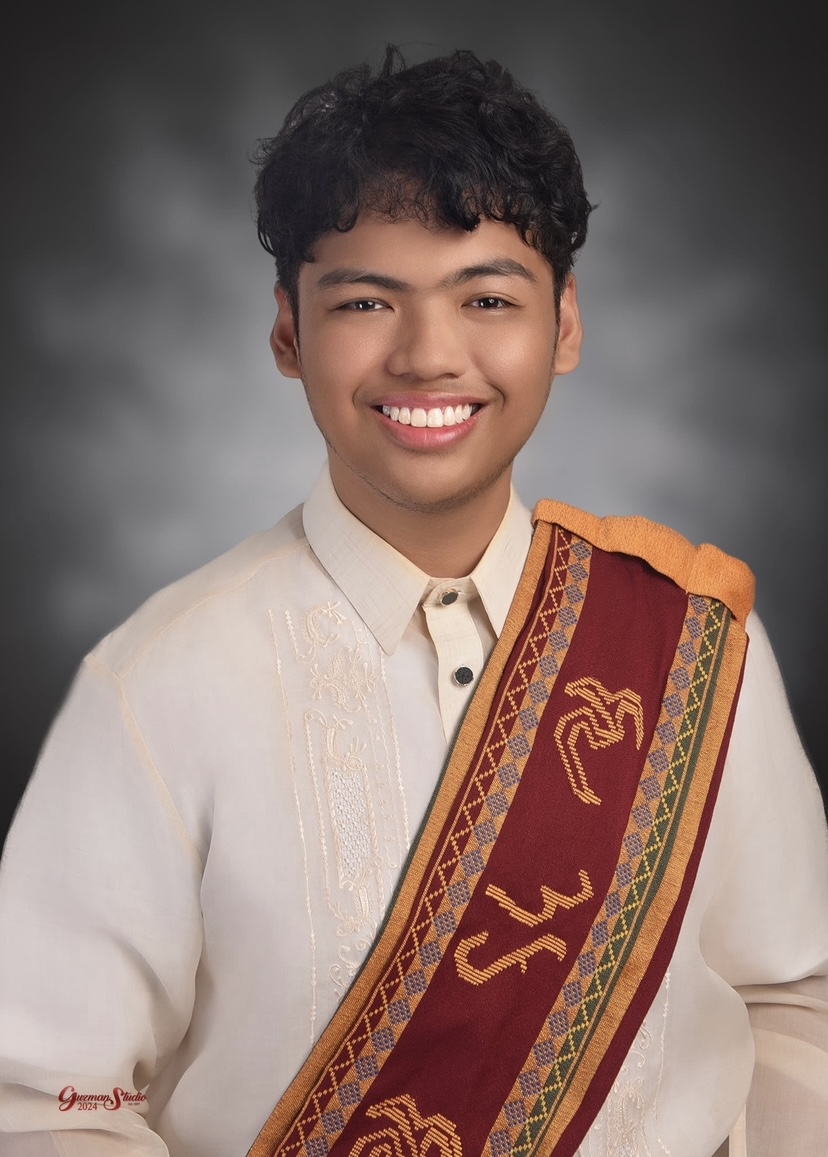
Dean Gabriel C. Amarillas is a BA Philippine Studies student at the University of the Philippines Diliman, double majoring in Comparative Literature and Malikhaing Pagsulat. When he is not reading books, he writes news articles for the Philippine Collegian, primarily covering human rights.
Recent News
You may also like these articles
[Hot Off the Press] Arkipelago
New book from the Ateneo Press Arkipelago provides a fascinating and fantastical twist on Philippine politics and history Our country is an archipelago of stories
Protecting Creativity: AIPO and Rizal Library Host Copyright Awareness Session for the Ateneo Community
On March 18, 2026, the Ateneo Intellectual Property Office (AIPO), in collaboration with the Rizal Library, successfully conducted a Copyright Awareness Session held on the
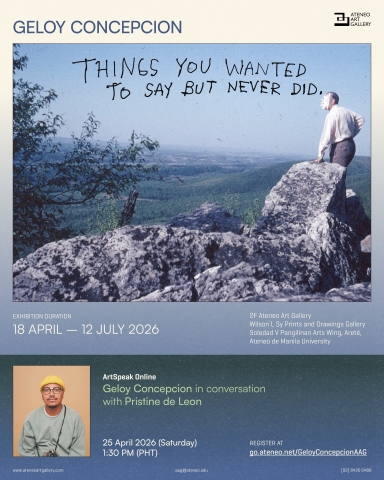
Things You Wanted to Say But Never Did: Geloy Concepcion’s six-year project makes Its exhibition debut at the Ateneo Art Gallery
Geloy Concepcion’s Things You Wanted To Say But Never Did comes to the Ateneo Art Gallery this 18 April 2026. After receiving almost 300,000 messages
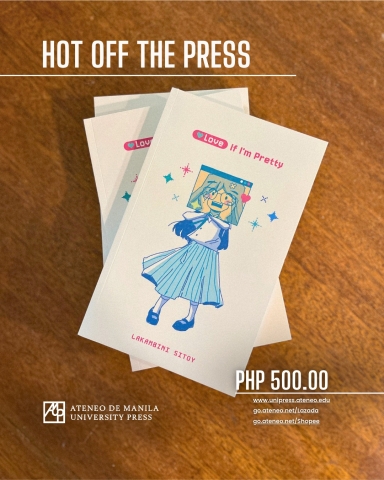
[Hot Off the Press] Love If I'm Pretty
New YA Release from the Ateneo Press Love If I’m Pretty tackles the nuances of growing up through complex characters and straightforward prose What do
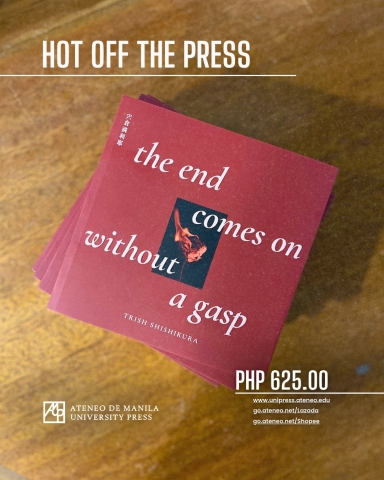
[Hot Off the Press] the end comes on without a gasp
the end comes on without a gasp: Trish Shishikura’s debut poetry collection arrives from Ateneo de Manila University Press (Bughaw) Ateneo de Manila University Press
QS Subject Rankings 2026: Ateneo in top 100 for theology; ranked in 7 subject areas
Ateneo de Manila University is among the top institutions in seven subject areas, and among the top 100 for theological and religious studies, according to