[Tinig] A Friend Told Me Not To Post My Political Opinions Online
21 Jan 2022 | Edwin B. Odulio


A friend of mine who is teaching in a public school sent me a message. She asked why I was posting political opinions on my social media account and so seemed to be endorsing candidates for the upcoming election. She was referring to my anti-Marcos posts, critiques of Duterte’s war on drugs and pandemic responses, and obvious support for the government programs of Leni Robredo. She told me that she was concerned because it is unethical for teachers to do such things. She insisted that teachers must be fair and neutral in political matters. To support her position, she sent me a copy of Article 2, section 5, of the Philippine Teachers Code of Ethics, which states, “A teacher shall not engage in the promotion of any political, religious, or other partisan interest, and shall not directly or indirectly, solicit, require, collect, or receive any money or service or other valuable material from any person or entity for such purposes.” 1] In response, I invited my friend to reflect with me on the meaning and purpose of this rule. I asked her to consider reading beyond the letter of the law or to seek a deeper understanding of what the whole code of ethics for teachers is all about.

The Teachers Code of Ethics is a guide to help educators act with honesty and integrity, which are the character traits that they must live out at all times. This is emphasized in the document’s Preamble, which says, “Teachers are duly licensed professionals who possess dignity and reputation with high moral values as well as technical and professional competence in the practice of their noble profession.”[2] Moreover, the code underlines that “each teacher is a trustee of the cultural and educational heritage of the nation and is under obligation to transmit to learners such heritage as well as to elevate national morality…”[3] I told my friend that for me, these statements express the deep purpose of the document and the bases on which all other rules written in it must be understood. Article 2 section 5 has to be appreciated in the spirit of the aim of helping teachers become models and promoters of honesty and moral integrity. Under an ideal situation where people enjoy economic and civic freedom and where there are no corrupt and abusive leaders taking over the government, this rule is helpful. However, at this time when rampant political abuses and corruption beset the community, following Article 2, section 5, to the letter might be problematic. It can be used to force educators to remain silent amid injustices, and this silence will benefit the people who are corrupt and who abuse power. I told my friend that I think the code does not tell teachers to be enablers of unjust people and structures by being quiet or neutral. Under the current context, the spirit of the Teachers Code of Ethics asks them to refute and go against injustices by speaking up so that they may truly fulfill their mandate to elevate national morality.
In the Christian tradition, the demand to go beyond the letter of the law to seek out and promote what is moral or good can be seen in the life of Jesus. Jesus gave deep importance to moral laws because they guide people to live morally good lives. However, he also showed that the laws have to be understood in light of God’s desire for all people to live in justice and love. For instance, in the Old Testament, God gave the Ten Commandments (Deut 5:6–21) to the Israelite community to teach them how to value their relationship with God and respect the rights and freedom of others. In the New Testament, Jesus’s Sermon on the Mount (Mt 5–7) contains moral laws that orient his disciples on how they can live with compassion and righteousness.
Jesus shows that laws are not perfect because laws do not explain themselves and need to adapt to different circumstances, which are important in seeking what is good. There are instances when people need to go beyond what is written in the laws to pursue what is upright in given circumstances. This is especially true in light of defending and promoting human life and dignity. In the gospels, Jesus ate with sinners and befriend them (Mk 2:13–17), talked with women in public (Jn 4:4–42), touched the sick (Lk 5:12–16), and healed them even on Sabbath days (Mt 12:9–14). All of these actions were prohibited in their Jewish laws. But Jesus did them because he knew that the greatest law after which all other laws must be understood is the law to love God and neighbor. Jesus did not violate their Jewish laws. He perfected them by revealing their deep purpose and meaning, which is to help people do the good and loving.
I ended my conversation with my friend with a challenge. I calmly but firmly told her that silence amid historical revisionism, fake news, and rampant violation of human life and dignity is not an ethical act by any teacher or person. This action does not reflect the true spirit of the Teachers Code of Ethics. Educators must speak out loudly and boldly against people and structures that are unjust for them to show moral integrity. They must help promote decisions and actions that are oriented to making society more loving to become professionals who possess dignity and reputation with high moral values.
[1] 2021 Code of Ethics for Professional Teachers Explained, Art. 2, sec. 5 (Accessed January 5, 2022), https://depedtambayan.net/the-code-of-ethics-for-professional-teachers/#ARTICLE_V_-_THE_TEACHERS_AND_THE_PROFESSION
[2] Ibid., Preamble.
[3] Ibid., Art. 2, sec. 1.
Tinig is a monthly opinion and analysis series from the School of Humanities. The views expressed in this piece are those of the author and do not necessarily represent the views of School of Humanities or the Ateneo de Manila University.
Recent News
You may also like these articles
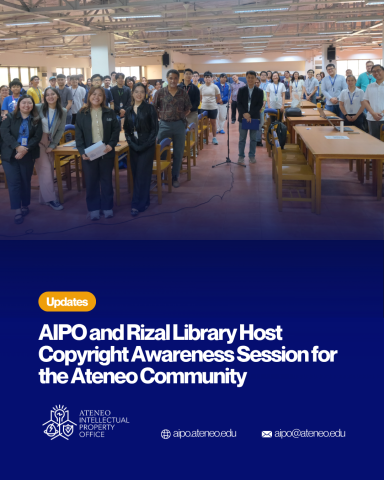
Protecting Creativity: AIPO and Rizal Library Host Copyright Awareness Session for the Ateneo Community
On March 18, 2026, the Ateneo Intellectual Property Office (AIPO), in collaboration with the Rizal Library, successfully conducted a Copyright Awareness Session held on the
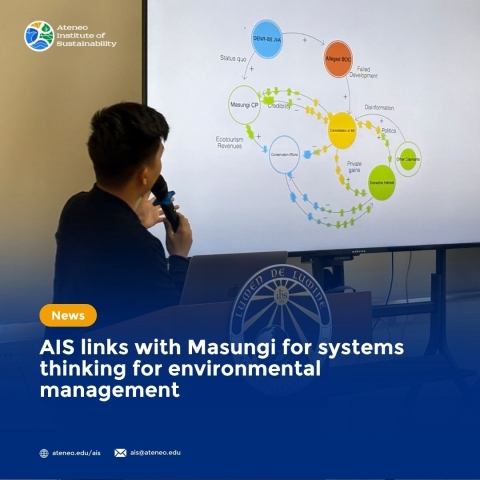
AIS links with Masungi for systems thinking for environmental management
Last 23-24 March 2026, the Ateneo Institute of Sustainability (AIS) , which manages the My Climate Risk – Ateneo de Manila University Regional Hub
Contingency Measures in Higher Education in the Face of a Worldwide Energy Crisis (HE Memo#Y4.16)
In response to the energy crisis caused by escalating tensions in West Asia, Ateneo Higher Education will implement the following class and operational adjustments.
Basic Education Class Schedules March – June 2026 (OVPBE memo)
In alignment with DepEd Memorandum No. 018, s. 2026, and our own commitment to Cura Personalis, we are refining our operations for the remainder of the school year to ensure that we finish strong, safe, and sustainable.
QS Subject Rankings 2026: Ateneo in top 100 for theology; ranked in 7 subject areas
Ateneo de Manila University is among the top institutions in seven subject areas, and among the top 100 for theological and religious studies, according to

URH residency application for Intersession SY 2026-2027 now open
Hey, Blue Eagles! Big news — URH INTERSESSION RESIDENCY SY 2026-2027 is NOW OPEN! Apply now to live where the vibes are unmatched! What’s in