Why green spaces are crucial for our children’s development
28 Nov 2022




Skyscrapers, highways, and bridges are a common sight in Metro Manila. In fact, NASA once referred to Manila as a ‘gray cityscape’ due to the predominant asphalt and concrete and the lack of green spaces in the region. This can be due in part to large-scale commercial and residential developments, alongside roads with high vehicle density.
Because the majority of transport policies are geared towards private vehicles, school zones are usually connected to major roads– causing traffic congestion within the vicinity. This means that children are greeted by a slew of motor vehicles as soon as they step out of school property. They also have little choice but to stay indoors or visit enclosed spaces like shopping malls instead because the city lacks accessible public spaces like parks, town centers, and even playgrounds.
Despite the high concentration of economic activities in urban areas, cities are more often associated with higher rates of mental health problems compared to rural areas. This can be traced to social and physical factors such as poverty, violence, pollution, and poor urban design. Urban living affects a child’s mental health, especially those living in areas with low social cohesion, higher crime rates, and lack of access to safe public spaces. This is where nature comes in.
Nature contributes to a child’s development more than one may think. In fact, children’s access to safe green spaces is relevant in several international frameworks, such as the Convention on the Rights of Childs and the Sustainable Development Goals.
Recognizing the benefits of nature-based learning is crucial in advocating for accessible green spaces. Unstructured physical activity and outdoor play improves children’s motor skills and balance as it strengthens their bodies and reduces health concerns. It also fosters imagination, creativity, and problem-solving skills. Through active engagement with their peers, outdoor play helps children develop social skills and build relationships with others.
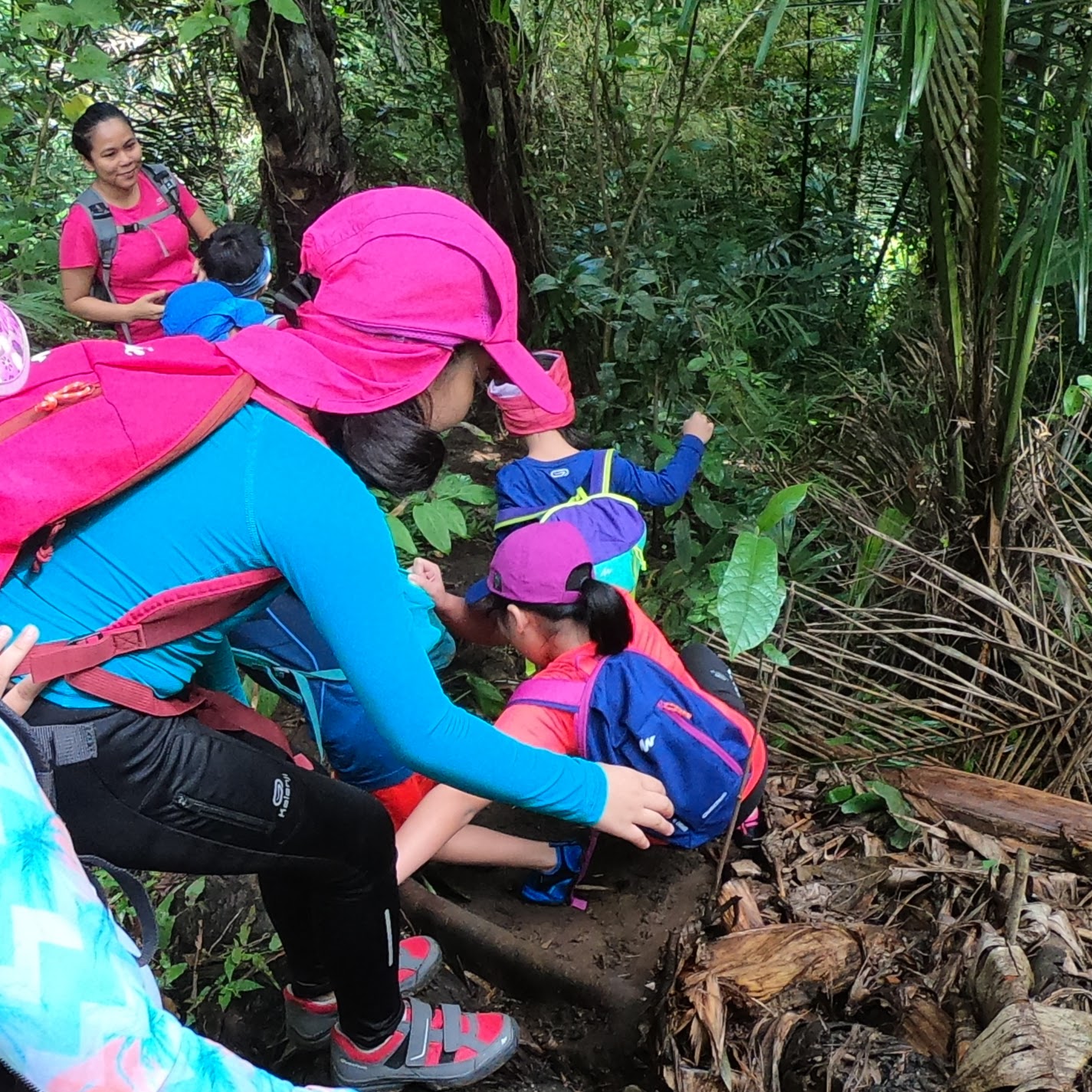
Forest School Philippines takes on a learning approach that encourages outdoor learning in nature and forest areas. Through activities such as insect hunting, tree climbing, crafts, and the like, Forest School Philippines aids in children’s development and guides them in becoming “confident, independent, resilient, and creative learners.”
With climate change, children are one of the most vulnerable to its effects. Children are still developing physically, and this increases their risk to climate-related hazards and their potential health impacts: respiratory illnesses, heatstroke, increased exposure to virus and bacteria, and lack of food security. UNESCO Green Academies is an intersectoral initiative linking active participation from students with climate-resilient projects in schools and communities. Through nature and science-based education, students and teachers will be empowered to implement their own sustainability plans in order to ensure that both the community and the environment are thriving.
By providing children with adequate exposure to green spaces, environmental education, and green skills like ecological literacy and systems thinking, they can adapt and prepare for the impacts of the climate crisis. More than that, children will also be able to recognize the importance of caring for the environment. According to NAAEE, environmental education can “help individuals, communities, and organizations learn more about the environment, develop skills to investigate their environment and to make intelligent, informed decisions about how they can help take care of it.”
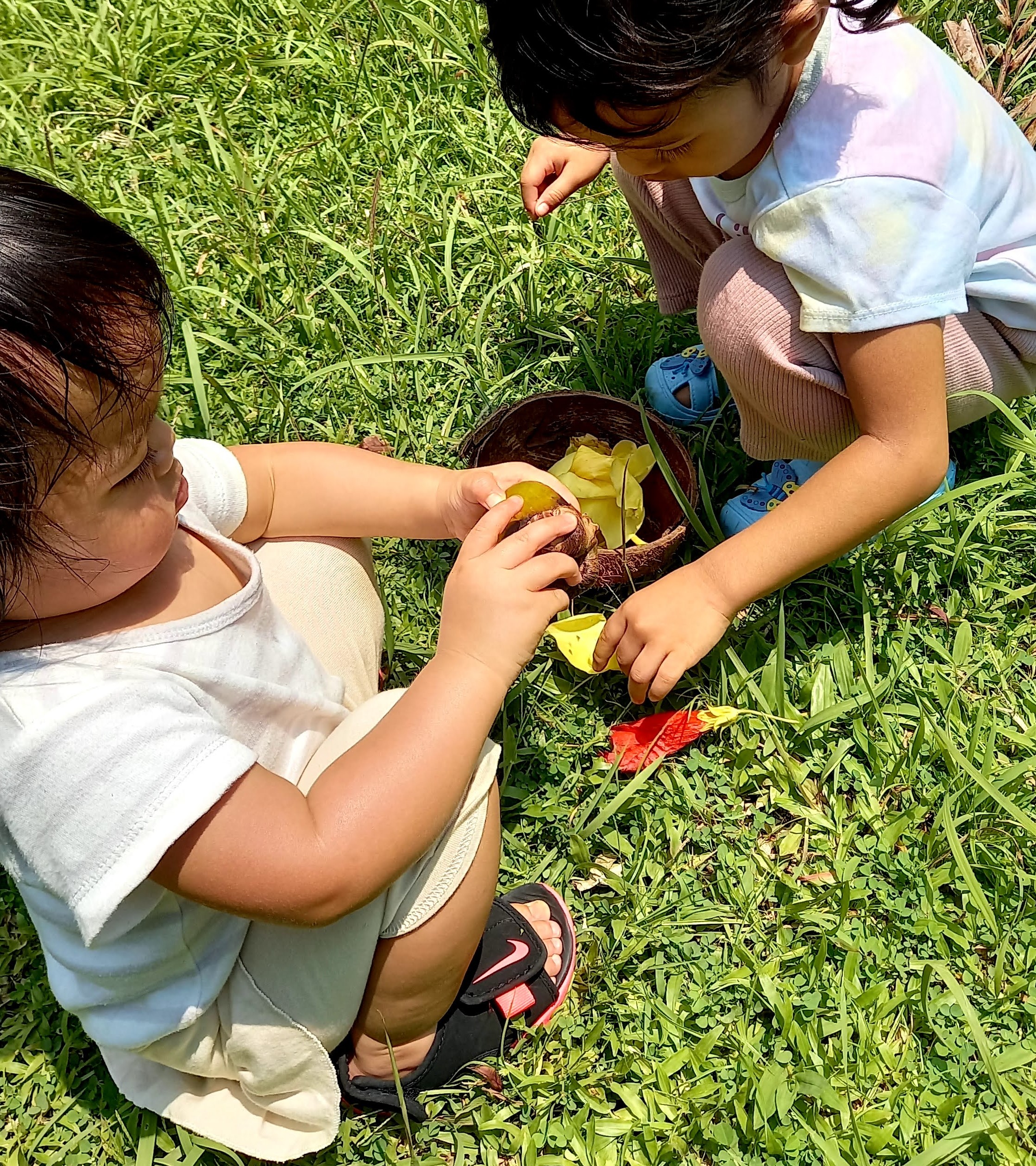
Given the lack of accessible green spaces in Metro Manila, how can schools ensure that kids are still able to get the exposure they need for their development? For one, schools should be designed to have outdoor green and blue spaces such as pocket forests, gardens, creeks, and ponds. Not only will this benefit children, but it can also help mitigate effects of climate change, like urban heat and flooding. Teachers can then set aside time dedicated to children’s outdoor play and recreation within their community.
Outdoor Classroom Day is a global movement that advocates for outdoor play and learning. By joining the movement, teachers allot 2 days in a year for outdoor learning, which can include gardening, nature walks, community clean-ups, or whatever the teachers deem feasible. Schools can also opt to integrate environmental education into the curriculum and include both indoor and outdoor components.
Of course, ensuring that kids have access to safe green spaces is not the responsibility of schools and parents alone– there must also be extensive support from government bodies. Taking a participatory approach to urban development is crucial in developing policies and designing solutions that can meet the needs of its people.
This article was written by Antonella Sampang (3 AB Economics), a volunteer for the Ateneo Institute of Sustainability.
References:
About. Outdoor Classroom Day. (2022, February 9). Retrieved November 14, 2022, from https://outdoorclassroomday.com/about/
About Forest School. Forest School Philippines. (2021, March 13). Retrieved November 14, 2022, from https://forestschoolphilippines.com/forest-school/
About EE and Why it Matters. North American Association for Environmental Education. (n.d.). Retrieved November 14, 2022, from https://naaee.org/about/ee
Brodsky, J. (2020, November 9). Why students should be taught systems thinking starting in Kindergarten. Forbes. Retrieved from https://www.forbes.com/sites/juliabrodksy/2020/11/09/why-students-shoul…;
Goleman, D., Bennett, L., & Barlow, Z. (2013, April 18). Five Ways to Develop "Ecoliteracy". Greater Good. Retrieved from https://greatergood.berkeley.edu/article/item/five_ways_to_develop_ecol…;
Gruebner, O., Rapp, M. A., Adli, M., Kluge, U., Galea, S., & Heinz, A. (2017). Cities and Mental Health. Deutsches Arzteblatt international, 114(8), 121–127. https://doi.org/10.3238/arztebl.2017.0121
Marasigan, A. (2021, November 21). The reasons and way forward for unlivable Metro Manila. BusinessWorld Online. Retrieved from https://www.bworldonline.com/opinion/2021/11/21/412110/the-reasons-and-…;
NASA. (2016, May 6). Manila, Philippines. NASA. Retrieved November 14, 2022, from https://earthobservatory.nasa.gov/images/88643/manila-philippines
Pateña, A. J. (2019, June 3). MMDA to continue clearing roads near public schools. Philippine News Agency. Retrieved from https://www.pna.gov.ph/articles/1071348
UNICEF Armenia. (2021, July 26). The necessity of urban green space for children's optimal development. UNICEF. Retrieved November 14, 2022, from https://www.unicef.org/armenia/en/stories/necessity-urban-green-space-c…;
UNESCO. (n.d.). UNESCO Green Academies. Retrieved November 14, 2022, from https://unesdoc.unesco.org/ark:/48223/pf0000372158/PDF/372158eng.pdf.mu….
Recent News
You may also like these articles
Protecting Creativity: AIPO and Rizal Library Host Copyright Awareness Session for the Ateneo Community
On March 18, 2026, the Ateneo Intellectual Property Office (AIPO), in collaboration with the Rizal Library, successfully conducted a Copyright Awareness Session held on the
Why can’t we eradicate tuberculosis? AIS dissects the TB issue in a multidisciplinary panel
On 24 March 2026, the Ateneo Institute of Sustainability (AIS), through its Sustainable Development Goals (SDGs) Program, hosted a multidisciplinary panel in observance of World
AIS links with Masungi for systems thinking for environmental management
Last 23-24 March 2026, the Ateneo Institute of Sustainability (AIS) , which manages the My Climate Risk – Ateneo de Manila University Regional Hub
Contingency Measures in Higher Education in the Face of a Worldwide Energy Crisis (HE Memo#Y4.16)
In response to the energy crisis caused by escalating tensions in West Asia, Ateneo Higher Education will implement the following class and operational adjustments.
Basic Education Class Schedules March – June 2026 (OVPBE memo)
In alignment with DepEd Memorandum No. 018, s. 2026, and our own commitment to Cura Personalis, we are refining our operations for the remainder of the school year to ensure that we finish strong, safe, and sustainable.
URH residency application for Intersession SY 2026-2027 now open
Hey, Blue Eagles! Big news — URH INTERSESSION RESIDENCY SY 2026-2027 is NOW OPEN! Apply now to live where the vibes are unmatched! What’s in