MCR-ADMU leads global network webinar in navigating open climate science
24 Apr 2023 | Daniel C Ratilla



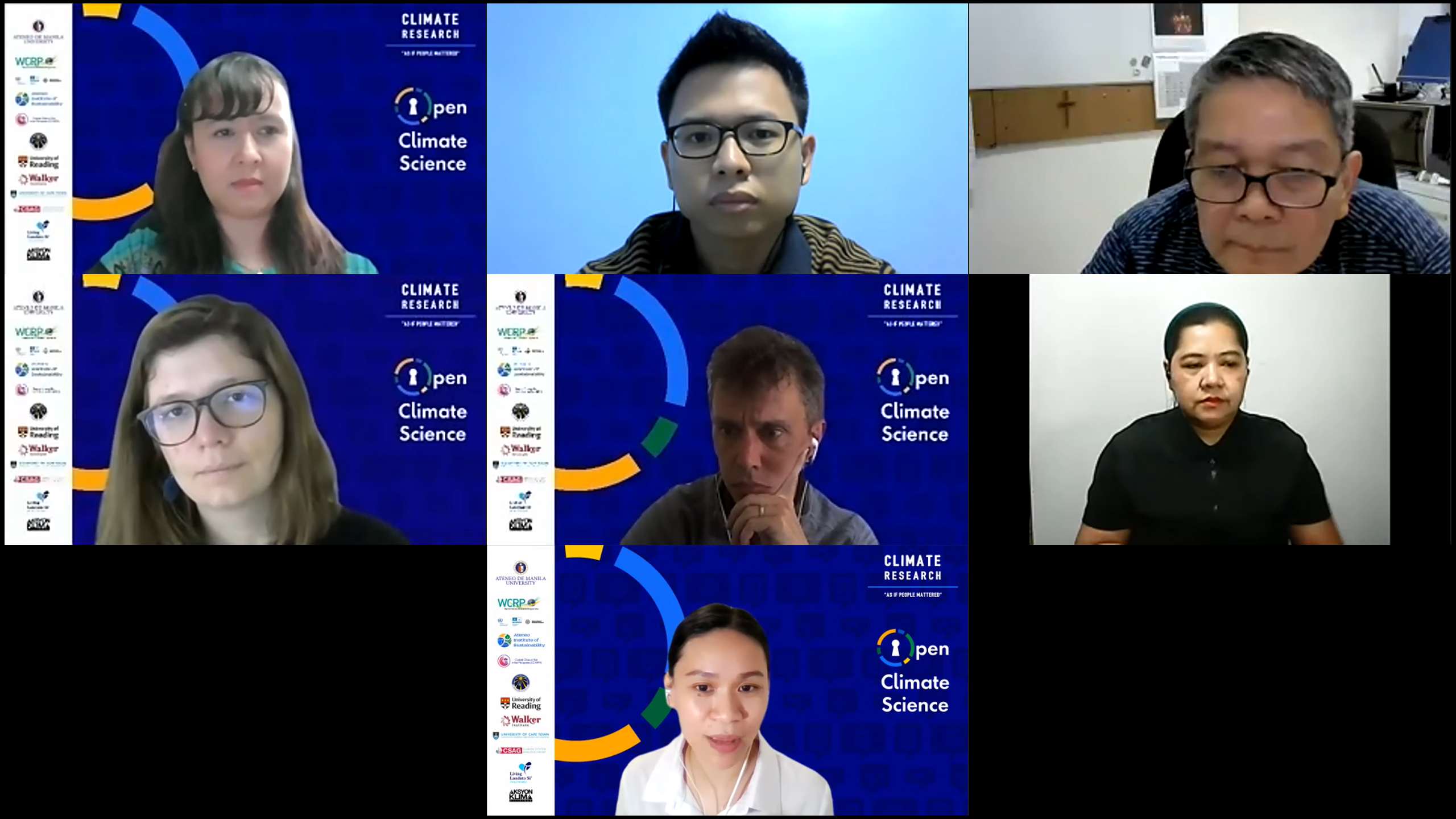
On 15 February 2023, the My Climate Risk – Ateneo de Manila University (MCR-ADMU) Regional Hub, which is hosted by the Ateneo Institute of Sustainability, organized a webinar titled “Open Climate Science: A Panel Discussion on the Meanings and Practice of Open Science” as part of its Climate Research webinar series.
The webinar was held to discuss, articulate, and navigate the tensions of the meanings and practice of open science in addressing climate change, particularly in local contexts. This is consistent with the goal of My Climate Risk, a lighthouse activity of the World Climate Research Programme which aims to develop and mainstream bottom-up, contextual, and empowering approaches to regional climate risk, and which has a mycorrhizal network of hubs that span all continents except Antarctica. Rather than seeking definitive frameworks and tools, the panel discussion aimed to develop rough outlines and share cases of what open science is and how it might work in practice.
Open Climate Science featured a five-member panel, composed of members from different MCR hubs and from partner institutions and like-minded organizations. They were Ms Fiona Spuler of the University of Reading hub in the United Kingdom, Dr Christopher D Jack of the University of Cape Town hub in South Africa, Fr Jose Ramon Villarin, SJ of the Ateneo de Manila University hub in the Philippines, Dr Noralene Uy of the Climate and Disaster Resilience Innovations Program of the Anthropological and Sociological Initiatives of the Ateneo (CDRI-ASIA), and Mr John Leo C Algo of Living Laudato Si' Philippines.
Dr Charlotte Kendra Gotangco Gonzales, Director of the Ateneo Institute of Sustainability and Focal Point of the MCR-ADMU Regional Hub, opened the program and welcomed the audience to the event. She spoke of the nuances of open science, specifically with questions of what makes climate science “open.” She highlighted four aspects of openness: as a question of participation; of accessible tools; of communicating research and the salient issue of open access in scientific journals; and of the language used and its role in making it “open, transparent, and inclusive.” Dr Gotangco Gonzales also noted the diversity of the panel, with experiences coming from diverse sectors as the academe, national and local government, non-government organizations, and the private sector. Dr Theodore Shepherd and Dr Regina Rodrigues, Co-Chairs of the Scientific Steering Group of the My Climate Risk lighthouse activity of the World Climate Research Programme, delivered the Closing Remarks. Dr Shepherd gave a synthesis of the event and noted the approaches of the panel members in discussing open science, and Dr Rodrigues shared an anecdote detailing the lack of awareness around open science and underlying power dynamics in the practice of science.
Ms Jean Jardeleza Mijares, Program Manager for Climate and Disaster Resilience of the Ateneo Institute of Sustainability, moderated the session. The panel discussion commenced with each member sharing their individual reflections on open science and its role in climate action.
Mr Algo, Deputy Executive Director for Programs and Campaigns of Living Laudato Si’ Philippines and a member of the Interim Secretariat of Aksyon Klima Pilipinas, shared an insight from a former mentor, who imparted that the purpose of science should be in the service of society. In the context of climate science, he lamented how the current speed of climate action does not match the gravity and rate of the crisis. He posited that reflecting on who ought to benefit from or be affected by an output the most should anchor a researcher’s work in open science. This extends to considerations of accessibility of methodologies, data and findings, and making research inclusive.
Reflecting on the goals of open science, Mr Algo believes these are: (1) accelerating scientific progress, (2) increasing trust in research, (3) and reducing access inequalities in the aid of making it usable to our publics. Closing his reflection, he stated that addressing the challenges the scientific community faces can help in making open science more mainstream. This includes workloads, data sharing, and the greater research culture in general. Other challenges also include digital literacy, lack of investments and political will, lack of guiding procedures on the conduct of open science, and increasing the presence of scientists and researchers on the public-science-policy nexus.
Dr Jack, Co-Director of the Climate System Analysis Group at the University of Cape Town, represented his university’s My Climate Risk hub. He reframed the discussion of open science and titled his presentation “Climate research – As if people are experts,” a play on Dr Rodrigues’ and Dr. Shepherd’s paper, “Small is beautiful: climate-change science as if people mattered.” He began by pointing out a few problems with the orthodox practice of science: a difficulty to access, difficulty to understand, too many different sources, and uncertainty in information. These are anchored on underlying challenges, which include questions of relationships and trust, meaning-making, agency, diversity in experiences and understanding, deep uncertainties, and ownership and responsibility for knowledge construction and the process of making science more “open.”
Delving into the concept of co-production, Dr Jack shared his experiences in conducting needs-based research, the limitations and frustrations he and his colleagues faced, and how they ventured towards greater participatory processes. This inclusive direction framed people not merely as beneficiaries of research, but as “experts” who can contribute their knowledge in generating solutions, and decision-makers who can leverage the use of science outcomes. His closing reflection summarized his experience as a process of building relationships, of “humble science and about balancing the power that comes with the science,” building trust, and creating meaning from data.
Ms Fiona Spuler, PhD researcher in Atmosphere, Oceans and Climate at the University of Reading, University of Reading, represented her university’s My Climate Risk hub which is housed in the Walker Institute. She segmented her reflection as a consideration, a question, and a topic for discussion. The first, being the consideration, was the non-neutrality of climate information’s “usability,” which is produced and used according to institutional norms and can be used as an instrument to protect the status quo. An example is the incorporation of climate risk into sovereign credit ratings by Moody’s, which can entrench third-world and climate-vulnerable states in greater debt and vulnerability. This runs counter to the assumption that if climate information were more accessible, a greater number of people would benefit. Echoing Mr Algo, she added that centering a question of “for whom?” can help anchor the direction of open climate science.
The question she brought to the discussion was the role of open-source software. She reflected on these not being usable beyond the research groups or projects for which they were developed, the tensions between scalability and loss of accuracy, and whether this could reinforce existing power structures. The topic for discussion focused on incentives that govern academia which may stand in the way of co-developing bottom-up climate science, such as metrics of academic success, access to university finances, and collaborations that go beyond project funding’s time horizon.
Dr Uy, Technical Adviser at the Office of the Secretary of the Department of Environment and Natural Resources, spoke from her experience as a climate and disaster risk reduction practitioner working with local governments and conducting research with communities. In her work, she and her colleagues have prioritized data published by government agencies, but supplemented by open access data and quantitative and qualitative surveys. She lamented the challenge of data availability, and how this makes baselining difficult; when information is available, these are not always understandable or used in planning processes, pointing to challenges of understanding the importance of information and a culture around using it. Despite having freedom of information policies in the country, Dr Uy added that there is still limited data published by the government, and accessing the available data can be time-consuming, which local governments can ill afford, on top of capacity and resource challenges.
Dr Uy was careful to emphasize involving partner communities in order to facilitate uptake. It is important not to discount local knowledge, as it can be integrated with scientific research to add value to strategies and practices. She added that validation workshops with partner communities were particularly useful, as these are opportunities to disseminate findings and make partners aware of the knowledge generated and its implications. Dr Uy ended her reflection by touching on the role of the researcher as an actor to link science to policy and practice through participatory practices and transdisciplinary projects, building on Dr Jack’s reflection. These projects ought to be solution-oriented, and with knowledge that should be readily-available and relevant for stakeholders. Other forms of knowledge products aside from journal articles should also be produced, and she advocated that these be tailored for specific audiences.
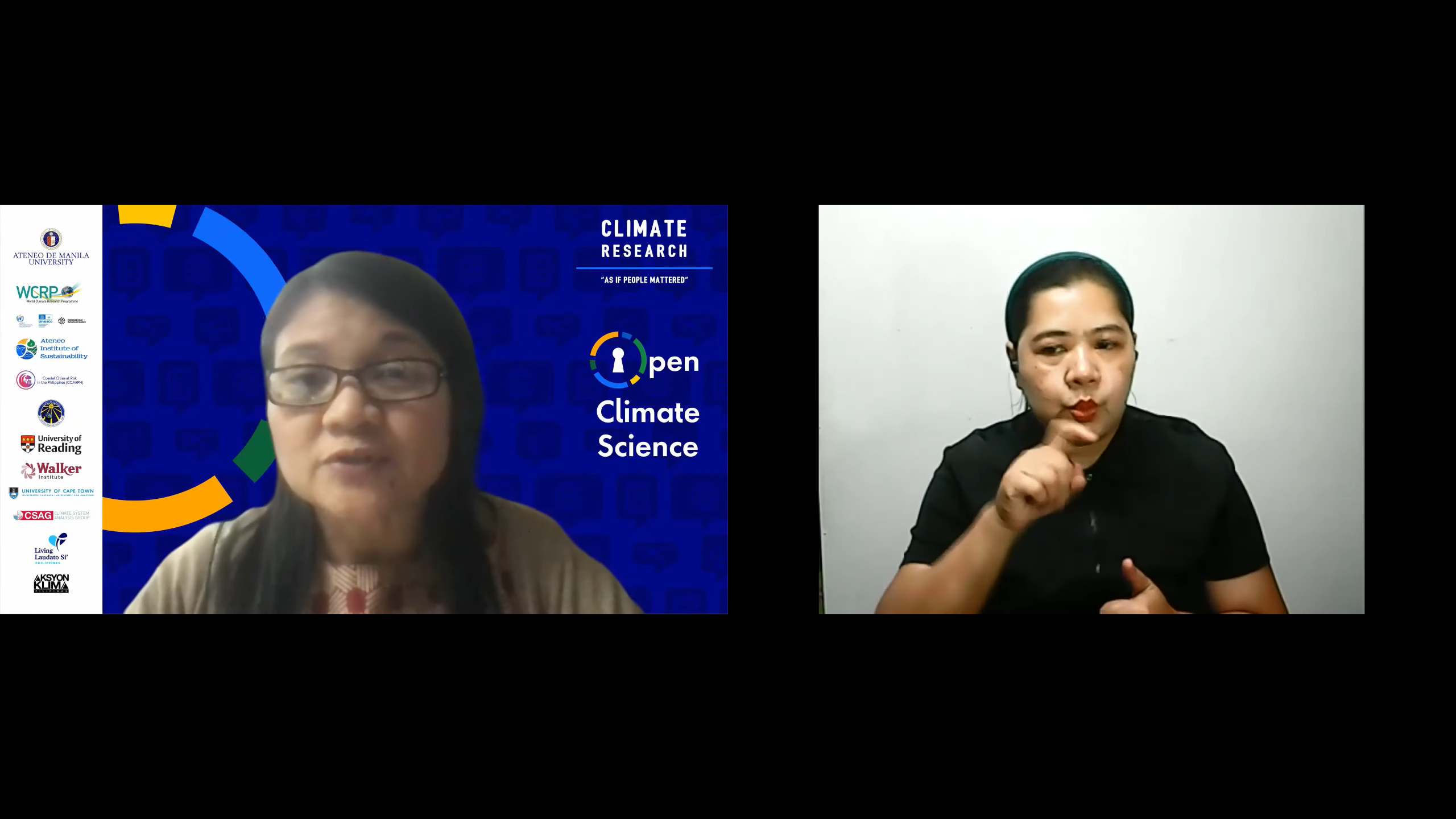
Fr Villarin, SJ, Executive Director of the Manila Observatory, represented the Ateneo de Manila University’s My Climate Risk hub. Reflecting on the meaning of open science, he opened by discussing what it is not, or “closed science,” which he defined as done by an elite group trained in methods of compartmentalization and idealization, choosing to confine science to what is measurable. This hegemony, Fr Villarin shared, privileged the measurer and measured, and conversely marginalized the unmeasurable; uplifting the “how” and not the “why,” or facts over values. In contrast, he noted that open science allows itself to be driven by social concerns, and to be done with other stakeholders, with the identity of the “scientist” as one who is embedded in a society’s context rather than a purely objective observer. Balancing this with a cooking analogy, he noted that while too many cooks may spoil a broth, the degree of involvement and thus exclusion of others depends on what is being brewed. This highlights the need to question: “who is it for?” to justify involving those in the “dining room.”
Language can also function as both an obstacle and enabler: as complicated jargon, it may represent a barrier to being understood. Anxiety of “contamination” of a precise scientific knowledge and fear of oversimplification is a related obstacle which may prevent scientists from translating their work into usable information. Conversely, using language and stories as a tool to anchor and relate to something can make it a powerful instrument, and thus an enabler of open science. Extending this, Fr Villarin praised science journalism for the feat of reducing science into “bite-sized chunks” that decision-makers can understand. Two other enablers included self-awareness, which built upon Dr Jack’s point on humility; and trans-disciplinal gatherings, not in the orthodox sense of intra-academia, but dialogues with other sectors of society. In closing, he shared his experiences in conducting exercises that involve participants to help them understand phenomena and create mini-models, thus democratizing a concept and bringing it to a greater number of people. As climate change is a wicked problem, it will indeed take more than just “experts in the kitchen” to solve it.
Following an open forum, and consistent with the event’s theme, Dr Nico Caltabiano, Scientific Officer of the World Climate Research Programme Secretariat, promoted the World Climate Research Programme Open Science Conference (WCRP OSC 2023) was also promoted. The conference will be a hybrid event, held in Kigali, Rwanda, and online, on 23-27 October 2023, and will focus on “advancing climate science for a sustainable future.” Submission of abstracts had been closed on 14 March 2023.
The session was attended by participants from the Philippines, with international attendees from Brazil, Germany, Japan, Pakistan, Panama, South Africa, Switzerland, and the United Kingdom. The replay and highlights of the webinar are available in the following page.
Recent News
You may also like these articles
Protecting Creativity: AIPO and Rizal Library Host Copyright Awareness Session for the Ateneo Community
On March 18, 2026, the Ateneo Intellectual Property Office (AIPO), in collaboration with the Rizal Library, successfully conducted a Copyright Awareness Session held on the
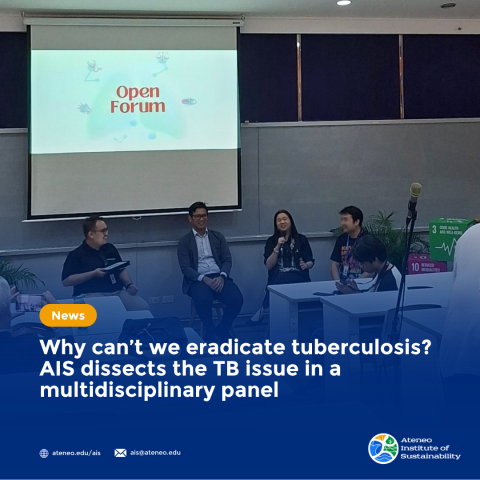
Why can’t we eradicate tuberculosis? AIS dissects the TB issue in a multidisciplinary panel
On 24 March 2026, the Ateneo Institute of Sustainability (AIS), through its Sustainable Development Goals (SDGs) Program, hosted a multidisciplinary panel in observance of World
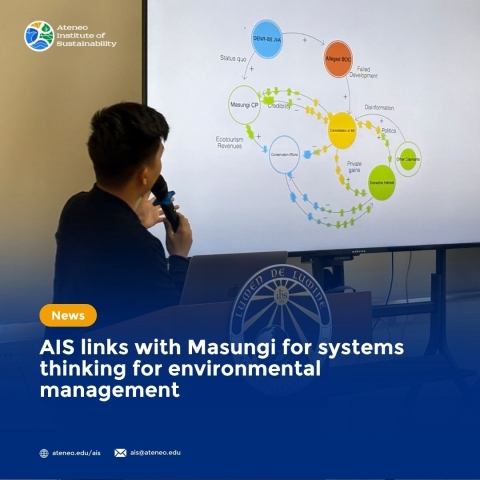
AIS links with Masungi for systems thinking for environmental management
Last 23-24 March 2026, the Ateneo Institute of Sustainability (AIS) , which manages the My Climate Risk – Ateneo de Manila University Regional Hub
Contingency Measures in Higher Education in the Face of a Worldwide Energy Crisis (HE Memo#Y4.16)
In response to the energy crisis caused by escalating tensions in West Asia, Ateneo Higher Education will implement the following class and operational adjustments.
Basic Education Class Schedules March – June 2026 (OVPBE memo)
In alignment with DepEd Memorandum No. 018, s. 2026, and our own commitment to Cura Personalis, we are refining our operations for the remainder of the school year to ensure that we finish strong, safe, and sustainable.
URH residency application for Intersession SY 2026-2027 now open
Hey, Blue Eagles! Big news — URH INTERSESSION RESIDENCY SY 2026-2027 is NOW OPEN! Apply now to live where the vibes are unmatched! What’s in