AIS continues to build capacity for resilience through systems thinking workshops
03 Jun 2025 | By Daniel C Ratilla and Ivy Geraldine Ferrer



The My Climate Risk – Ateneo de Manila University (MCR-Ateneo) Regional Hub, managed by the Ateneo Institute of Sustainability (AIS) through the Climate and Disaster Resilience (CDR) program, recently concluded a series of systems thinking workshops aimed at strengthening resilience planning efforts. Held for two cohorts on 13-14 May and 29-30 May 2025 at Heyden Hall, Manila Observatory, the two-day workshops brought together multi sectoral groups for an in-depth understanding of systems thinking frameworks, drawing from the City Resilience Toolkit (CResT): A Compendium of Activities for Resilience Planning, which covers three key phases across three modules: Problem Diagnosis, Stakeholder Engagement, and Action Planning.
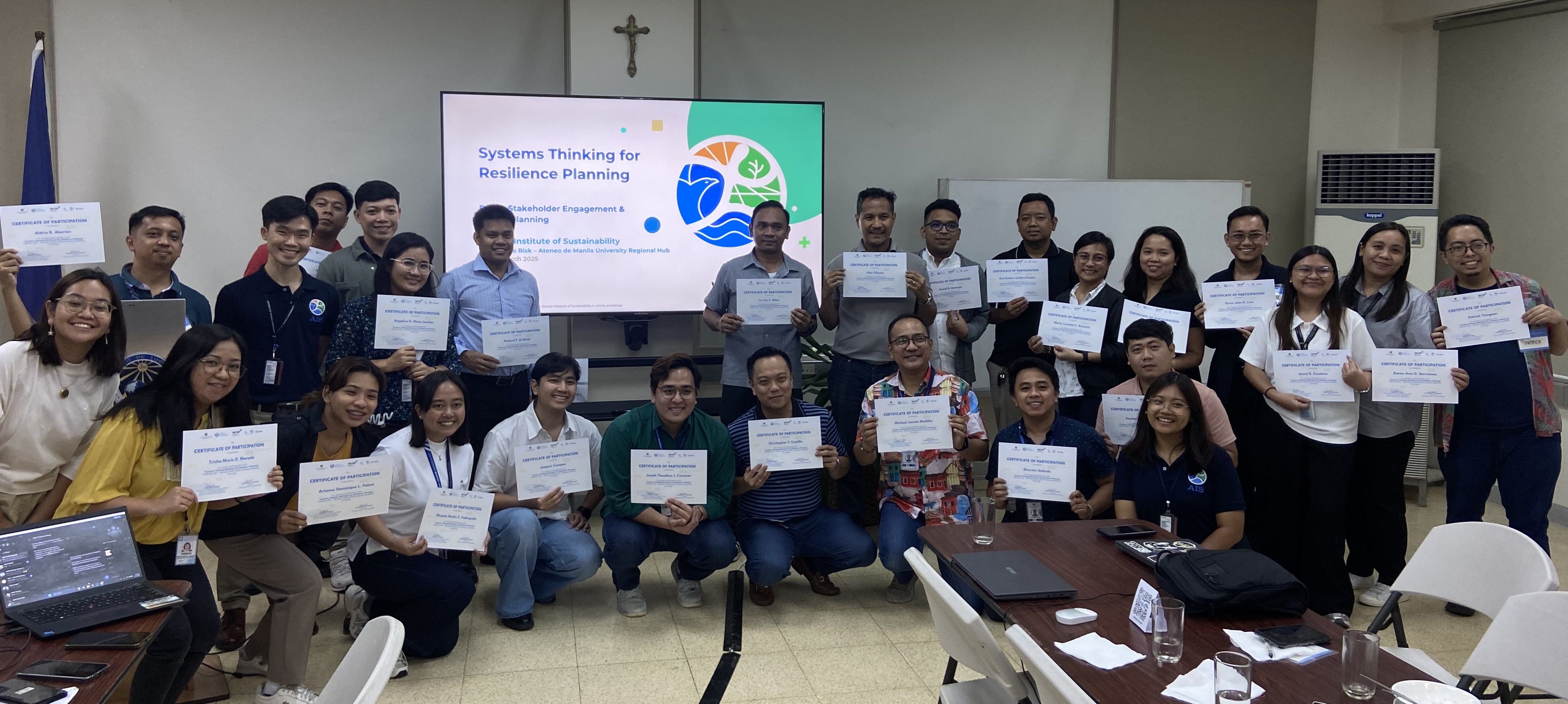
CResT, developed under the Coastal Cities at Risk in the Philippines: Investing in Climate and Resilience project, served as the foundation for the workshops’ activities and discussions. Facilitated by Mr Daniel C Ratilla, Program Head for Climate and Disaster Resilience and Focal Point of the MCR-Ateneo Hub, the workshops guided participants through the application of systems thinking in the context of resilience planning.
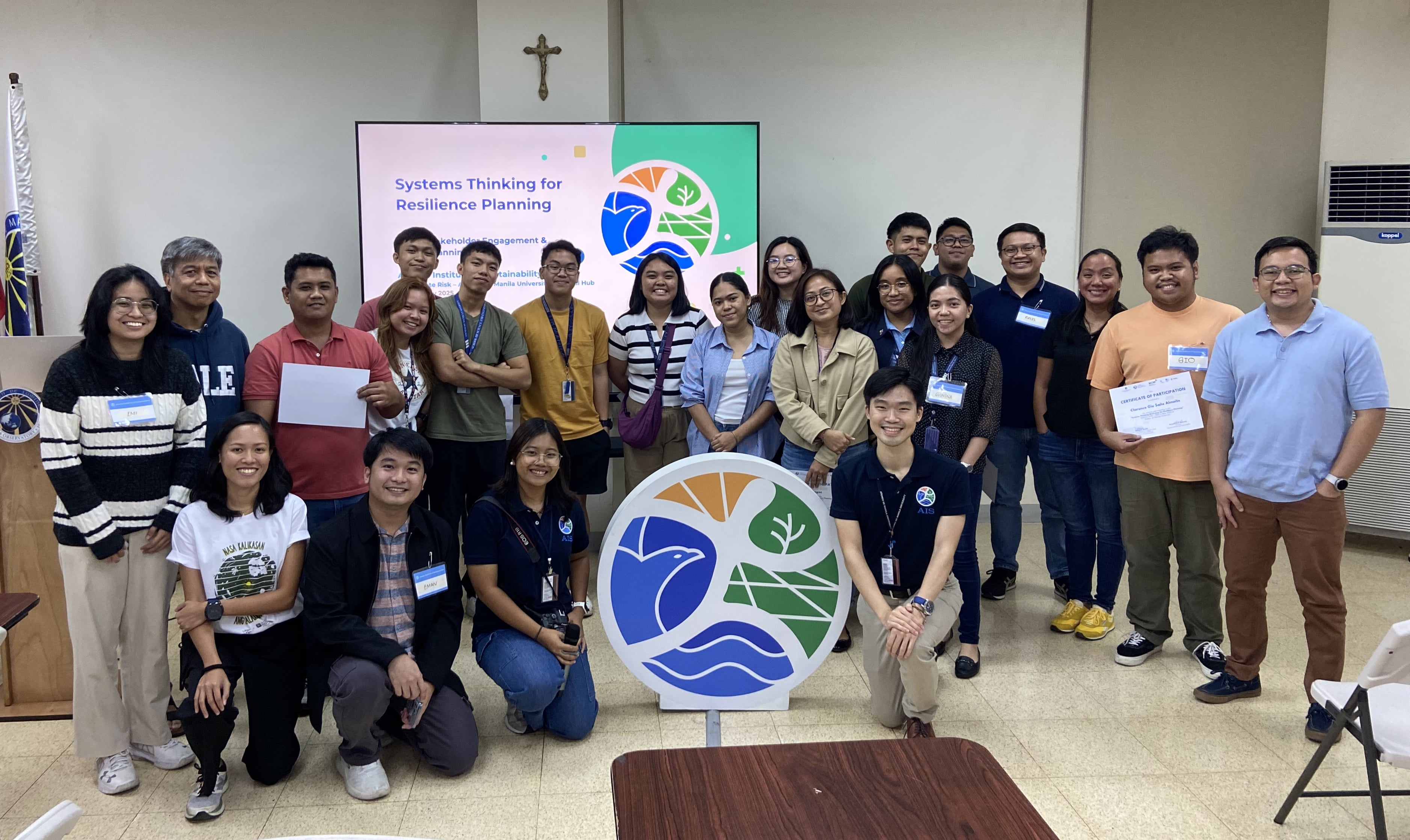
The practice of systems thinking involves careful delineation and reflection on interactions within and among systems, their boundaries, and how the specific structure of these systems leads to trends or behaviors over time. With this framework of broadened thinking, representatives from government, the private sector, academia, non-governmental organizations, and civil society explored how these concepts could be applied to their respective contexts.
Resilience, on the other hand, is characterized by a system’s ability to persist in the face of external disturbances. As a broad concept, it can thus be applied in various contexts, such as through the lens of ecosystem resilience, climate resilience, and even the resilience of an organization’s operations.
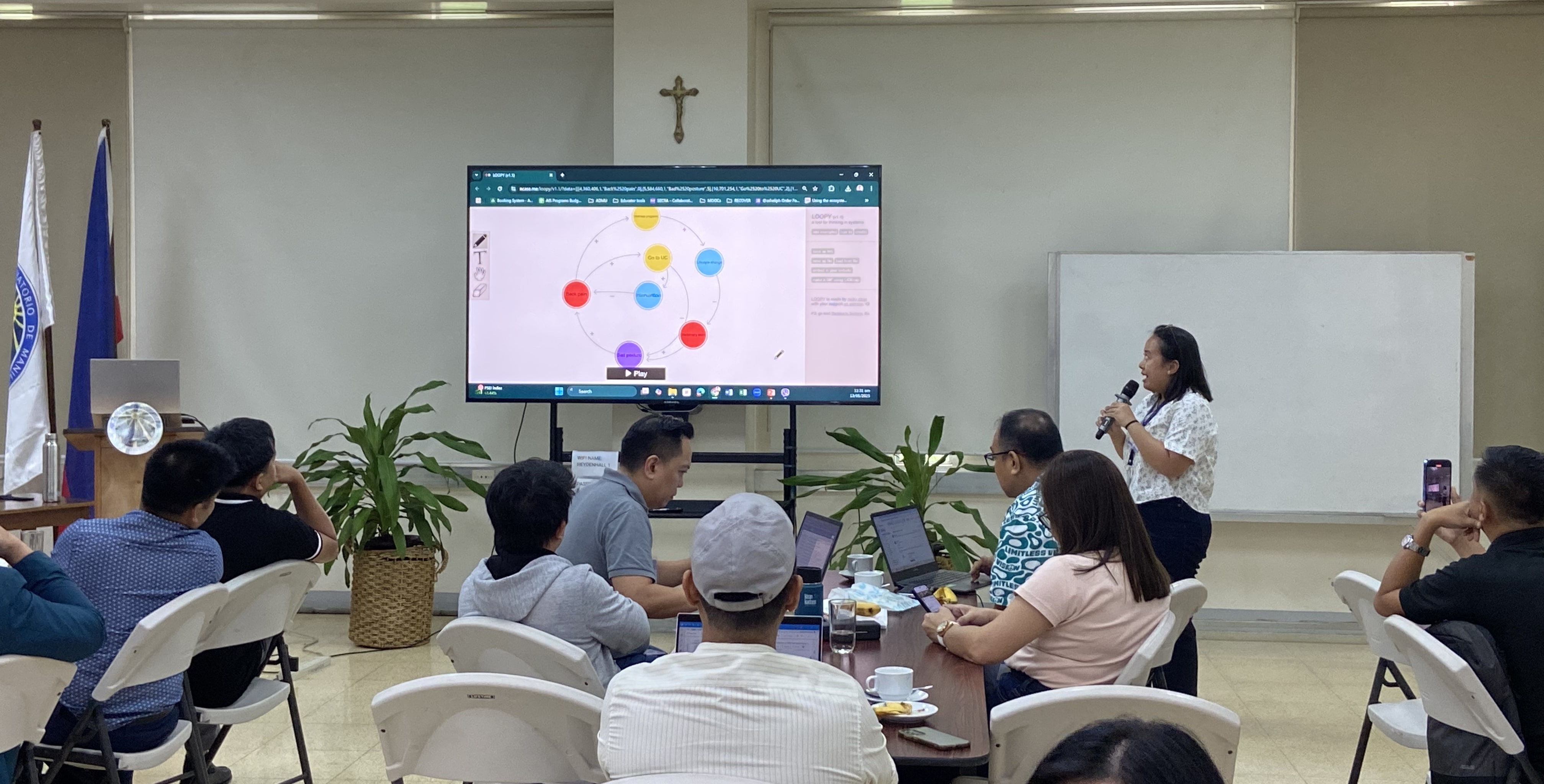
The first day of the workshop introduced the basics of systems thinking, including structure and feedback loops, systems thinking tools and models, and resilience concepts. Participants also learned to create causal loop diagrams (CLDs) using Loopy, a digital tool that visualizes interconnections among different components of a system. These diagrams allowed participants to construct “storylines” around specific resilience issues, thus allowing participants to articulate and even reflect on their own understanding of their selected issues. In a separate activity, participants were also able to analyze their constructed CLDs using system archetypes–generic, common patterns of systemic structure.
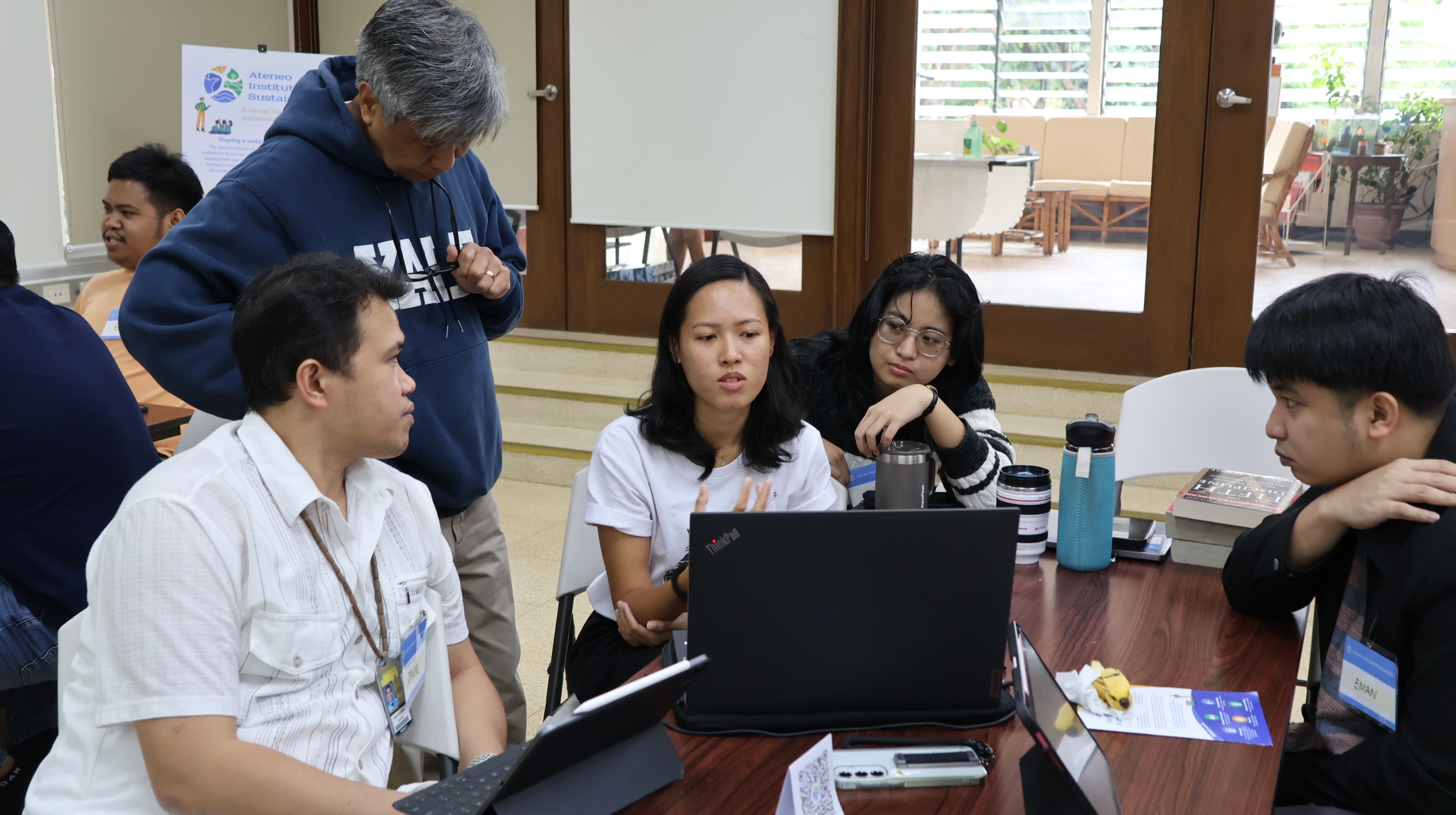
On the second day, the workshop focused on the Stakeholder Engagement and Action Planning modules. Participants identified key stakeholders involved in their selected resilience issues, assessed their influence and impact, and avenues for engagement and collaboration to define desired future outcomes. Through scenario building and pathway mapping, the groups evaluated the feasibility and robustness of potential strategies, allowing them to articulate different assumptions and explore transitions to their envisioned future.
The workshops concluded with participants reflecting on their shared experiences and practices of systems thinking in addressing complex resilience issues. The sessions further emphasized the importance of systems thinking as “big picture” thinking and “deep thinking,” which considers feedback and interconnections, as well as underlying worldviews to understand how structures are formed.
Overall, the workshop participants were able to appreciate the mix of theory and practice. Participants expressed their appreciation for the activities, and shared the potential for adapting these for their own planning processes, a promising avenue as some participants work in local and national government agencies. The workshops were able to affirm the importance of taking a holistic view of resilience issues for more effective planning, particularly in factoring in future uncertainty. The importance of considering stakeholders as vital players in any wide-reaching program was also brought up. Systems thinking, after all, is also about empathy–this was underscored by participants committing to use their knowledge to revisit response plans for DRRM applications.
AIS, through its CDR program, will carry out future opportunities for systems thinking and similar capacity-building workshops. Interested participants are encouraged to check the interest form HERE for public training and workshops.
Recent News
You may also like these articles
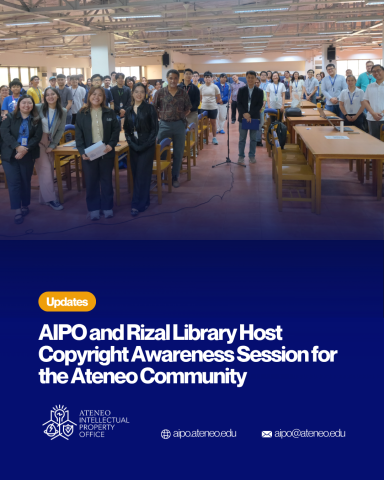
Protecting Creativity: AIPO and Rizal Library Host Copyright Awareness Session for the Ateneo Community
On March 18, 2026, the Ateneo Intellectual Property Office (AIPO), in collaboration with the Rizal Library, successfully conducted a Copyright Awareness Session held on the
ASOG’s Tobacco Control initiatives spotlighted in DOH National Technical Working Group for Tobacco Prevention and Control
On March 10 to 12, 2026, the Ateneo School of Government (ASOG), through its research and public policy unit, the Ateneo Policy Center, participated in
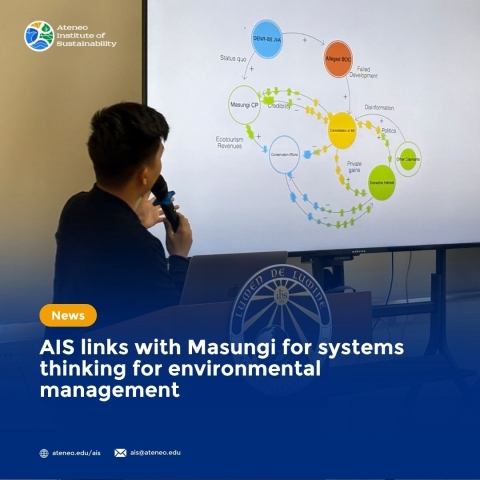
AIS links with Masungi for systems thinking for environmental management
Last 23-24 March 2026, the Ateneo Institute of Sustainability (AIS) , which manages the My Climate Risk – Ateneo de Manila University Regional Hub
Contingency Measures in Higher Education in the Face of a Worldwide Energy Crisis (HE Memo#Y4.16)
In response to the energy crisis caused by escalating tensions in West Asia, Ateneo Higher Education will implement the following class and operational adjustments.
Basic Education Class Schedules March – June 2026 (OVPBE memo)
In alignment with DepEd Memorandum No. 018, s. 2026, and our own commitment to Cura Personalis, we are refining our operations for the remainder of the school year to ensure that we finish strong, safe, and sustainable.
BIR and Ateneo sign MOU for academic cooperation and research collaboration
The Bureau of Internal Revenue (BIR) and Ateneo de Manila University recently signed a memorandum of understanding (MOU) for academic cooperation and research collaboration. The