Mobility highlighted in AIS’ TALAB session
20 Oct 2025 | By Daniel C Ratilla





On 14 October 2025, the Ateneo Institute of Sustainability (AIS) organized a Talakayang Alay sa Bayan (TALAB) session, titled “Moving Within and Between: An Ideation Workshop for an Accessible and Resilient Campus”. The workshop utilized systems thinking, and was designed using the framework of the City Resilience Toolkit (CResT), a compendium of systems thinking activities, which divides the discipline into distinct phases.
The session was co-organized by all three programs of AIS: the Climate and Disaster Resilience Program, led by Mr Daniel C Ratilla, who also served as workshop speaker and facilitator, the Organizational Sustainability Program, led by Mr Josiah Theodore Cacayan, and the Sustainable Development Goals Program, led by Ms Ma Margarita Christina Lacdao-Umali.
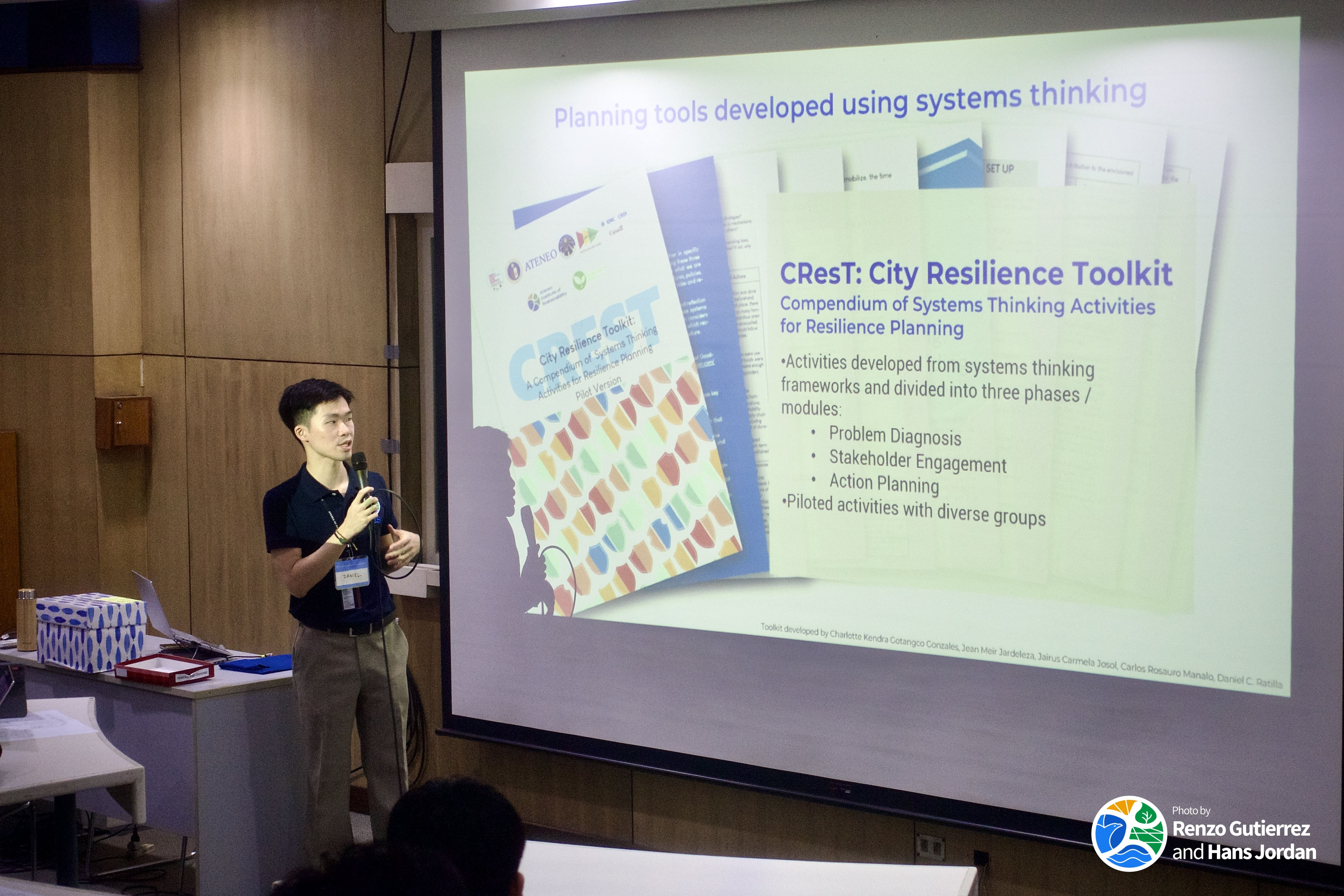
The theme of this year’s TALAB is “Walking with the Excluded”, and the session framed key stakeholder groups as segments of the community that are prone to be overlooked in design and mobility considerations: persons with disabilities, minors, and senior citizens. The session thus challenged participants to consider these particular segments in designing enabling structures or policies towards intra-campus mobility for their assigned groups.
The session began with a lecturette on the fundamentals of systems thinking, and using tools and methods such as causal loop diagrams (CLDs), stakeholder mapping, and vision-setting. The activities were also adopted from the CResT manual.
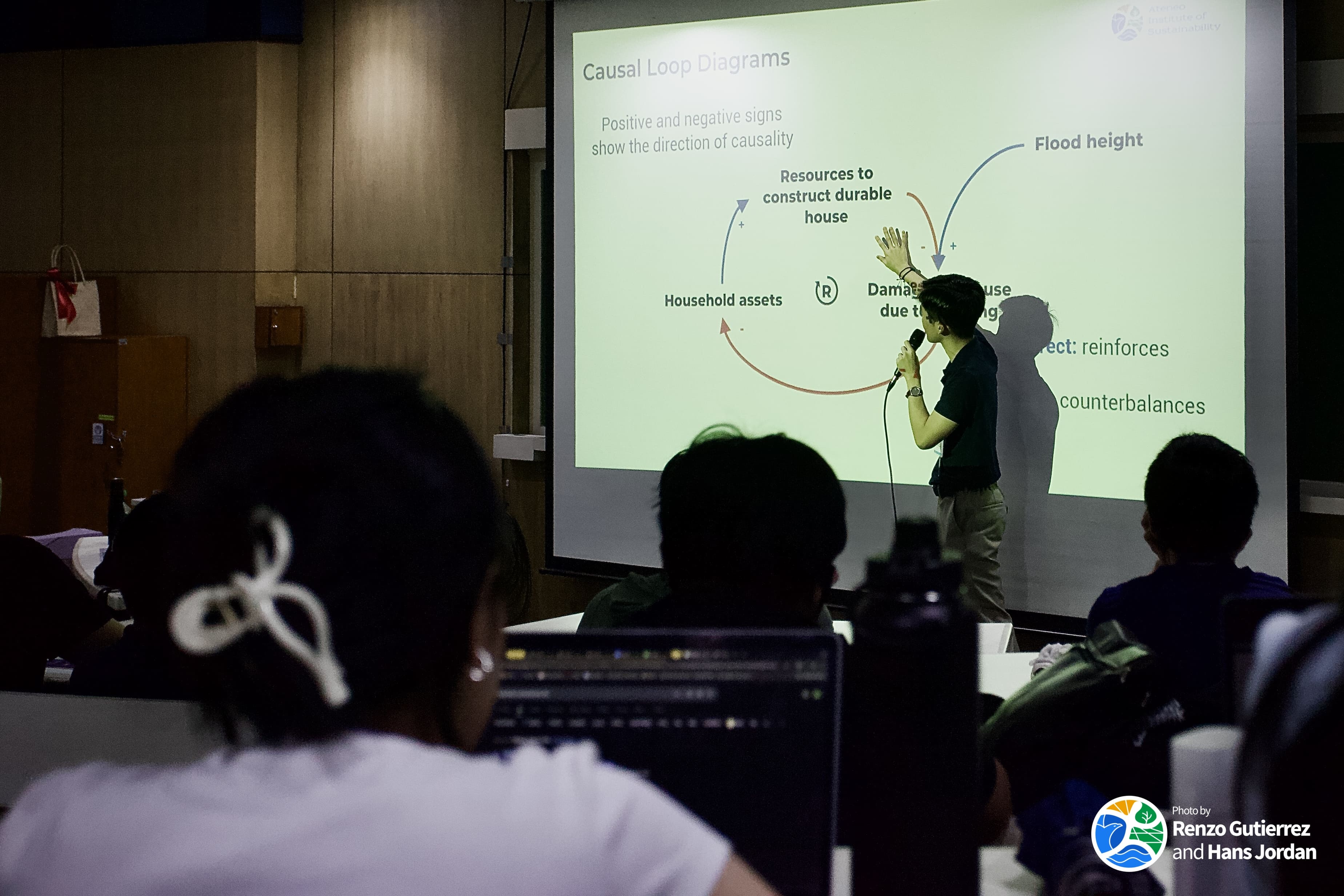
Participants used both digital and analog methods for the workshop, and were given the space to evaluate, ideate, and propose creative solutions to intra-campus mobility. Some groups expanded the range of their focus as well, considering mobility as a larger problem, and viewing the different units of the University as a complex system.
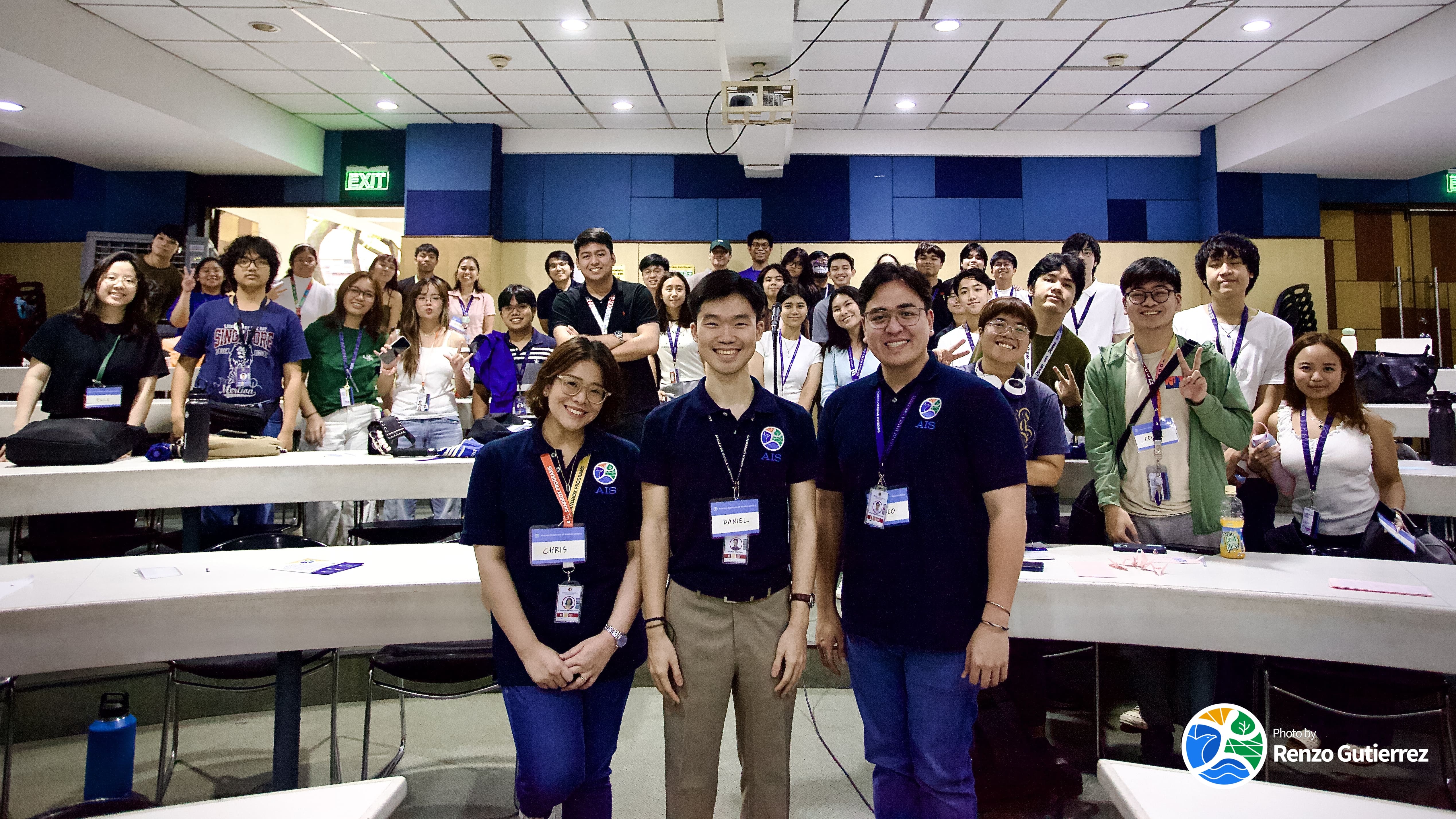
This workshop was one example of system thinking workshops geared towards different issues. AIS has previously organized such sessions for resilience planning, business resilience, and even on theatre production and management. Through this session, AIS also hopes to continue deepening its processes of dialogue with University stakeholders, gathering insights on issues of resilience and sustainability. It follows in the footsteps of similarly-held sessions in the past, where AIS creates avenues for participatory research, fostering inclusivity in the shared journey towards sustainability.
Recent News
You may also like these articles
Protecting Creativity: AIPO and Rizal Library Host Copyright Awareness Session for the Ateneo Community
On March 18, 2026, the Ateneo Intellectual Property Office (AIPO), in collaboration with the Rizal Library, successfully conducted a Copyright Awareness Session held on the
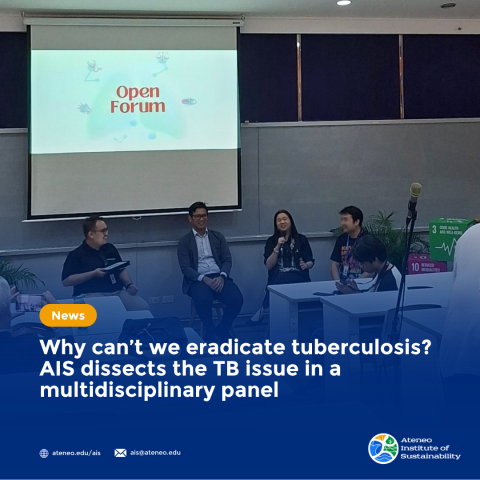
Why can’t we eradicate tuberculosis? AIS dissects the TB issue in a multidisciplinary panel
On 24 March 2026, the Ateneo Institute of Sustainability (AIS), through its Sustainable Development Goals (SDGs) Program, hosted a multidisciplinary panel in observance of World
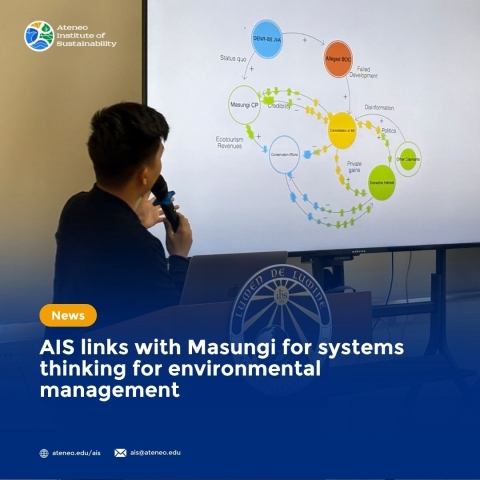
AIS links with Masungi for systems thinking for environmental management
Last 23-24 March 2026, the Ateneo Institute of Sustainability (AIS) , which manages the My Climate Risk – Ateneo de Manila University Regional Hub
Contingency Measures in Higher Education in the Face of a Worldwide Energy Crisis (HE Memo#Y4.16)
In response to the energy crisis caused by escalating tensions in West Asia, Ateneo Higher Education will implement the following class and operational adjustments.
Basic Education Class Schedules March – June 2026 (OVPBE memo)
In alignment with DepEd Memorandum No. 018, s. 2026, and our own commitment to Cura Personalis, we are refining our operations for the remainder of the school year to ensure that we finish strong, safe, and sustainable.
URH residency application for Intersession SY 2026-2027 now open
Hey, Blue Eagles! Big news — URH INTERSESSION RESIDENCY SY 2026-2027 is NOW OPEN! Apply now to live where the vibes are unmatched! What’s in