Demystifying disasters: AIS partners with ROTC for disaster literacy training
04 Dec 2025 | By Daniel C Ratilla




On 15 and 22 November, consecutive Saturdays, the Climate and Disaster Resilience (CDR) Program of the Ateneo Institute of Sustainability (AIS) conducted an annual training for the Reserve Officers' Training Corps (ROTC) basic cadets. This training is part of a long-standing partnership between AIS and the Ateneo NSTP-ROTC, under the Integrated Ateneo Formation (InAF) Programs, which began when the curriculum was revisited in 2015 to include disaster literacy.
AIS’ annual lectures are grounded on four learning outcomes. These are for the basic cadets to be able to: (1) discuss basic concepts of disaster literacy, (2) map their surroundings, (3) describe potential risk, and (4) to learn appropriate actions for different emergency situations. The lecture, led by CDR Program Head Mr Daniel C Ratilla, began with an overview of the determinants of disaster risk, which are hazard, exposure, vulnerability, and capacity. The concepts of multi-hazards, disaster risk reduction, and resilience were also covered throughout the lecture.
The mutually-reinforcing relationship of resilience and sustainability was also discussed: systems such as universities that are more sustainable are better able to withstand external shocks, while systems that are more resilient are better able to develop sustainably. This is a relationship that is also recognized in the 2024 revision of the Campus Emergency Management Plan. This opening lecture ended with the affirmation that as disasters happen in the world humans make for them, there is no such thing as a natural disaster.
A mapping activity followed, which tested basic cadets’ environmental awareness, or knowledge and familiarity with the campus. They were challenged to name as many buildings, fields, roads, gates, and other infrastructure in the Higher Education complex as possible, while also identifying which direction is north. They were also tasked with identifying potential safety zones, and places to avoid during emergencies.
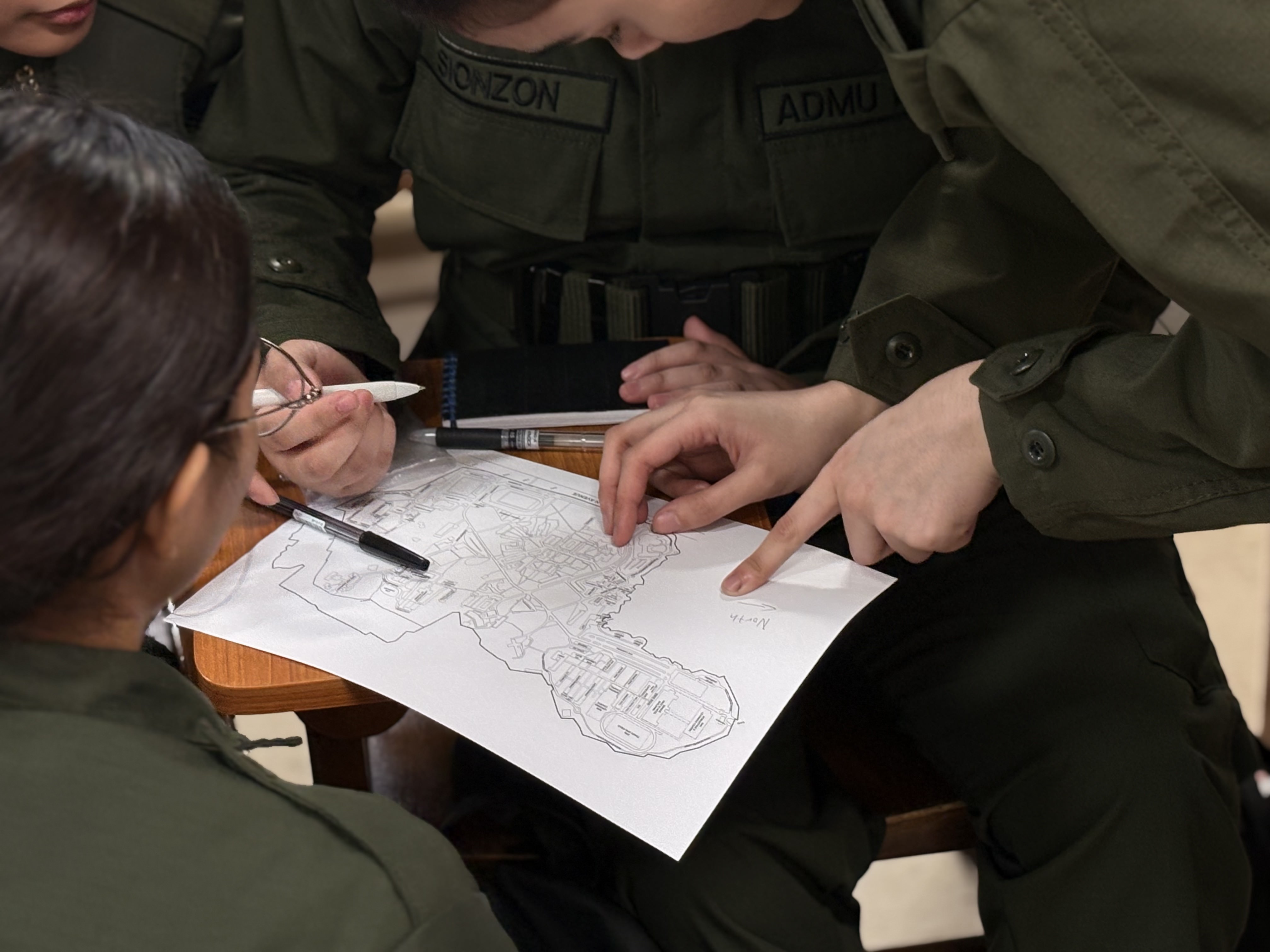
The basic cadets were then divided into two groups: one would stay behind as the classroom cohort, going over protocols for different emergency situations and learning about hazard assessment tools, while the other, the field cohort, would accompany the AIS team. The classroom cohort learned about responses during situations such as earthquakes, fires, and medical emergencies, and also learned about assessment tools such as HazardHunterPH, Project NOAH, and GeoAnalyticsPH.
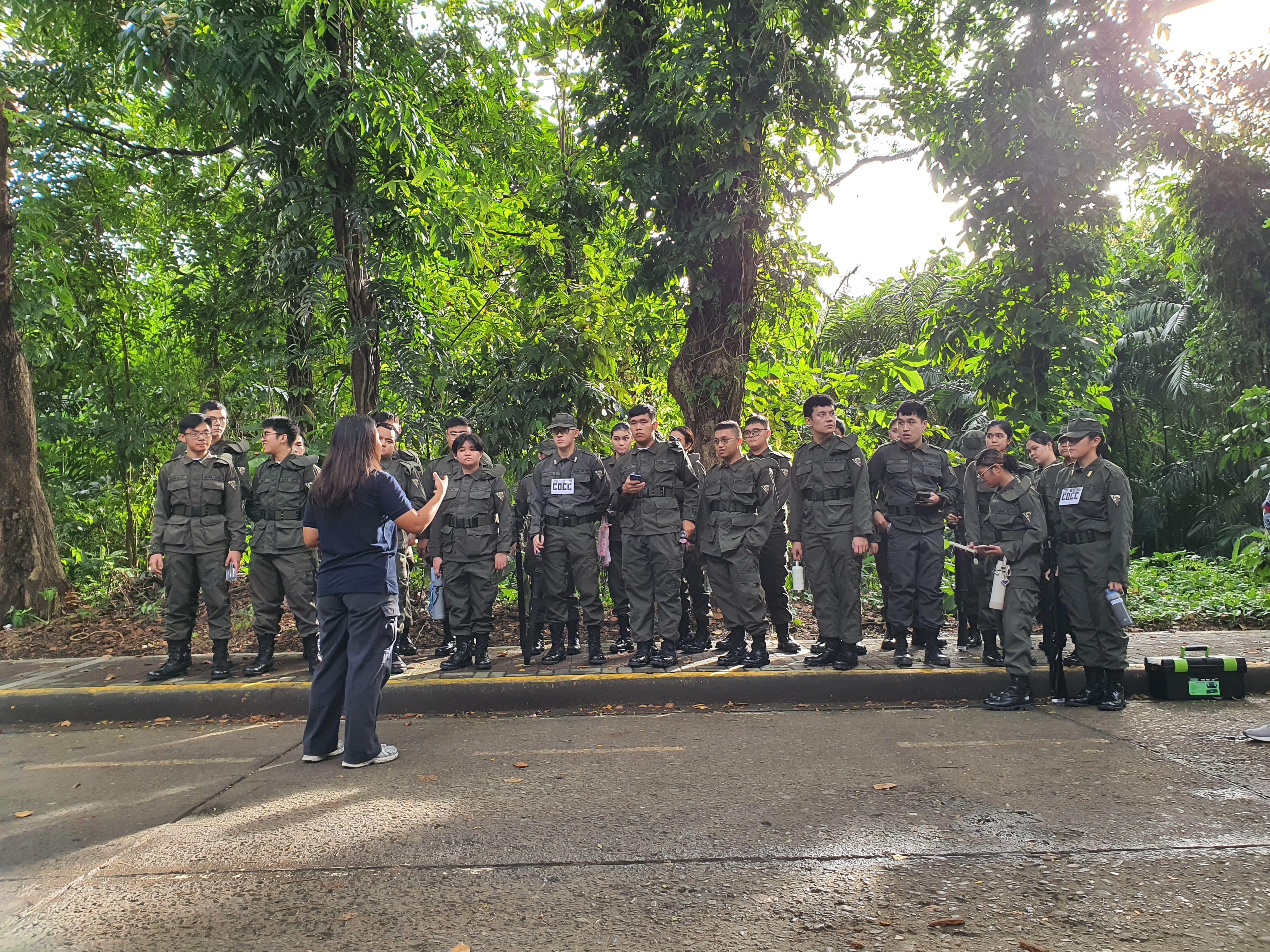
The field cohort was led by the AIS team, who were assisted by Ms Judel Lozada, Research Specialist for Disaster Literacy, and AIS-CDR interns Ms Dhea Nicole Amante, Mr Lyzter John Deuda, and Mr Patrick Reyes-Santos. This cohort was led down Seminary Road, where they used the mobile application FaultFinder to locate the nearest point to the West Valley Fault. After identifying this, the cohort was led further down Seminary Road to the Loyola School of Theology, overlooking Marikina City and Rizal Province beyond, where they were then tasked with conducting a risk assessment of the area in groups. They were then led to one of the container vans on campus; it was explained to them that these function as emergency stockpiles in times of emergency when the community must shelter in the University, such as an earthquake. Finally, they were led to one of the open fields on campus, which serve as Emergency Assembly Areas (EAAs). The field cohort rejoined the classroom cohort for an orientation on the Campus Emergency Management Plan, which was discussed by CDR Program Officer Ms Ivy Geraldine Ferrer. The discussion covered the frameworks and guidelines for a coordinated response to different levels of emergencies in the University, its leadership structure, including the Local Unit Emergency Response Team (LUERT) and Building Emergency Assistance Team (BEAT), and release of announcements for emergency preparedness drills.
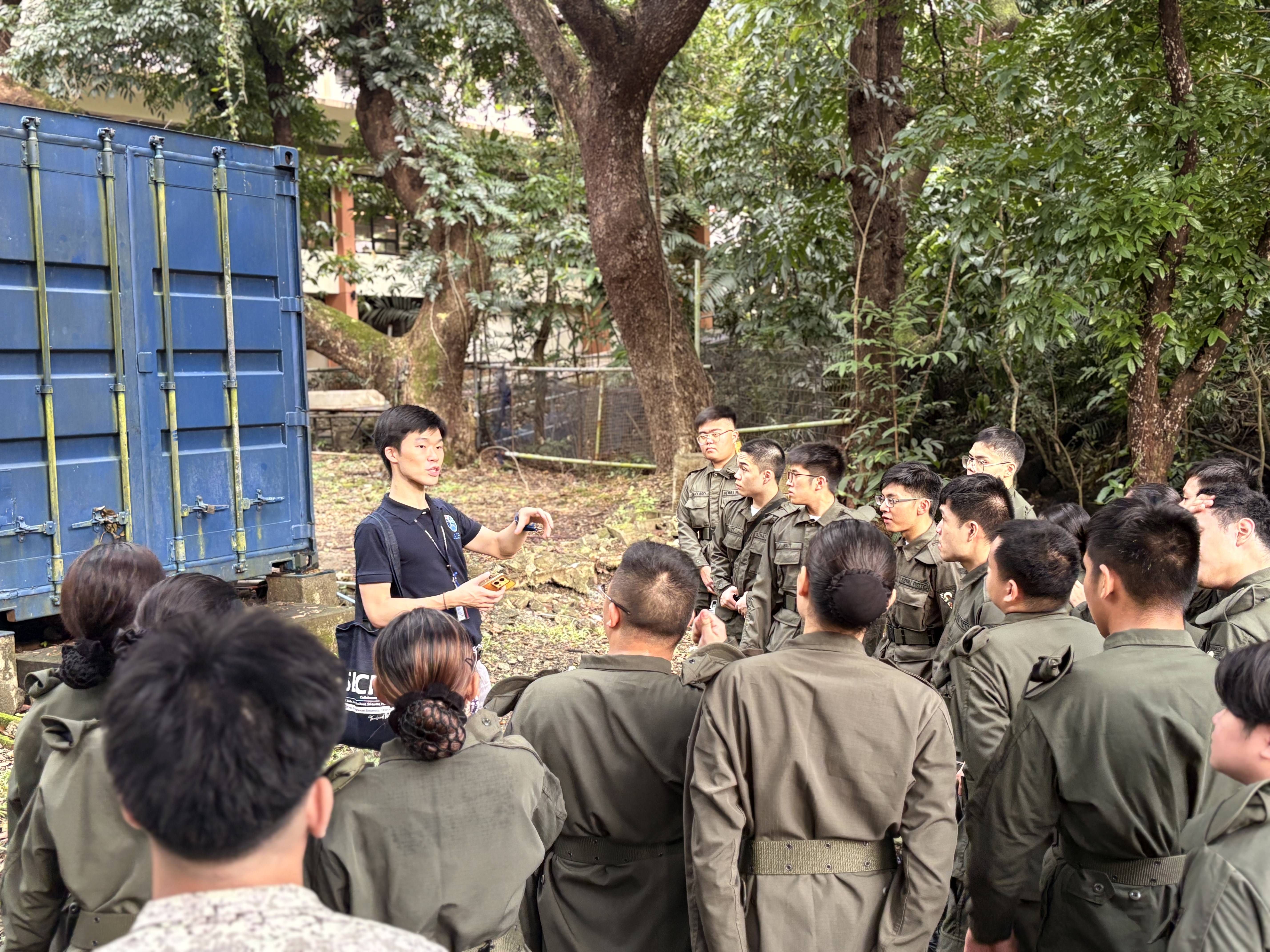
The following Saturday, the two cohorts were switched, to enable all basic cadets to experience the same activities and lectures. It ended with a synthesis of the different protocols and learnings gained during the two sessions.
Recent News
You may also like these articles
Protecting Creativity: AIPO and Rizal Library Host Copyright Awareness Session for the Ateneo Community
On March 18, 2026, the Ateneo Intellectual Property Office (AIPO), in collaboration with the Rizal Library, successfully conducted a Copyright Awareness Session held on the
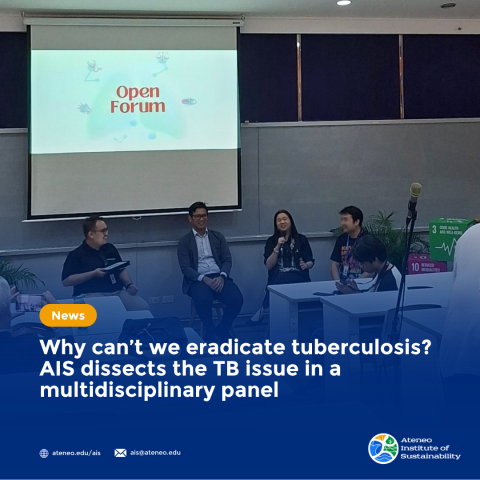
Why can’t we eradicate tuberculosis? AIS dissects the TB issue in a multidisciplinary panel
On 24 March 2026, the Ateneo Institute of Sustainability (AIS), through its Sustainable Development Goals (SDGs) Program, hosted a multidisciplinary panel in observance of World
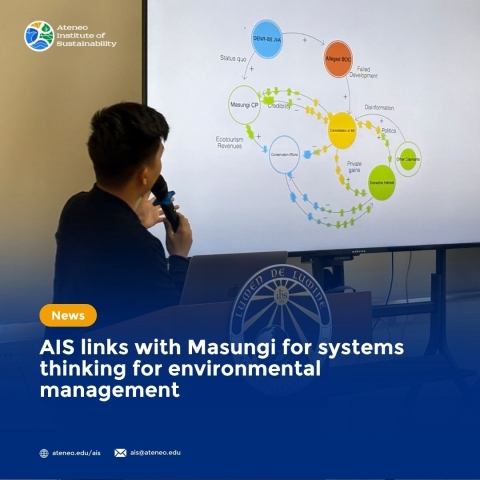
AIS links with Masungi for systems thinking for environmental management
Last 23-24 March 2026, the Ateneo Institute of Sustainability (AIS) , which manages the My Climate Risk – Ateneo de Manila University Regional Hub
Contingency Measures in Higher Education in the Face of a Worldwide Energy Crisis (HE Memo#Y4.16)
In response to the energy crisis caused by escalating tensions in West Asia, Ateneo Higher Education will implement the following class and operational adjustments.
Basic Education Class Schedules March – June 2026 (OVPBE memo)
In alignment with DepEd Memorandum No. 018, s. 2026, and our own commitment to Cura Personalis, we are refining our operations for the remainder of the school year to ensure that we finish strong, safe, and sustainable.
URH residency application for Intersession SY 2026-2027 now open
Hey, Blue Eagles! Big news — URH INTERSESSION RESIDENCY SY 2026-2027 is NOW OPEN! Apply now to live where the vibes are unmatched! What’s in