Baring the ‘Silent Violence’ of Philippine jails
12 Feb 2026 | Danika Geronimo, RCWI Research Communications




Conversations about Philippine jail congestion often begin and end with statistics: thousands of case backlogs, cells built for 50 crammed with 200 bodies, and facilities straining at 300 to 400 percent beyond capacity. Yet these numbers barely capture the everyday human cost of overcrowding.
What does punishment feel like when confinement overwhelms the senses?
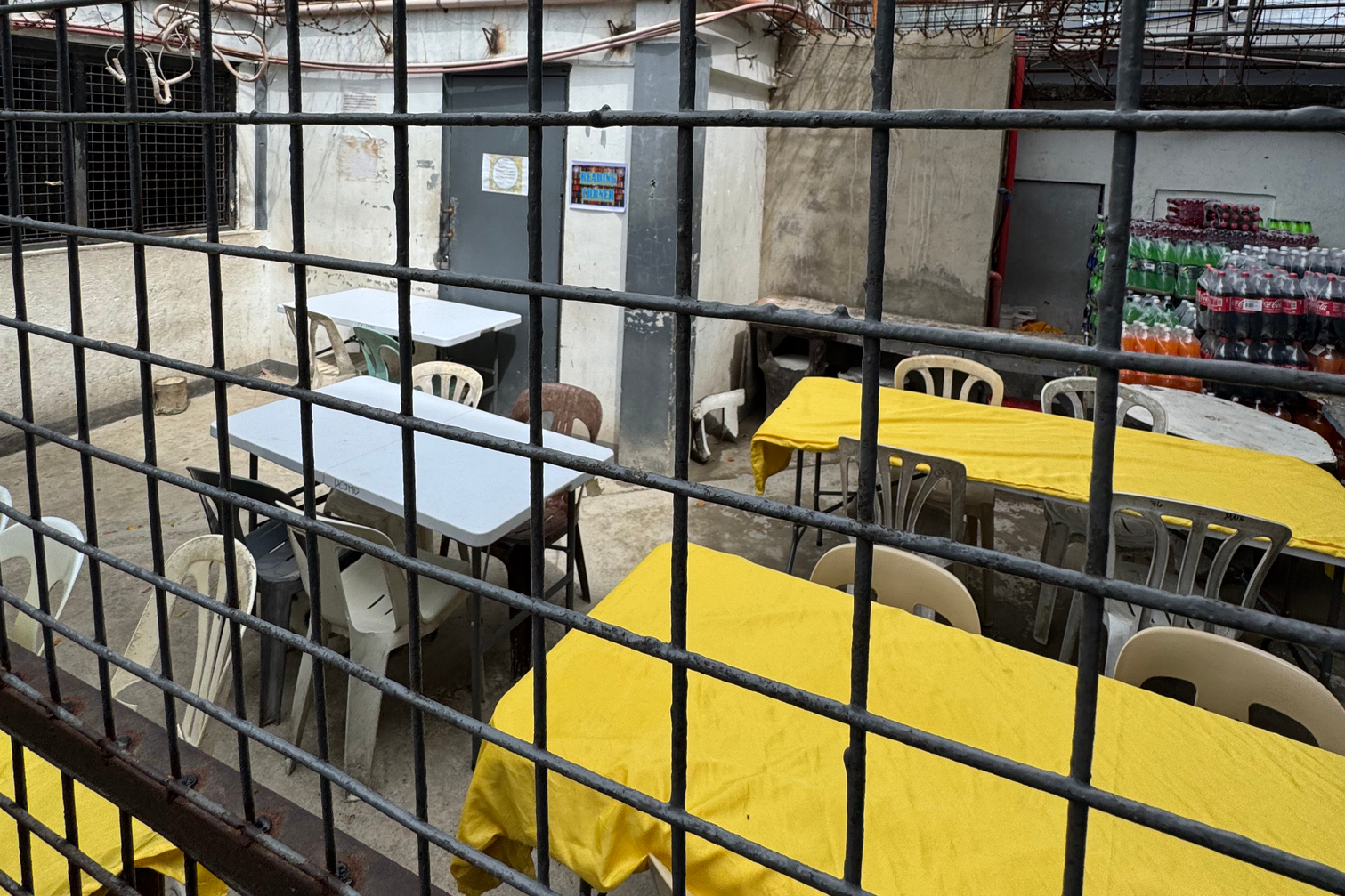
New research at Ateneo de Manila University shifts attention from numbers to lived experience, examining how carceral punishment in Philippine jails extends far beyond legal sentences by permeating every bodily sense.
Dwayne Antojado is no stranger to these conditions, having served time himself in Australia for insurance fraud. His lived understanding of imprisonment shapes his engagement with persons deprived of liberty (PDLs) in Davao and Zamboanga City Jails.
He found that confinement inflicts overlapping sensory overload—sight, sound, touch, and smell—creating a persistent, invisible form of shackles that Antojado calls “silent violence.”
Oppressive prison air
Nowhere is this more apparent than in the prison air itself. Poor ventilation and tropical humidity trap the stench of bodily fluids, ineffective cleaning chemicals, sweat-soaked clothes, sourness of leftover foods, and the pervasive reek of shared toilets. Odors cling to everything, lingering even in visitors’ memories. Physical sensation also offers no relief. Overcrowded cells radiate heat, with wall-mounted fans merely circulating warm and foul air.
The sounds and visuals of confinement compound this sensory burden. Punctuated by constant hums: sporadic shouts, clanging gates, whirring fans, blaring televisions, and synchronized greetings to officials, make quiet nearly impossible. Meanwhile, the eyes encounter compression everywhere. Often repurposed from schools or offices, jails reflect an architecturally crushing fullness of makeshift adaptations: plywood and cardboard wedged between bunks, forming fragile sleeping tiers, clotheslines hang from bars, shelves jam the walls, and belongings fill every gap. Yet amid this press for survival, murals, religious icons, family photos, and slogans accent the spaces, asserting dignity, resistance, and ownership within confinement.
Frustration with elite impunity
Antojado acknowledges that, within public discourse, harsh jail conditions are perceived to be a legitimate part of the Philippine penal system. However, public reactions to high-profile detentions—such as calls that former Senator Bong Revilla should receive “no special treatment”—reflect frustration with elite impunity and unequal justice, not just a desire for suffering. Antojado shows that calls for harshness usually stem from resentment and distrust in institutions, rather than a true belief in degrading punishment.
“The insistence that he should ‘feel it’ functions as a moral argument about anti-impunity and equality before the law, not simply as retributive sentiment,” he said.
Rather than moralizing or relativizing harm, the research anchors its ethics in Philippine constitutional commitments against cruel, degrading, or inhuman punishment, alongside international standards. The central question is not who deserves to suffer, but on the effects of overcrowding and sensory deprivation on people and justice.
Addressing the full spectrum of harm
Recognizing this dynamic, Antojado calls for sensorially attuned penal reform to acknowledge the full spectrum of carceral harm. He asks what forms of justice genuinely reduce harm, uphold equality, and address the structural roots of crime.
“By foregrounding smell, heat, sound, touch, and the micropolitics of space, this work offers an evidentiary bridge between rights-based obligations and daily experience. It invites policymakers, practitioners, and the public to attend to the sensory infrastructures of confinement where human flourishing is either quietly sustained or steadily eroded, and to craft reforms that answer to those embodied realities now,” he adds.
Dwayne Antojado published “Embodied Overcrowding and Sensory Tensions: A Carceral Autoethnography of Philippine Jails” in International Journal of Law, Crime and Justice in December 2025.
SOURCE: https://archium.ateneo.edu/asog-pubs/318/
For interview requests and other inquiries, please email media.research@ateneo.edu. Visit archium.ateneo.edu for more information about our latest research and innovations.
Recent News
You may also like these articles

Bending toward justice: A forum on the ICC, the Duterte Case, and victim participation
Following the successful conclusion of the third installment of the On the Sounding Board Series, entitled Bending Toward Justice: A Forum on the ICC, the

Bending Toward Justice: ALS Forum Examines the ICC, the Duterte Case, and Victim Participation
The Ateneo Law School, through the Fr. Joaquin G. Bernas, SJ Institute for Continuing Legal Education, in partnership with the Ateneo Human Rights Center, held
Protecting Creativity: AIPO and Rizal Library Host Copyright Awareness Session for the Ateneo Community
On March 18, 2026, the Ateneo Intellectual Property Office (AIPO), in collaboration with the Rizal Library, successfully conducted a Copyright Awareness Session held on the

Ateneo Law School joins international effort to strengthen graduate legal education through EU-Funded CALSADA Project
The Ateneo Law School (ALS) is part of a global consortium under the Erasmus+ programme through the CALSADA R.S.D. Project —a collaborative initiative that seeks

Bending toward justice: A forum on the ICC, the Duterte Case, and victim participation
The Fr Joaquin G Bernas SJ Institute for Continuing Legal Education introduces the first half of its panel for the third installment of its On

Bending toward justice: A forum on the ICC, the Duterte case, and victim participation
Amid growing public attention to proceedings before the International Criminal Court involving former President Rodrigo Duterte, questions of accountability, due process, and victim participation have