Pedagogy before technology: Digital transformation for social impact
04 Sep 2025 | Jyro B Triviño



I recently had the privilege of attending Digital Universities Asia 2025, co-hosted by Times Higher Education and Lingnan University in the vibrant city of Hong Kong. Held on 8 to 9 July 2025, this conference convened an impressive delegation of leaders from higher education and industry to examine the profound social impact of digital transformation. The event focused on the humanistic aspects of technology, moving beyond mere technicalities to foster a robust knowledge-exchange network designed to benefit academic institutions.
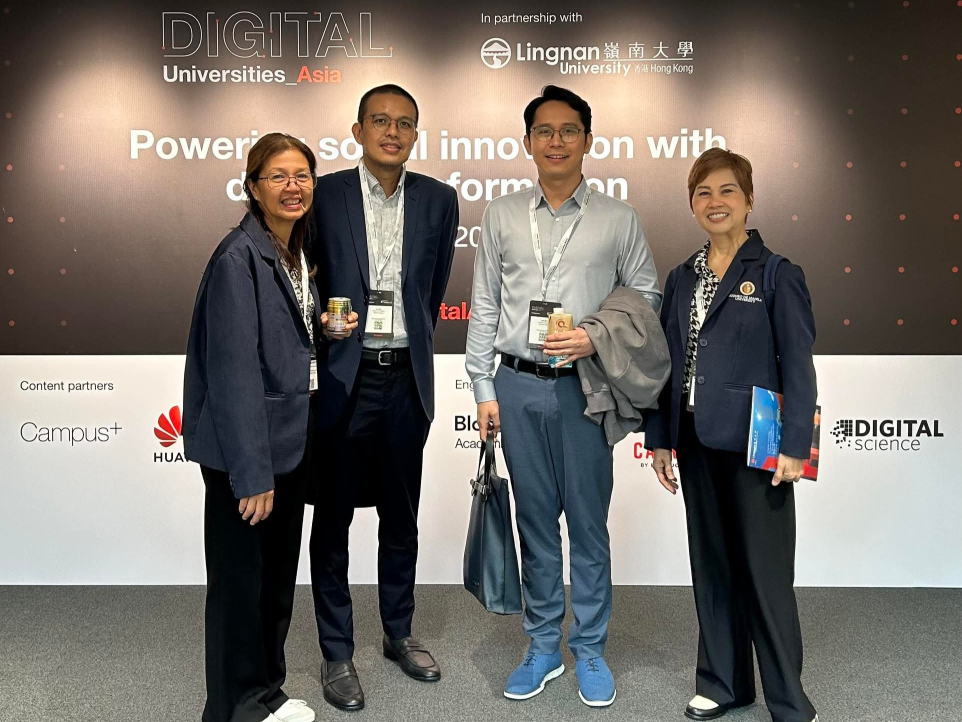
Participants engaged actively by attending insightful keynotes that set the intellectual tone, participating in dynamic interactive panel discussions that sparked interesting concepts, and capitalizing on valuable networking opportunities that connected me with leaders from across the region. A significant portion of the sessions explored the evolution of traditional educational methods through the seamless integration of digital tools and innovative techniques. The discussions were not just theoretical, but they also explored practical applications.
The keynote of Ishan Kolhatkar from Inspera challenged educators to utilize technology to enhance and innovate assessments. He emphasized that a digital assessment platform can be used to digitize existing assessment practices, driving innovation and redesign of these practices. However, he reminded us that regardless of which approach you choose or where you start from, pedagogy comes before technology. It should be an enabler, not a determinant of how you assess.
Professor Jean-Michel Morel from the University of Hong Kong shared about artificial intelligence through the lens of imaging science. He highlighted that half of our brain’s cortex is dedicated to visual processing, and interestingly, the majority of the digital storage on the web is taken up by images. He explained why image processing and analysis have been a popular battleground for advances in artificial intelligence.
The panel session on harnessing AI for personalized learning during the first day was also interesting. Three academic leaders highlighted the need for personalized and adaptive learning, with the challenge of educators becoming more effective. AI-powered platforms are revolutionizing content creation, enabling institutions to scale customized learning without adding to workloads. The speakers discussed how AI avatars, gamification, storytelling tools, and digital twin technology can create immersive and interactive learning experiences that keep students engaged.
While the plenaries and panel discussions offered immense value, I had hoped for a different experience from the workshops. These sessions would be more hands-on, allowing participants to engage in practical exercises or collaborative activities actively. This kind of direct application would have been incredibly impactful, enabling participants to apply new concepts and techniques immediately. However, the workshops mirrored a smaller version of the keynote speeches, primarily consisting of a talk show format with speakers followed by a brief question-and-answer segment. While still informative, this format meant I mainly remained in a passive listening role. Integrating more practical and interactive elements would have significantly enhanced the conference experience with more tangible takeaways.
Technology can significantly enhance educational outcomes. As an educator, I need to focus on leveraging technology to create a truly engaging learning environment that fosters rich, collaborative learning experiences. However, a forward-thinking and crucial aspect of the conference was also raised: how technology can effectively support sustainability goals, serving as an accelerator rather than a hindrance to these critical efforts. By diversifying and modernizing campus infrastructure to support educational advancements, academic institutions can thrive and reap the benefits of these exciting transformations.
Recent News
You may also like these articles
Protecting Creativity: AIPO and Rizal Library Host Copyright Awareness Session for the Ateneo Community
On March 18, 2026, the Ateneo Intellectual Property Office (AIPO), in collaboration with the Rizal Library, successfully conducted a Copyright Awareness Session held on the
Why can’t we eradicate tuberculosis? AIS dissects the TB issue in a multidisciplinary panel
On 24 March 2026, the Ateneo Institute of Sustainability (AIS), through its Sustainable Development Goals (SDGs) Program, hosted a multidisciplinary panel in observance of World
AIS links with Masungi for systems thinking for environmental management
Last 23-24 March 2026, the Ateneo Institute of Sustainability (AIS) , which manages the My Climate Risk – Ateneo de Manila University Regional Hub
Contingency Measures in Higher Education in the Face of a Worldwide Energy Crisis (HE Memo#Y4.16)
In response to the energy crisis caused by escalating tensions in West Asia, Ateneo Higher Education will implement the following class and operational adjustments.
Basic Education Class Schedules March – June 2026 (OVPBE memo)
In alignment with DepEd Memorandum No. 018, s. 2026, and our own commitment to Cura Personalis, we are refining our operations for the remainder of the school year to ensure that we finish strong, safe, and sustainable.
URH residency application for Intersession SY 2026-2027 now open
Hey, Blue Eagles! Big news — URH INTERSESSION RESIDENCY SY 2026-2027 is NOW OPEN! Apply now to live where the vibes are unmatched! What’s in