Applied technology in BS Information Technology Entrepreneurship, John Gokongwei School of Management
01 Dec 2025







A look at student projects from ITMGT 45 The Digital Economy
Students of the BS Information Technology Entrepreneurship (ITE) program at the John Gokongwei School of Management recently completed their culminating projects for ITMGT 45 The Digital Economy. The course, taught by Jose Ramon Ilagan and Isabela Gabrielle Palarca, introduces students to applied technology through hands-on problem solving. ITMGT 45 originally covered business and technology foundations for early-stage startup thinking, but for this cycle, the focus shifted toward applied technology and building simple, functional tools that address real issues.
Although the projects were developed within a short period, they show the students’ growing skills in product thinking, user understanding, and collaborative work. This year’s outputs cover themes such as scheduling tools, receipt extraction, civic reporting platforms, artificial intelligence applications, and computer vision systems.
These projects are not yet intended as startup concepts; rather, they serve as early technical exercises completed before students take their formal programming classes. The aim is to help them become comfortable with applied technology and simple prototyping before progressing to more advanced work in the program.
SchedSmart
Monica Ng and Paolo Velilla
SchedSmart is a web application that helps students create and visualize their weekly class schedules. The tool manages a list of available classes, checks for conflicts, and updates the calendar view as students select sections. It is designed for Ateneo students who want a clearer way to plan their semester schedules.
The application opens directly to the main page, where all core features are available. Students input their planned courses for the next semester, after which the system searches its database and displays the available sections for each course. Once a section is selected, the calendar updates and fills in the corresponding timeslot. Conflicting classes cannot be added unless the existing entry is removed.
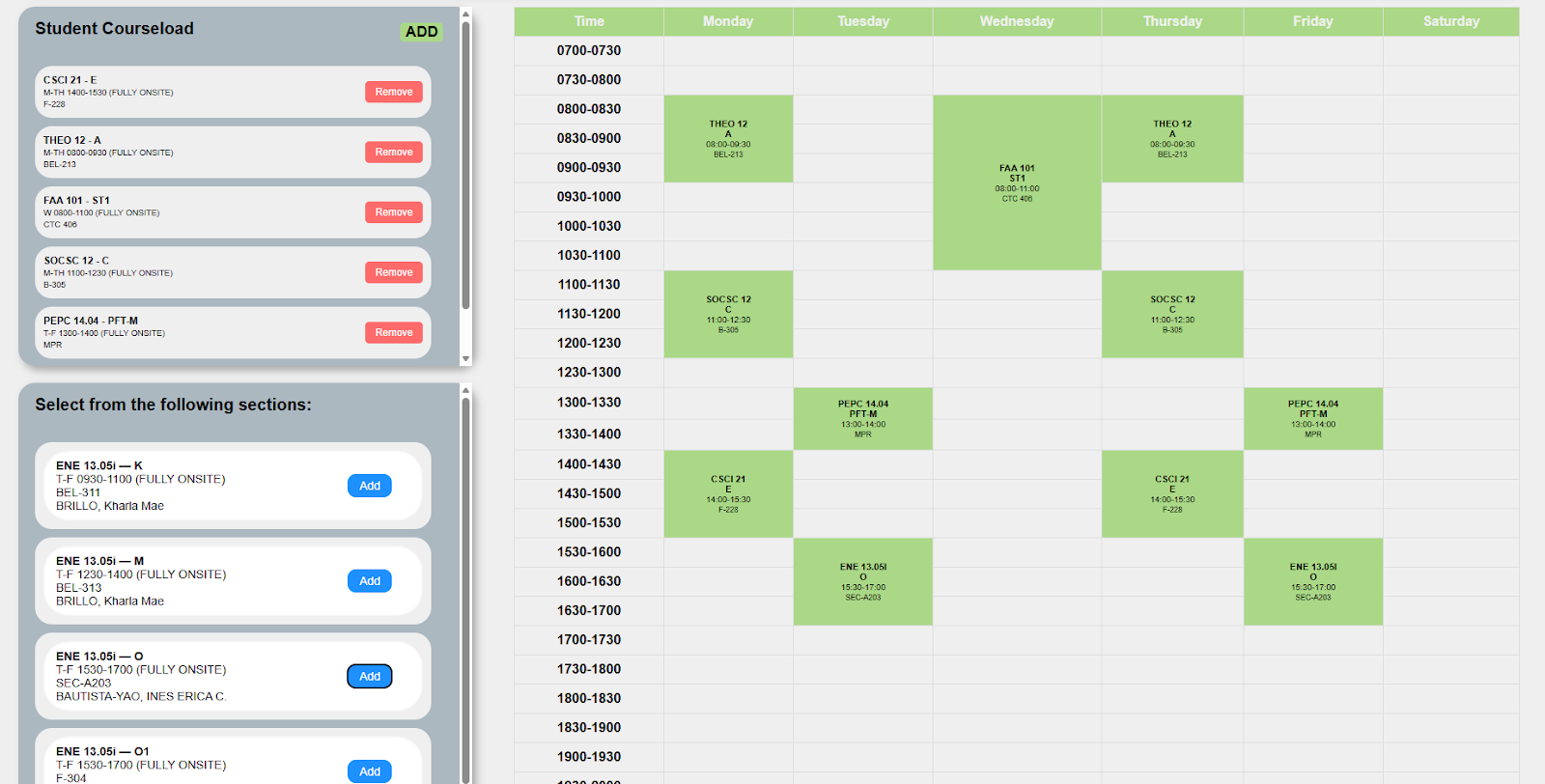
Through the project, the team gained experience in both technical development and user-focused design. They learned how to manage a course database, dynamically update a calendar interface, and build a tool intended to be straightforward for students to use. They also identified areas for improvement, such as expanding the course dataset and refining the conflict-checking system. Future plans include improving responsiveness and making the interface more polished to better support student needs.
Technologies used
Python and JavaScript
Flask framework
HatiKo
Angeline Stephanie Tan, Ashley Denise Yu, Franzelle Joyce Yulangco
HatiKo is a receipt-scanning website that extracts item names and prices from uploaded images and includes a bill-splitting feature. Users can upload several receipts, merge the results, and compute individual shares. Each session generates a link that others can access to view the uploaded receipts and calculate their own totals. The project reduces manual encoding and keeps the entire process on one page.
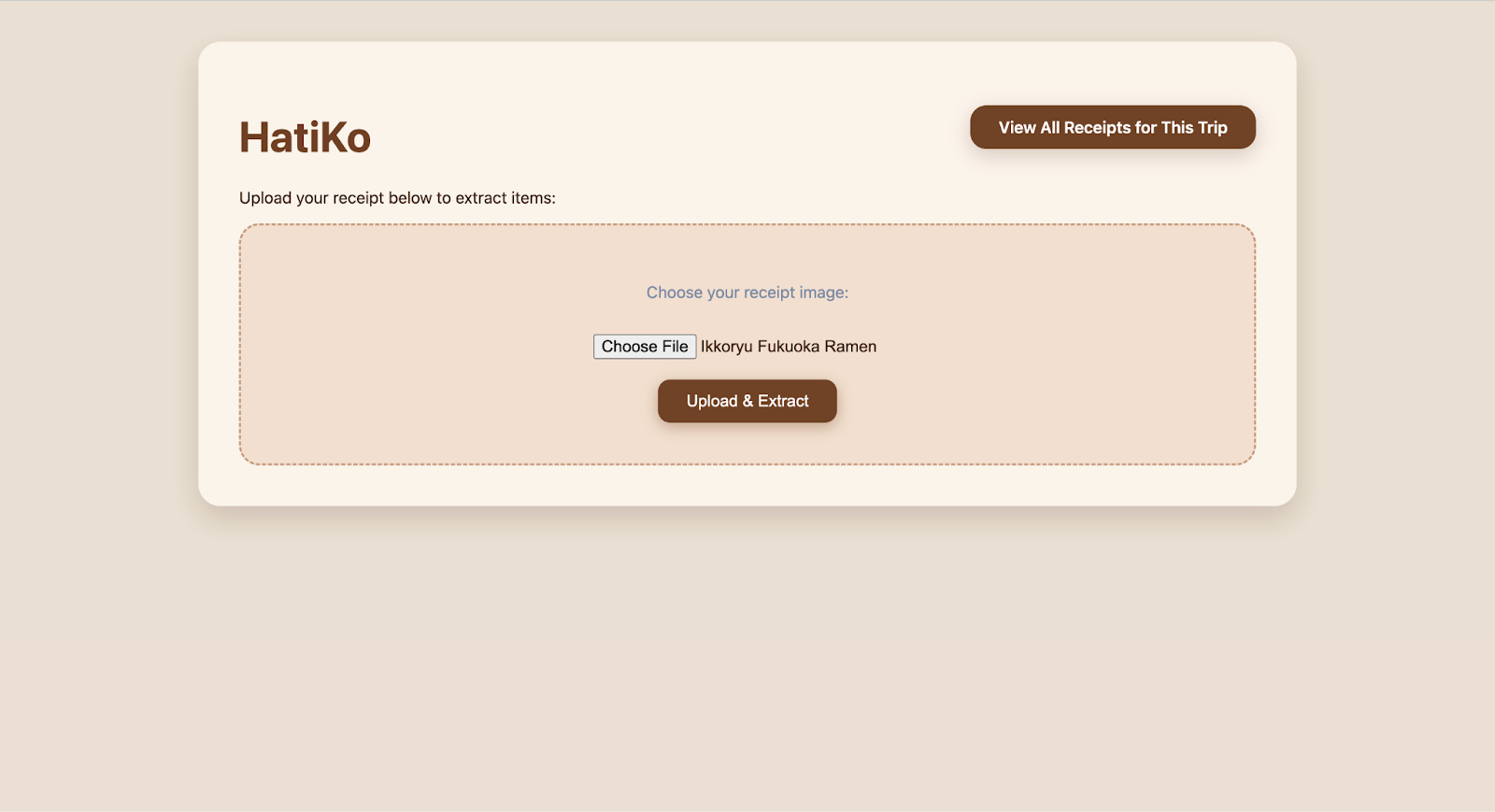
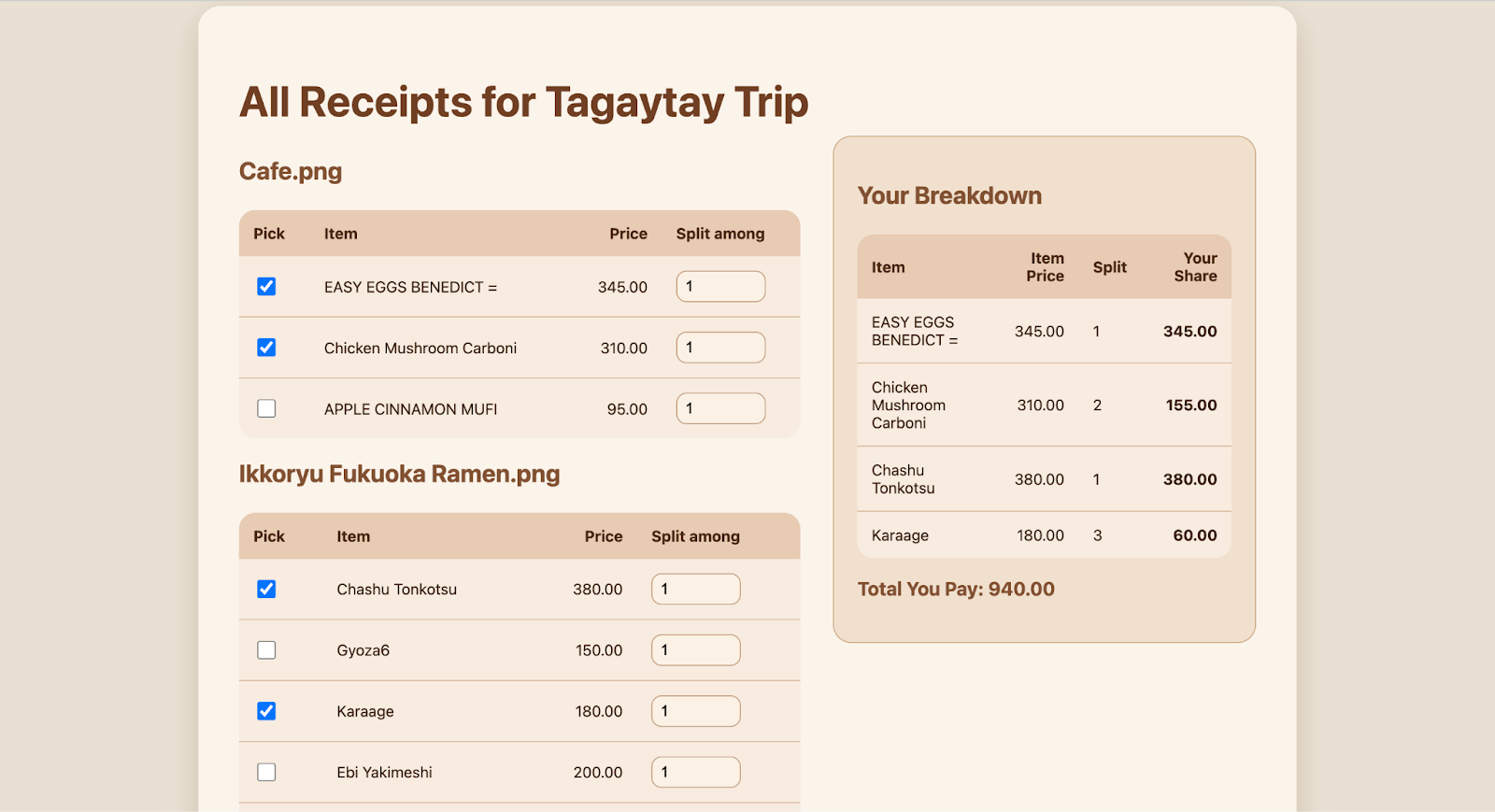
The team shared that the project involved considerable trial and error and required them to learn tools they had not encountered before, including Roboflow for YOLO training and Tesseract OCR. Working with these technologies pushed them to understand how AI-based systems work. They noted that the experience strengthened their teamwork and perseverance, and that completing the project showed them what they could build with patience and a steady pace.
Technologies used
Roboflow (YOLO training, best.pt model)
Tesseract OCR (text extraction from cropped receipt sections)
ZeroGhost
Karelle Martinez, Christine Cruz, Joaquin Viquiera, Isabella Espino
ZeroGhost is a web-based reporting tool that allows citizens to document suspected DPWH ghost projects. Users upload a photo, indicate the location, choose a project status, and add an optional description. Once reviewed and approved, reports are posted on the ZeroGhost Facebook page for public viewing. The project demonstrates how a simple reporting workflow can support transparency through crowdsourced data.
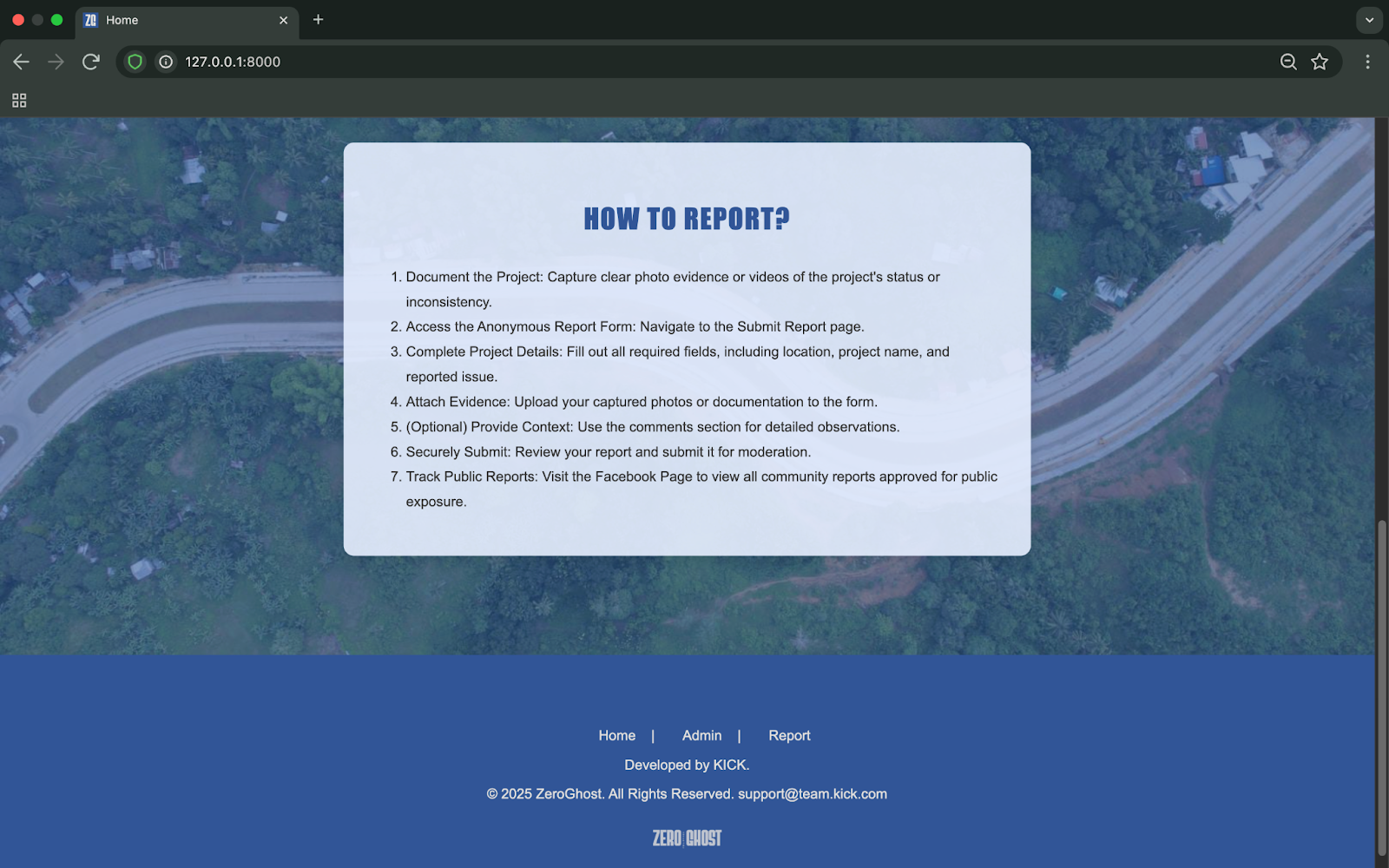
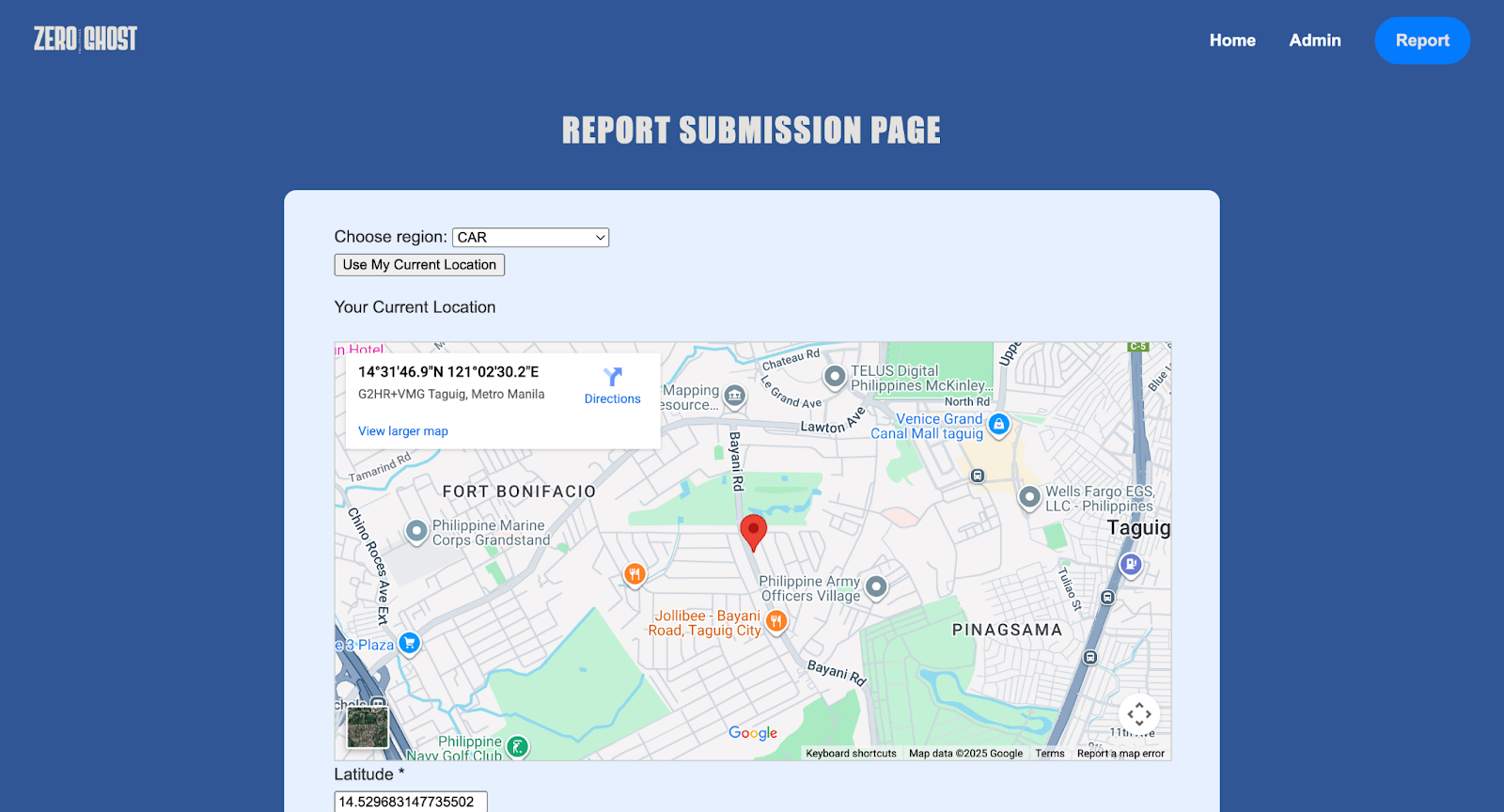
The system consists of several key pages. The main dashboard outlines the platform’s purpose and provides reporting instructions. The submission page focuses on evidence capture and location tagging, with a region selector, an option to use the user’s current location, fields for status selection, image upload, and an optional description. An admin page allows moderators to filter, review, and update reports before posting them publicly.
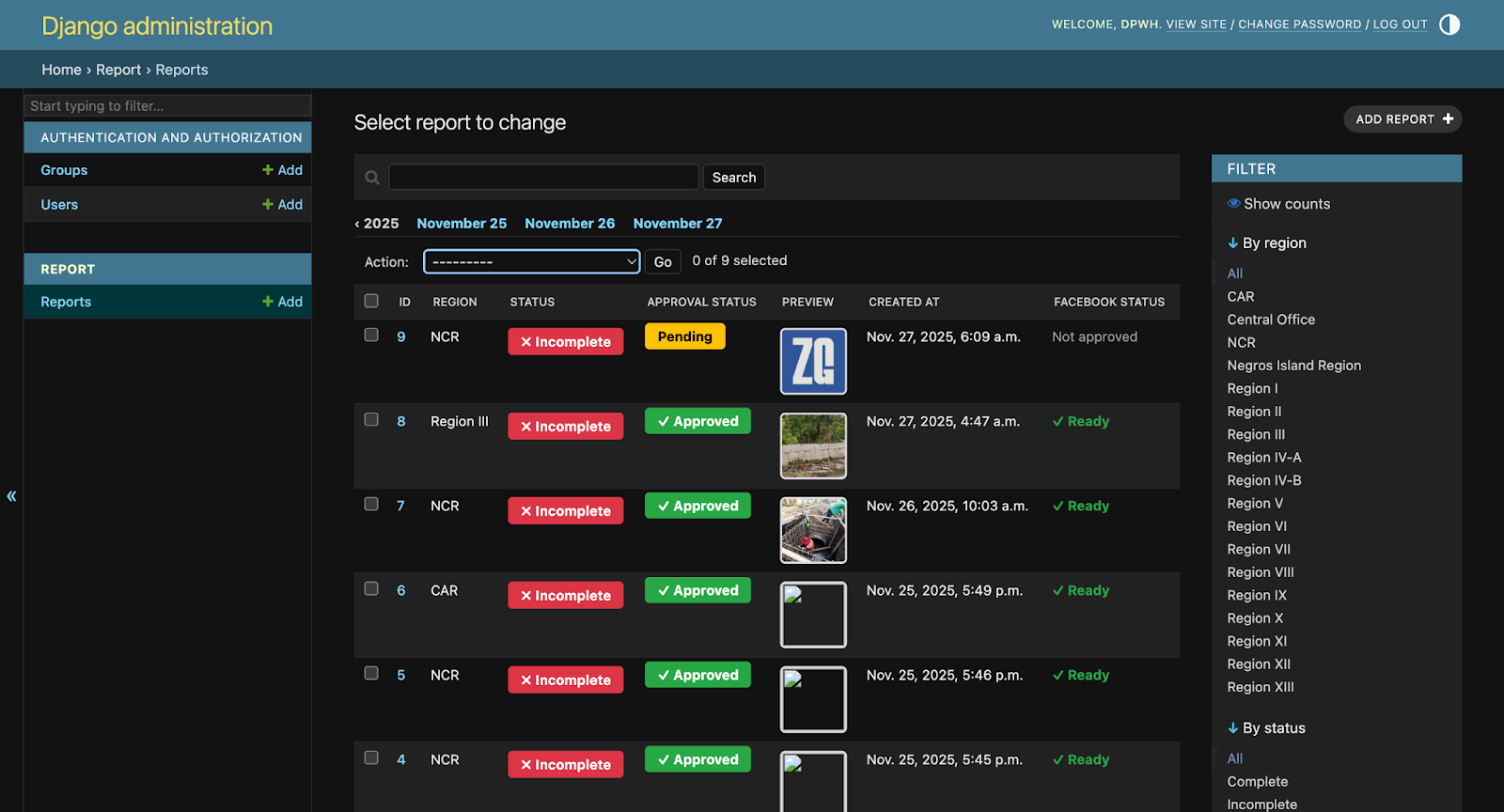
The team shared that the experience emphasized the importance of planning and structure when working with AI-assisted development. They found that AI-generated code required significant debugging and integration because it lacked architectural context. Technical issues such as server configuration and dependency management also slowed progress. These challenges highlighted the need for clear workflows and coordination. Beyond the technical work, the group expressed a strong motivation to respond to the current political climate and contribute to civic accountability through a tool built for public transparency.
Technologies used
Django
HTML, CSS, JavaScript
Python
SQL
Meta (for Facebook page integration)
Optiq
Daniel Hans, Kevin Lee, Kenzi Lam, Ralph Santos
Optiq Retail Analytics processes live or recorded video to detect shoppers and estimate their age and gender. The system converts these detections into foot traffic insights displayed in a dashboard with charts and filters. Users can view detection patterns over time and across demographic groups, offering an experience similar to having analytics for a physical establishment.
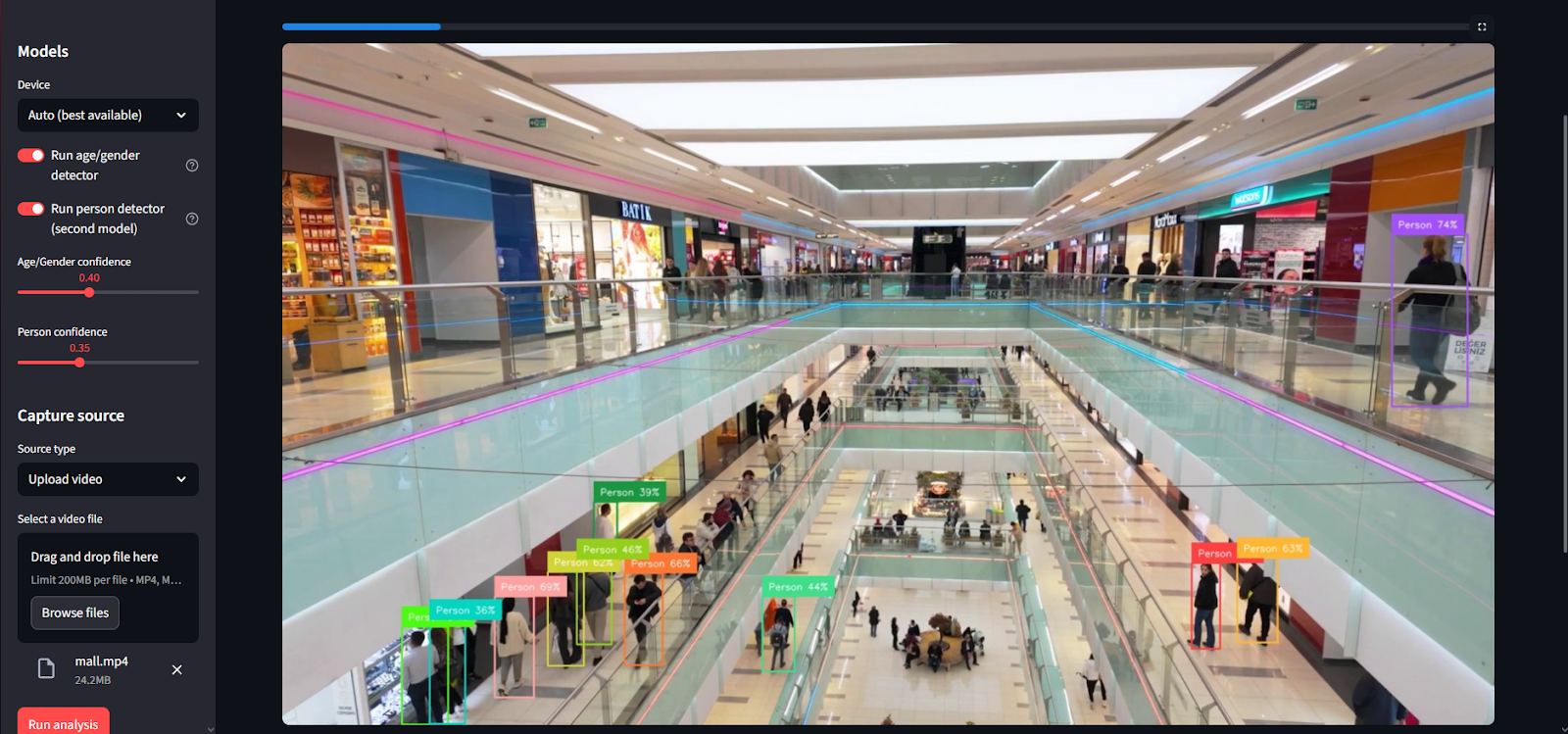
The web application supports several use cases. Users can configure the sidebar for a specific scenario, upload a video, and run the analysis to view detections in real time. Scenarios include simple foot traffic monitoring in malls or gathering demographic data from passersby in public areas, with age and gender estimates depending on distance and visibility. The system logs all detections in an SQLite database, and users may download the logs as a CSV file. Filters allow users to adjust the dashboard to view foot traffic trends and demographic distributions.
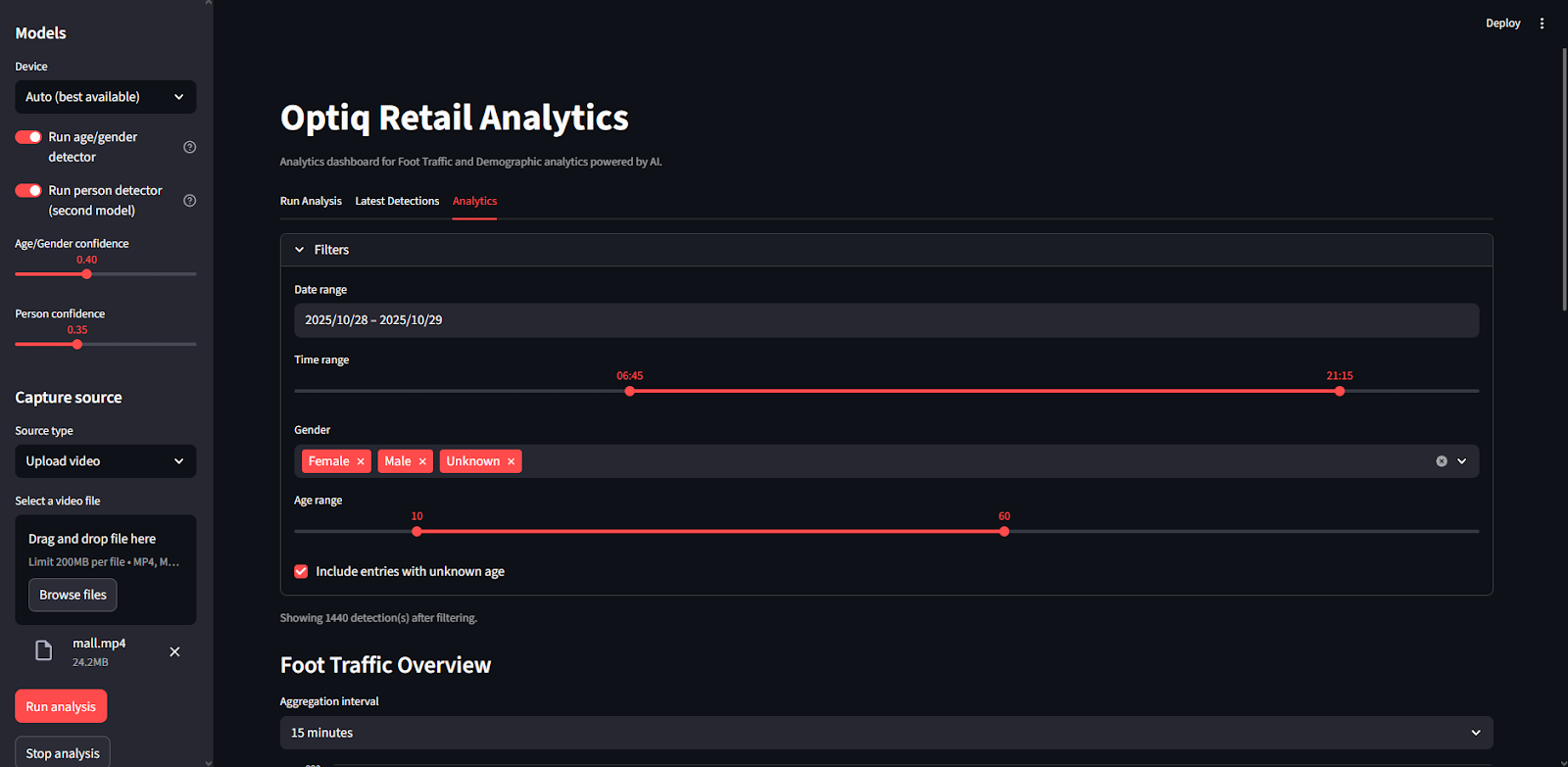
The team shared that the project required learning new libraries and workflows, including building and training a YOLO model using a custom Roboflow dataset. They noted that the work was demanding but meaningful because it aligned with a startup concept they had pitched earlier. The project gave them a sense of how their idea might evolve into a real product, and they are interested in continuing development.
Technologies used
Python (core logic and data processing)
Streamlit (dashboard and application framework)
YOLO – Ultralytics (object and demographic detection)
Roboflow (dataset management and model training)
OpenCV (video ingestion and frame processing)
SQLite (local metadata storage)
Pandas and Altair (data aggregation and visualization)
Supervision (detection filtering and annotation)
NightShift
Gabriel Angelo Anyog, Alcedrei Bangcola, Psalter Placer
NightShift is a CCTV intelligence system that integrates YOLO with Meta’s SAM 3 into a single computer vision pipeline for surveillance, evidence retrieval, and automated monitoring. YOLO handles real-time object detection for entities such as people and vehicles. These detections feed into SAM 3, which performs prompt-based, high-resolution segmentation and persistent tracking, maintaining precision even in low-light or crowded scenes.
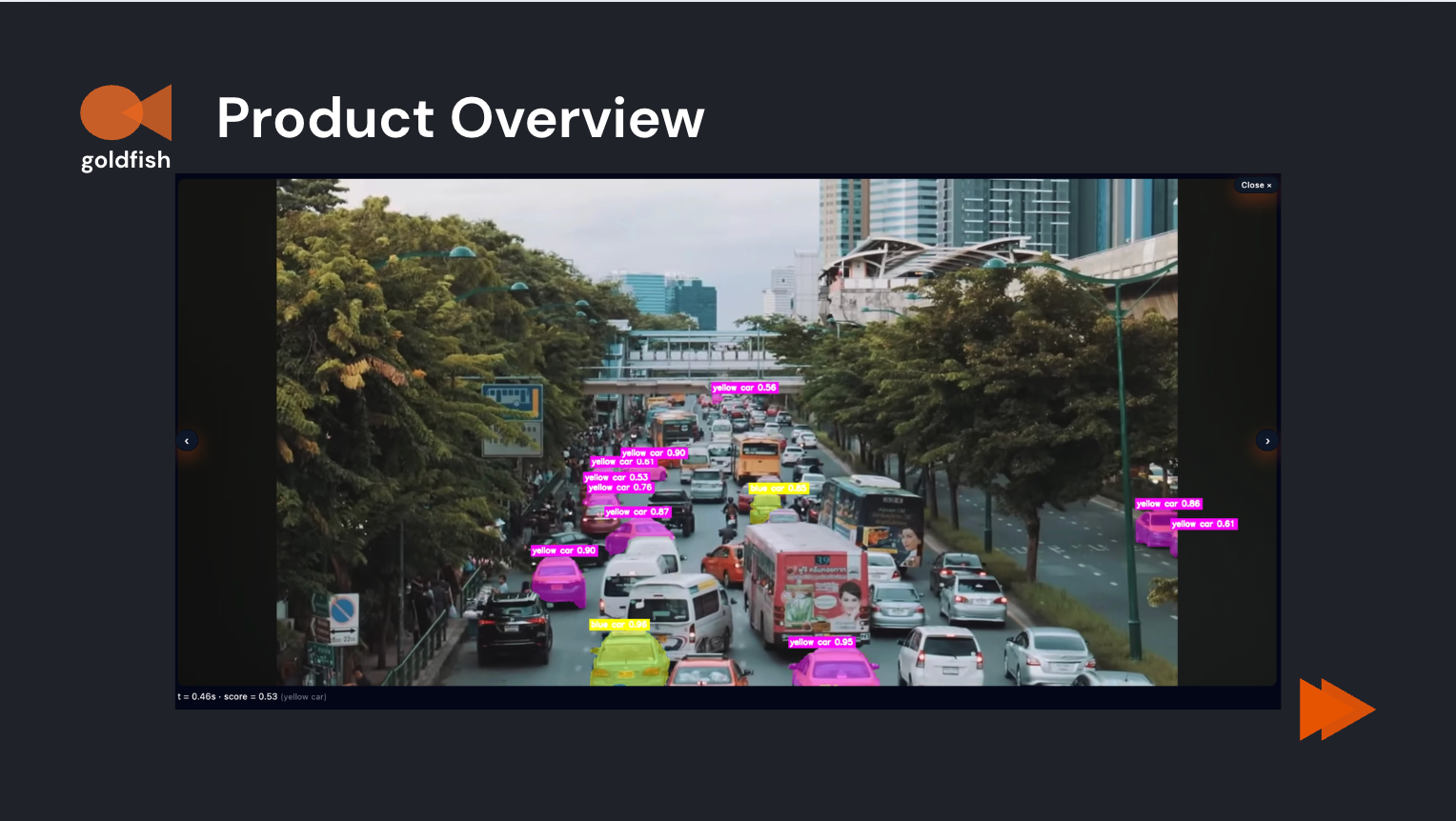
The project began from a late pivot rather than a detailed plan. One week before the deadline, the team set aside their original concept and decided to experiment with SAM 3 shortly after its release. They focused on a familiar problem in CCTV work: identifying relevant moments within long recordings. Within a short development sprint, they built an MVP that could detect objects and help retrieve key frames from hours of footage.
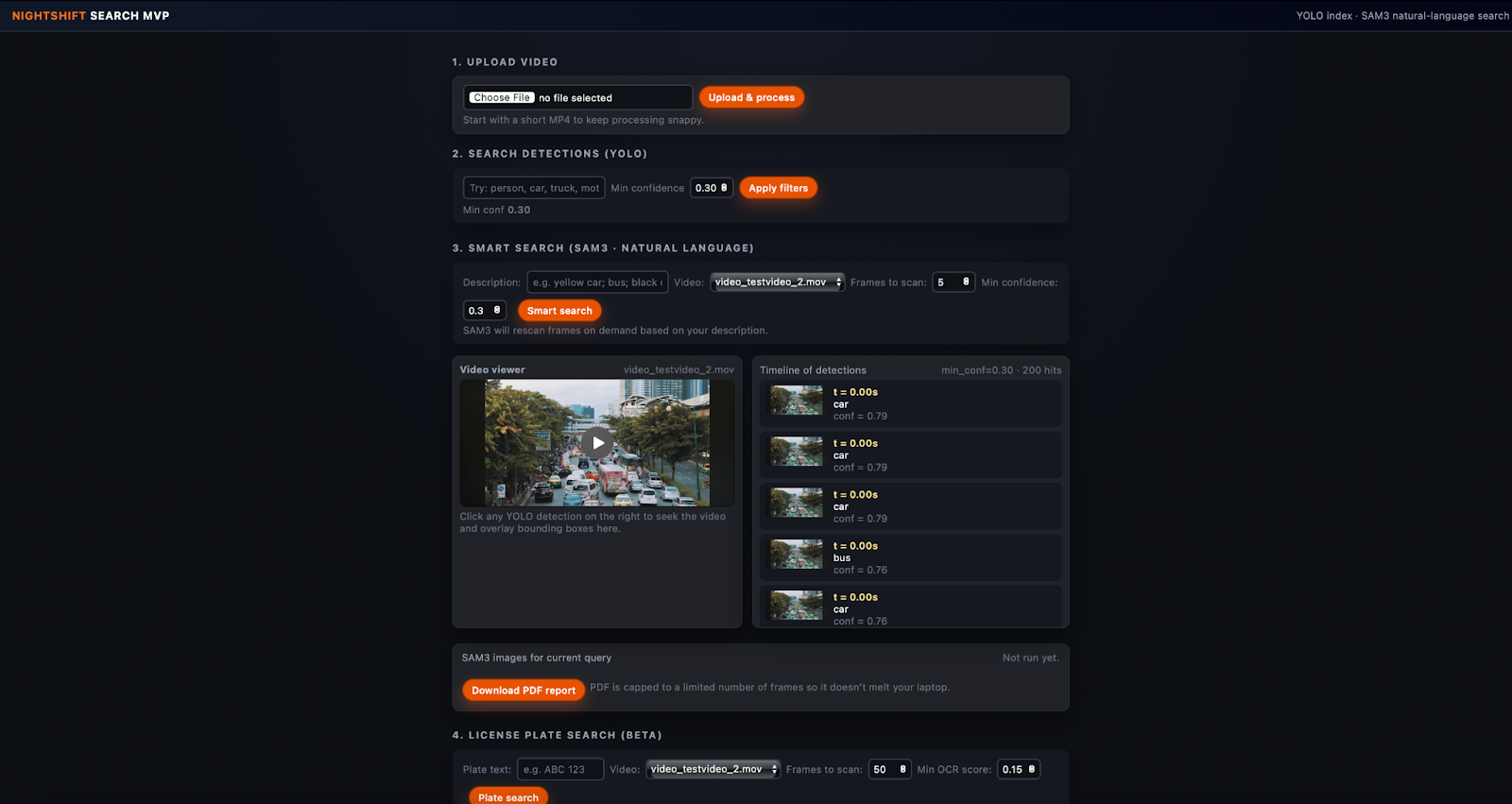
The idea continued to grow after their initial demo. The team kept improving NightShift by refining segmentation, enhancing searchability, and exploring new features such as license plate recognition. They noted that the project began out of urgency, but ongoing curiosity pushed them to keep building and exploring where the system could go.
Technologies used
YOLOv8
SAM 3
Heart.exe
Eduardo Zablan, Meredith Lo, Marco Valenton, Keng Wei Lin
Heart.exe is a short narrative-based dating simulator designed to help players practice conversational awareness, emotional intelligence, and healthier communication when interacting with someone they are interested in. Through branching dialogue and relationship-driven choices, the game encourages players to recognize respectful behavior, respond with care, and notice how tone and phrasing can shape trust and connection.
The project also draws attention to the risks of online interactions. Not everyone behaves as they present themselves, and the game’s routes highlight warning signs, privacy concerns, and the importance of caution when forming relationships on the internet. The aim is to combine social learning with storytelling and help players build confidence while keeping boundaries in mind.
The narrative follows a player who meets a character named Byte in an online game. Byte reacts strongly to the player’s choices, and the simulator presents outcomes that range from positive interactions to abrupt endings. The design shows how choices influence the conversation and how small differences in communication can lead to different paths.

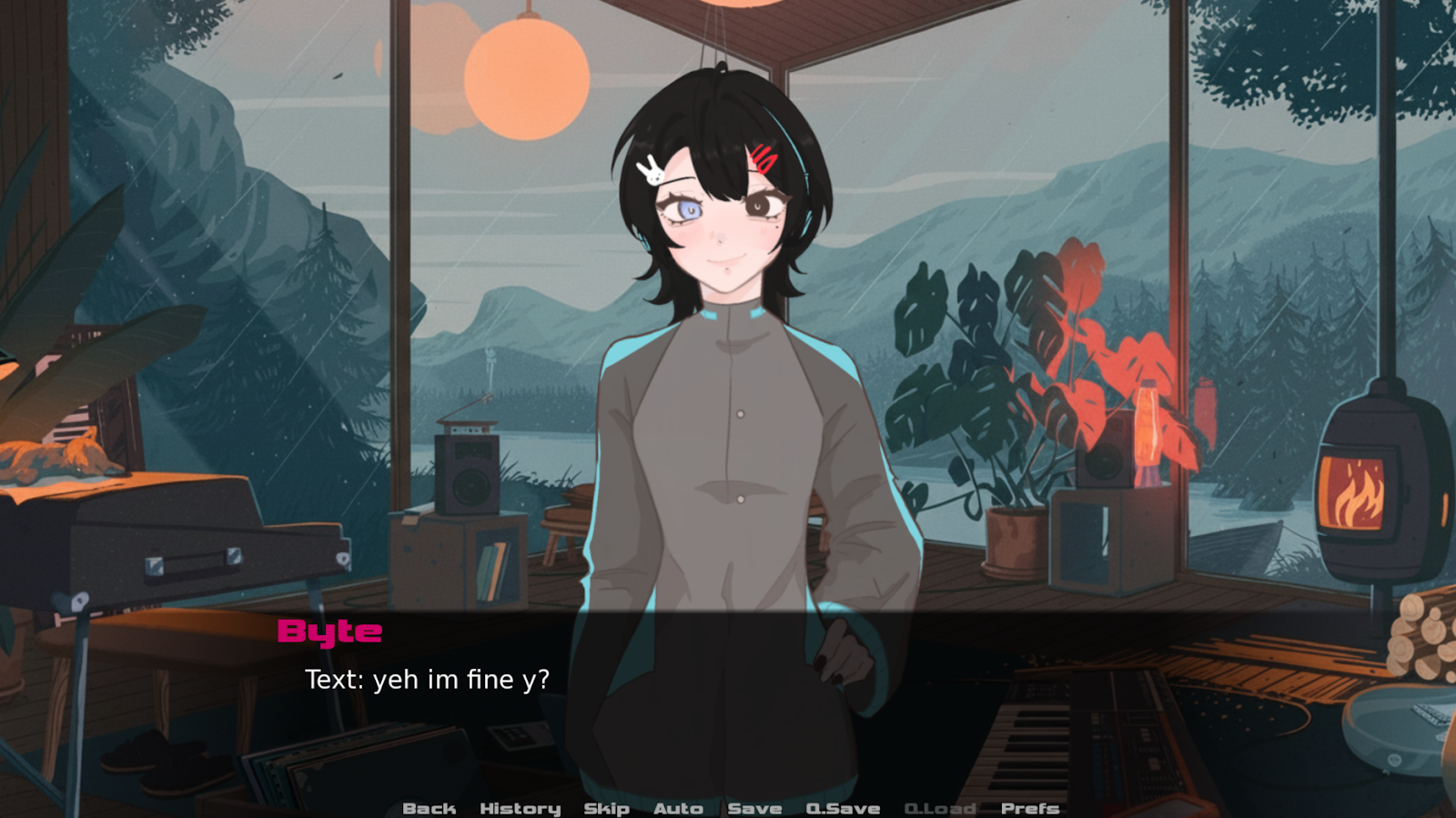
The team shared that building the game showed them the value of enjoyment and commitment in a project. They took a risk developing a dating simulator, unsure how it would be received, but the concept allowed them to explore ideas such as simulated system access and controlled in-game effects. They noted that the work required persistence, coordination, and careful planning, and that the lessons they gained extend beyond this project. The experience reminded them that progress often depends on taking the first step even when the direction is uncertain.
Technologies used
Made with Ren’Py 8.4.1
SnapTure
Alexa Cruz, Luis Mariano, Carina Tiangco
SnapTure is a full-stack photobooth web application that lets users take photos from their device and apply customizable templates within seconds. Built with Django, JavaScript, HTML/CSS, and SQLite, it offers a live photobooth interface where users can capture images, choose a layout, and download the final photostrip. Users can upload their photos privately, publicly, or to friends only. These uploads appear on the Explore page, where they can browse, like, and comment on shared photos. A Profile page stores each user’s full collection.
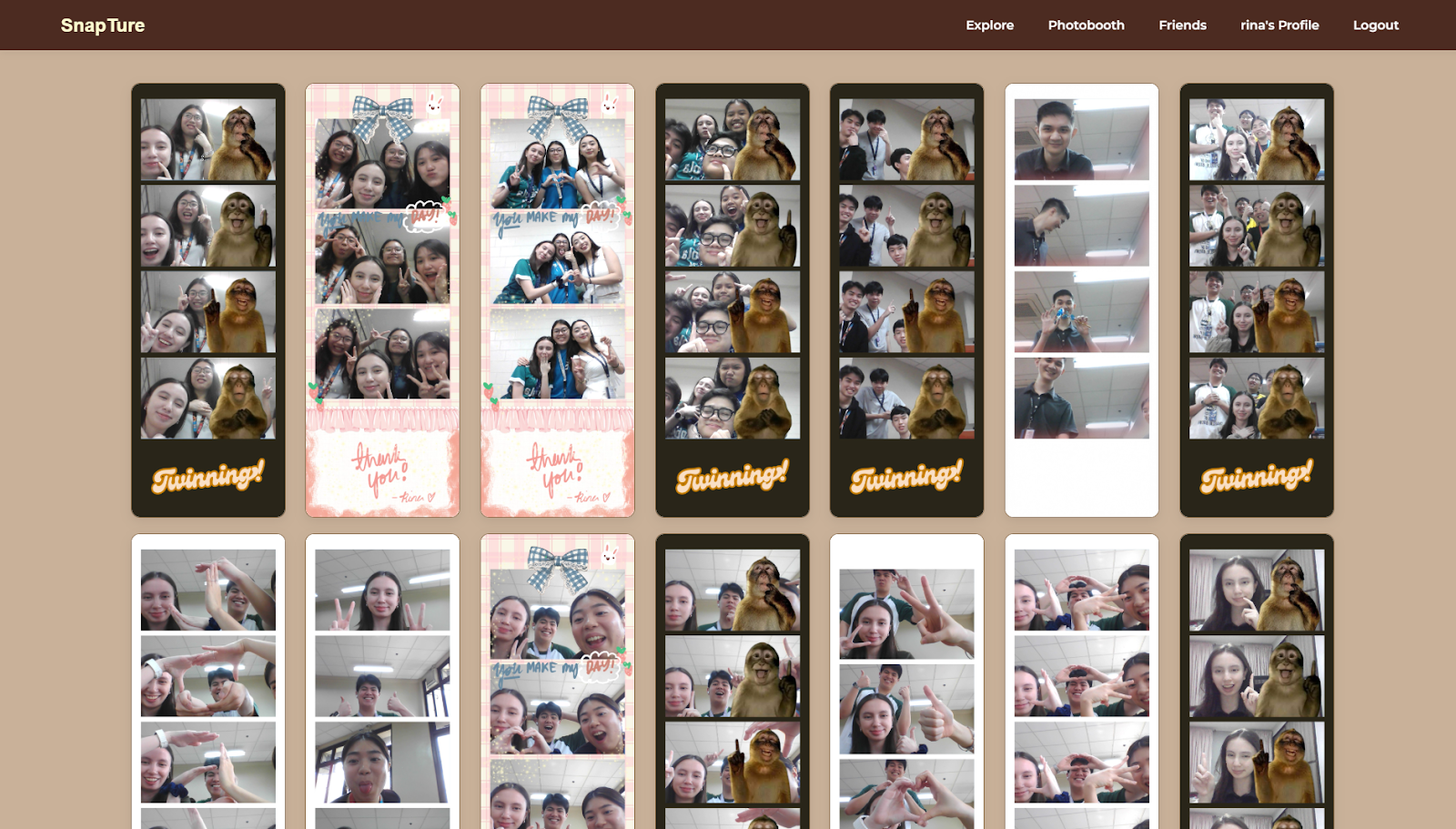
The interactive photobooth page is the core of the platform. It uses browser webcam capabilities, a countdown timer, and template-positioning logic that arranges each photo automatically into the chosen layout. This allows users to take multiple shots with minimal setup.
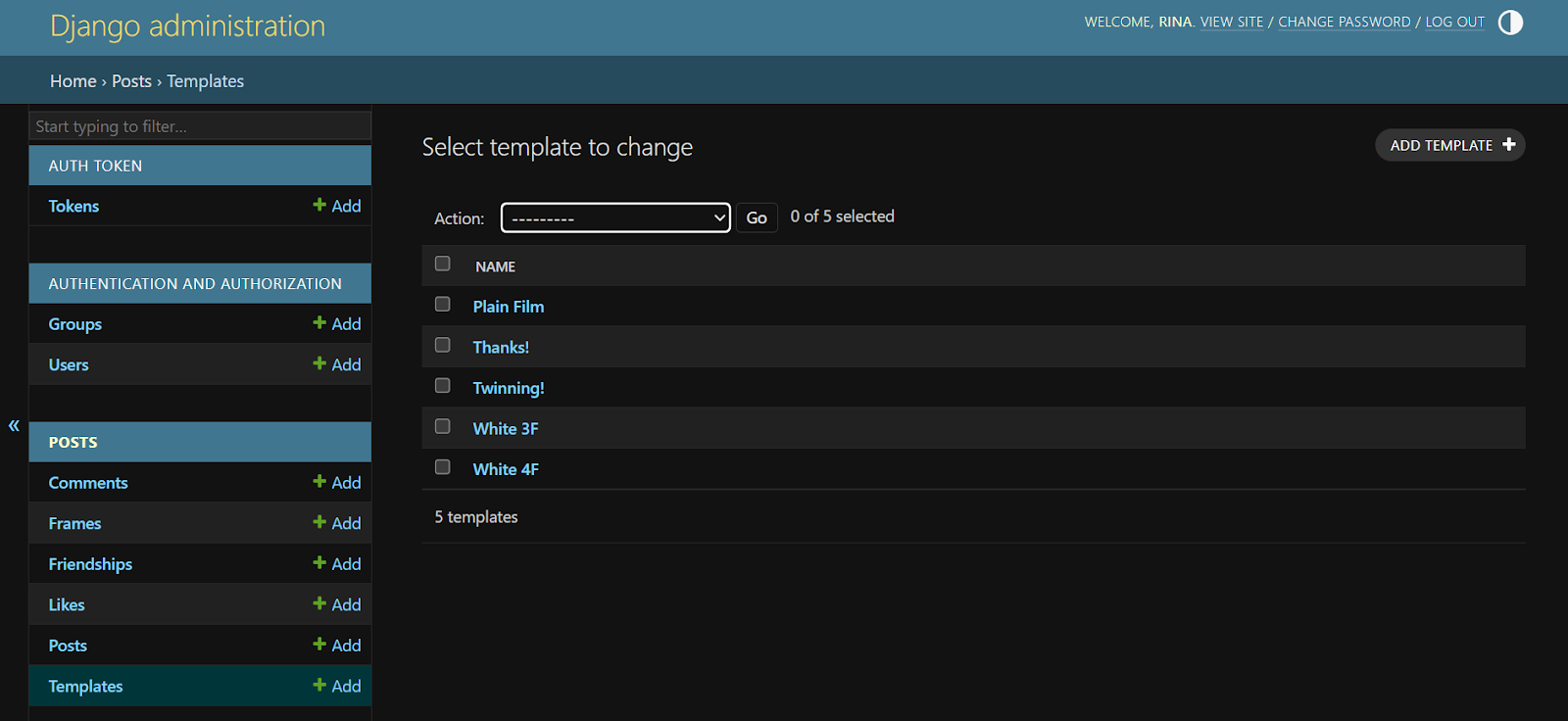
A notable part of SnapTure is its friends system. Users can create accounts, send and accept friend requests, and view their friends list. While this currently works between local accounts, it is already designed for cloud deployment. Once hosted online, users will be able to interact with the friends system over the internet. The platform is also structured to be adaptable for a physical photobooth setup, requiring only modest hardware adjustments.
Technologies used:
Python and Django (backend)
HTML, CSS, JavaScript (frontend)
KitchenX
Catarina Maria Narciso, Janelle Reonal, Adrienne Lyndly Wang
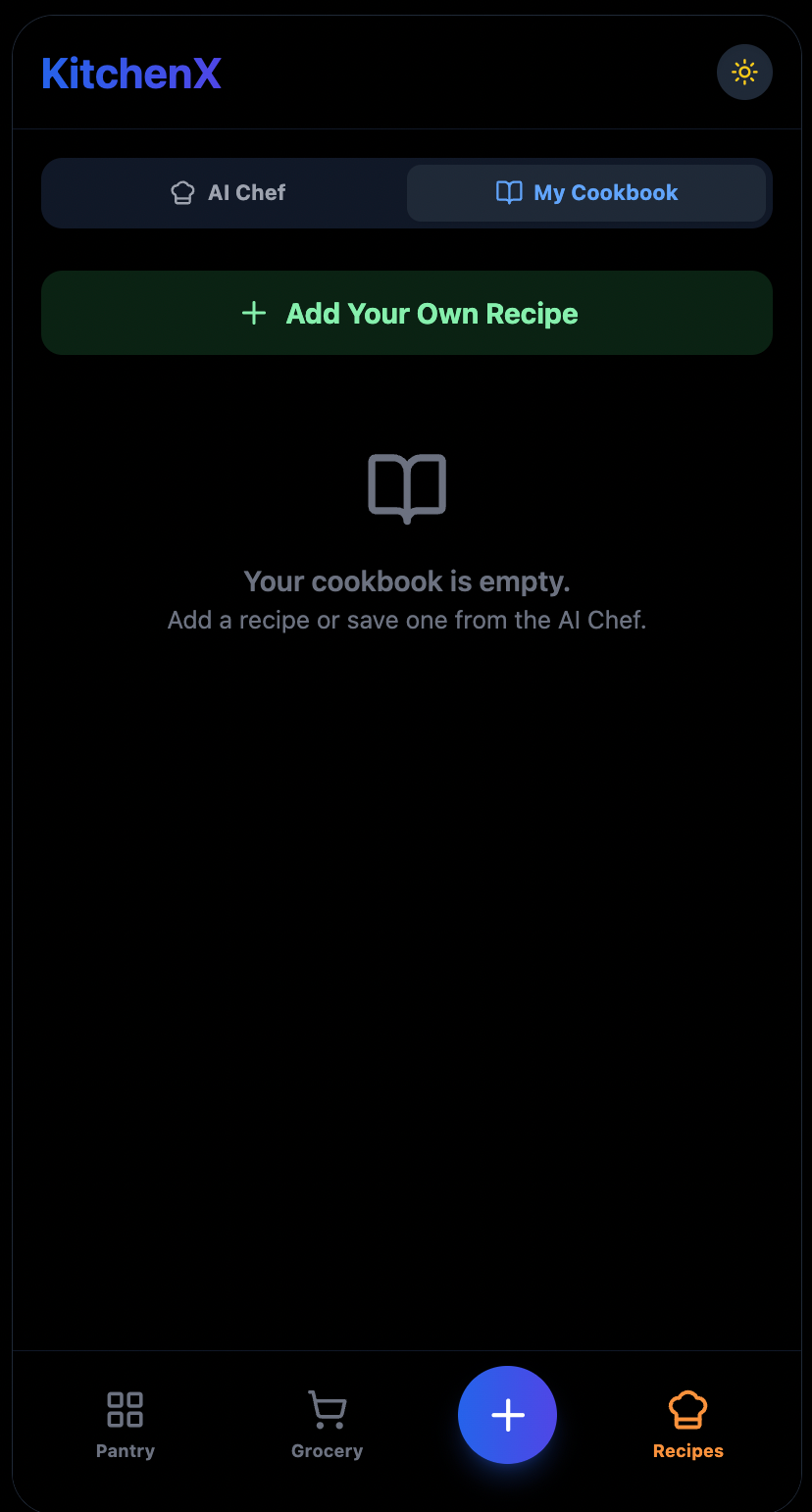
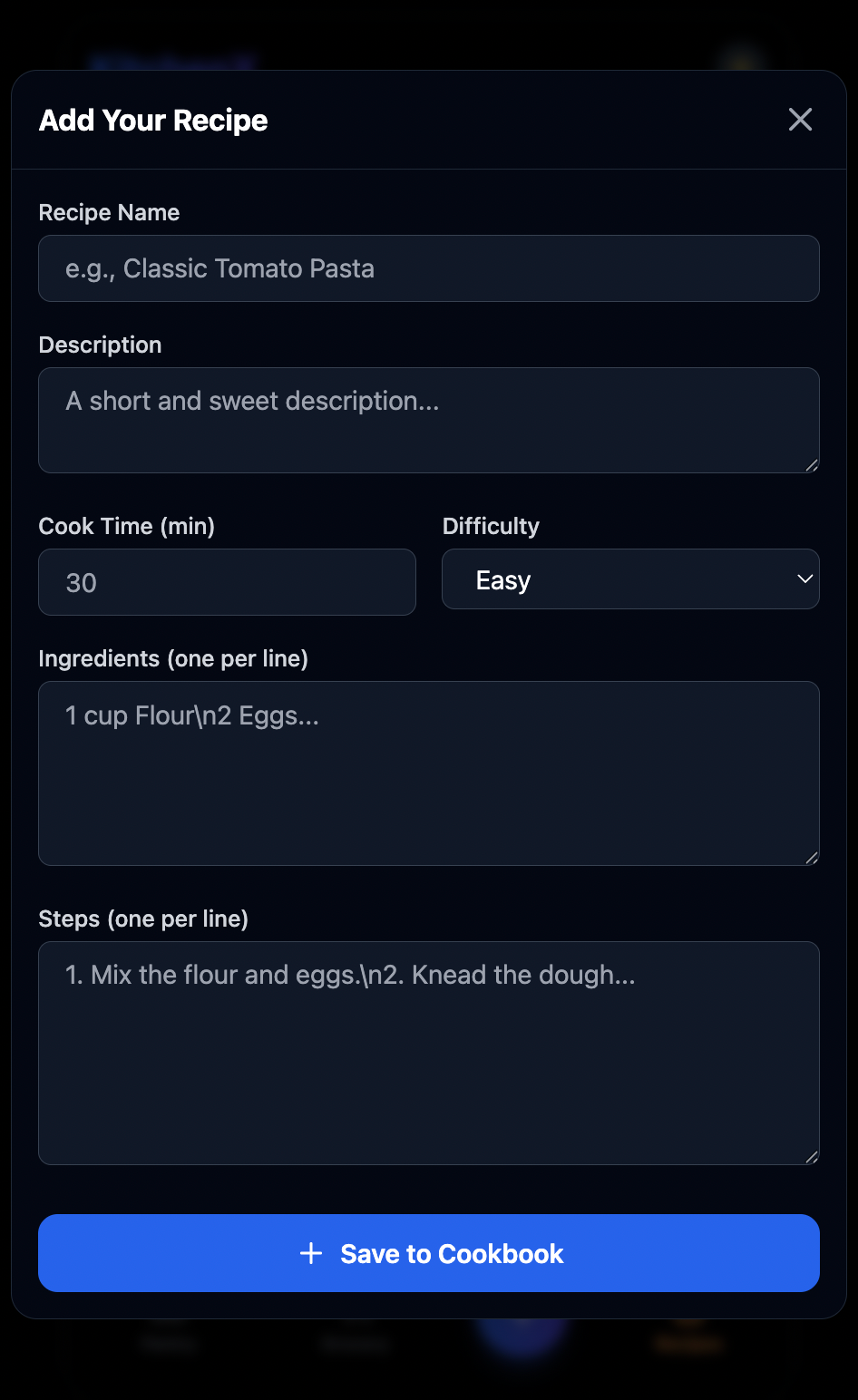
KitchenX is a smart pantry management application designed to help reduce food waste and simplify meal planning. Built with React and TypeScript, it uses Google’s Gemini AI to identify food items from photos, estimate expiry dates, and generate recipes based on what users already have at home. The tool brings together a grocery list, digital cookbook, and sustainability-focused guidance in one interface.
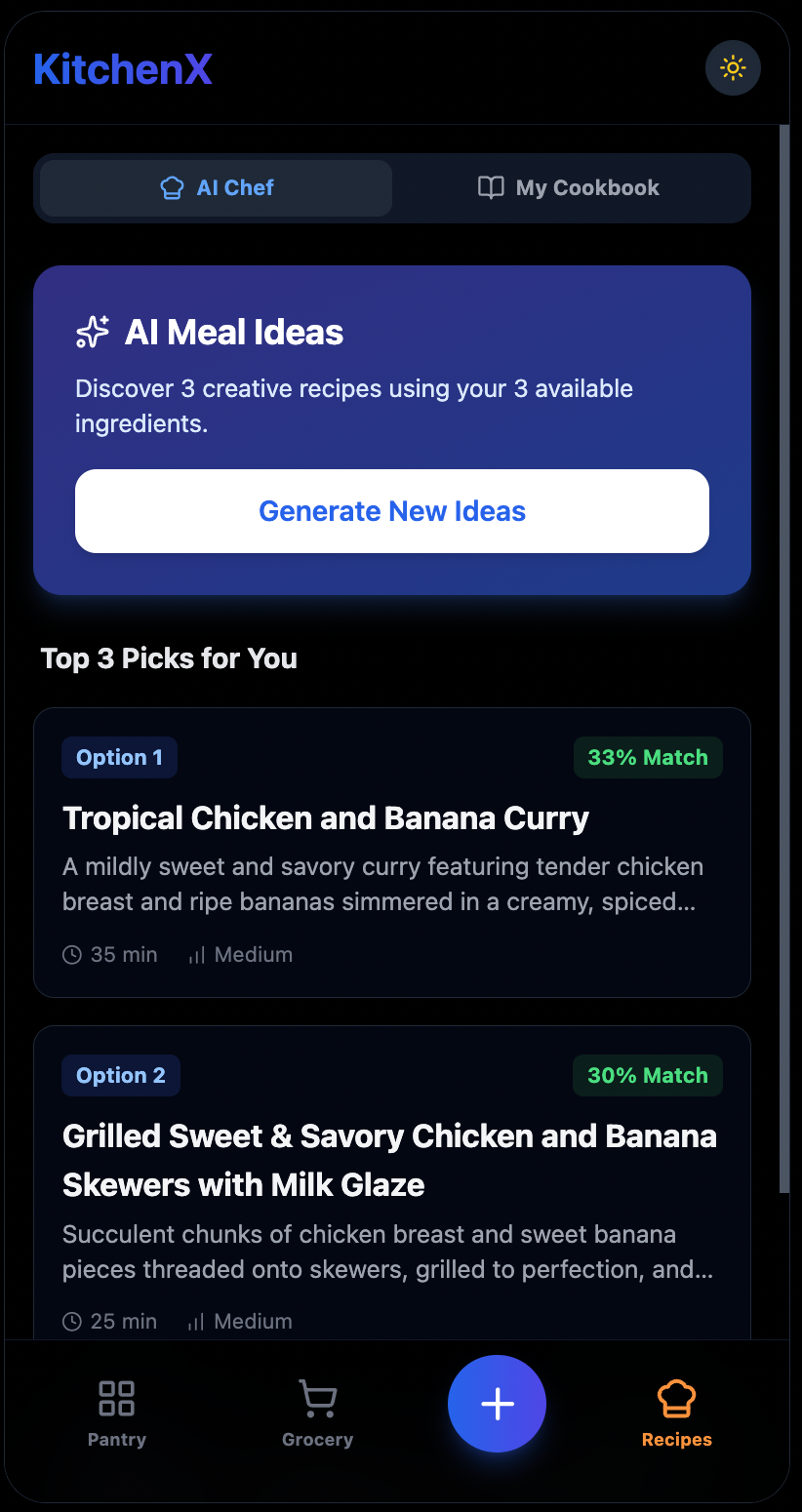
The Home and Pantry Dashboard serves as the main view, displaying all pantry items organized by category, such as frozen goods or dairy. A color-coded system highlights items nearing expiry. A grocery list feature allows users to manage planned purchases and move checked items directly into their pantry inventory. The AI Scanner lets users take a photo of groceries, after which Gemini AI fills in fields such as item name, category, and estimated shelf life. An additional feature, the AI Chef, generates recipes tailored to items currently in stock and provides a structured output with ingredients and preparation steps.
Closing note
The projects from ITMGT 45 show the range of work produced by students of the BS Information Technology Entrepreneurship program. The course provides a structured environment for experimentation and helps students gain experience in building, testing, and improving simple technology tools. These outputs form part of their broader learning journey as they move on to more advanced work in the program.
The sections below provide additional background for readers who want to learn more about the course and the program.
What is ITMGT 45 The Digital Economy?
ITMGT 45 is a course in the BS Information Technology Entrepreneurship program. It introduces students to applied technology through hands-on prototyping and problem solving. The course originally centered on business and technology foundations for early-stage startup work, but for this cycle it focused on practical technology application.
What types of projects do ITE students build in ITMGT 45?
Students develop simple functional tools that address real problems. These include scheduling applications, receipt-processing systems, civic reporting platforms, AI-driven tools, and computer vision projects.
How does ITMGT 45 support students’ development?
The course helps students practice identifying needs, designing prototypes, testing ideas, and improving concepts based on user considerations. It strengthens product thinking and collaborative work.
How does the course connect to the broader ITE curriculum?
ITMGT 45 gives students early exposure to applied technology. It supports later coursework that covers product design, venture building, data, and innovation.
About the BS Information Technology Entrepreneurship Program
The BS Information Technology Entrepreneurship program combines technology, product development, and business concepts. It prepares students to identify opportunities, design solutions, and build practical tools and ventures. The program emphasizes applied learning, experimentation, and collaboration across different areas of technology and management.
About the Ateneo Business Insights Laboratory (BUILD)
The Ateneo Business Insights Laboratory for Development works on projects that involve data, technology, and applied analytics. BUILD supports students and organizations in exploring digital tools, artificial intelligence, financial modeling, operations research, and other practical applications. The lab also engages with university units, such as the Ateneo Intellectual Property Office (AIPO), to help teams understand responsible innovation and IP considerations relevant to their work. BUILD provides a space for experimentation and collaborative problem-solving.
Recent News
You may also like these articles

[Hot Off the Press] Arkipelago
New book from the Ateneo Press Arkipelago provides a fascinating and fantastical twist on Philippine politics and history Our country is an archipelago of stories

Protecting Creativity: AIPO and Rizal Library Host Copyright Awareness Session for the Ateneo Community
On March 18, 2026, the Ateneo Intellectual Property Office (AIPO), in collaboration with the Rizal Library, successfully conducted a Copyright Awareness Session held on the

Holy Week 2026 Holidays (Memo # UHR2526-038)
Memo # UHR2526-038 31 March 2026 TO: All Employees FROM: [Sgd] Maria Victoria T Cortez, PhD Vice President for University Human Resources SUBJECT: Holy Week
ASOG’s Tobacco Control initiatives spotlighted in DOH National Technical Working Group for Tobacco Prevention and Control
On March 10 to 12, 2026, the Ateneo School of Government (ASOG), through its research and public policy unit, the Ateneo Policy Center, participated in

Things You Wanted to Say But Never Did: Geloy Concepcion’s six-year project makes Its exhibition debut at the Ateneo Art Gallery
Geloy Concepcion’s Things You Wanted To Say But Never Did comes to the Ateneo Art Gallery this 18 April 2026. After receiving almost 300,000 messages

[Hot Off the Press] Love If I'm Pretty
New YA Release from the Ateneo Press Love If I’m Pretty tackles the nuances of growing up through complex characters and straightforward prose What do