[Blueboard] Reflecting on gender equality and an inclusive society
14 Mar 2023 | Ma Lourdes Veneracion-Rallonza
Women’s Day is celebrated on the 8th of March every year. This designated day of commemoration has a long history connected to the context of European and American women workers’ movements in the early 1900s. The United Nations (UN) started celebrating International Women’s Day in 1975. Two years later, the UN adopted a resolution, A/Res/32/142, titled Women’s Participation in the Strengthening of International Peace and Security and in the Struggle against Colonialism, Racism, Racial discrimination, Foreign Aggression and Occupation and all forms of Foreign Domination declaring the yearly commemoration of International Women’s Day (IWD).
In the Philippines, we started celebrating women’s rights and International Peace Day in 1988 by virtue of Proclamation No. 224s, 1988 or Declaring the First Week of March of Every Year as Women’s Week and March 8, 1988, and Every Year Thereafter as Women’s Rights and International Peace Day. Republic Act (RA) 6949 or An Act to Declare March Eight of Every Year as a Working Special Holiday to be Known as National Women’s Day was signed by President Corazon C. Aquino in April 1990.
According to the Philippine Commission on Women (PCW), 2023 will be the launch of the new recurring theme on WE for Gender Equality and Inclusive Society until 2028. WE, in this framing, stands for “women and everyone” and “women and empowerment.” For this year, PCW identified the four goals of the Women’s Month celebration. Two of the goals specific to gender equality and inclusive society, are:
- “To inspire women and girls to empower themselves and take on leadership roles, opportunities, and benefits toward maximizing their full potential and enabling them to reap the fruits of gender equality”; and,
- “To promote a society that ensures inclusion, protection of fundamental freedoms, diversity, and social justice and in which every individual, each with rights and responsibilities, is capacitated and encouraged to take an active role to play.”
So where are we at right now in terms of these aspirations?
On Gender Equality
According to UN Women, gender equality means “the equal rights, responsibilities and opportunities of women and men and girls and boys.” In connection with Sustainable Development Goal or SDG Goal 5, gender equality aims to end gender disparities, eliminate violence against women and girls as well as early and forced marriages, secure equal leadership participation and opportunities, and provide universal access to sexual and reproductive rights.
One of the sources of gender equality information is the Global Gender Gap Report, an annual study on illustrating how near (or far) the gap is between women and men in various aspects of their lives. Launched in 2006 by World Economic Forum (WEF), the global gender gap is an index that specifically measures: 1.) economic participation and opportunity or the wage equality between women and men for the same work they do and ratios for female-male labor force participation, estimated income, as well as female-male ratios of legislators, senior officials and managers, and professional and technical workers; 2.) educational attainments or that which measures gaps between females and males in literacy rate as well as primary, secondary, and tertiary-levels enrolment; 3.) health and survival or the ratio between women and men’s healthy life expectancy and sex ratio at birth; and, 4.) political empowerment or gaps in the areas of seats in parliament, ministerial level, and number of years as head of state for women and men.
For years, the Philippines has been in the top 10 countries that had narrower gaps between women and men based on the global gender gap index: 6th (2006, 2007, 2008), 9th (2009, 2010), 8th (2011), 8th (2012), 5th (2013), 9th (2014), 7th (2015, 2016), 10th (2017), and 8th (2018). However, in 2019, the country dropped eight notches in the index. As explained in the Report:
“This downgrade is almost entirely attributable to lower female representation in the cabinet, which declined from 25% to 10% between 2017 and 2019. Female representation in the parliament was also slightly down and stood at 28% at the beginning of 2019.”
The Philippines ranked 16th in 2020, 17th in 2021, and 19th in 2022.
Last year, the Philippines released its updated Gender Equality and Women’s Empowerment (GEWE) Plan 2019-2025 which stated “proactively prevent backsliding on the gains so far achieved towards inclusion, gender equality and the empowerment of women and girls” as one of its aims. Indeed, there might have been backsliding in the country’s gender equality in the recent years. Therefore, we must work to bring us back where were or forward to where we should be.
Our Inclusive Society
In 1995, the World Summit on Social Development defined inclusive society as a “society for all in which every individual, each with rights and responsibilities, has an active role to play.” It further noted that such a society “must be based on respect for all human rights and fundamental freedoms, cultural and religious diversity, social justice and the special needs of vulnerable and disadvantaged groups, democratic participation and the rule of law.” For PCW, an inclusive society is one “that overrides differences in SOGIE, class, ability, generation, status, and culture.”
To a large extent, social policies play a critical role in societal transformation towards this goal. The legislative struggle of Sexual Orientation and Gender Identity Expression (SOGIE) bills is a case in point on how inclusive (or not) our society currently is. To date, numerous bills have been filed and re-filed in the Philippine House of Representatives and Senate since the year 2000.
The following bills were filed in the Lower House: House Bill (HB) 634 (2004); HB 51, HB 267, and a consolidated HB 4982 (2016). HB 4982 was first read in 2017, passed the second and third reading, was approved by the House (with a vote of 197-0), and transmitted and received by the Senate. In the 18th Congress, the House had 16 SOGIE filed while in the current 19th Congress, there are nine bills pending at the committee level.
At the Philippine Senate, Senate Bill (SB) 165 was filed in 2004 followed by SB 11 (2007), SB 1559 (2010), SB 1022 (2013). During the 18th Congress, several SOGIE bills were filed by various senators. There are currently five SOGIE-related bills filed in the Senate in the 19th Congress: SBs 139, 245, 442, 708, and 1600. In December 2022, the Senate Committee on Women, Children, Family Relations, and Gender Equality passed the SOGIE anti-discrimination Bill and 19 out of the 24 Senators signed the Committee Report. However, it has been reverted to the committee level after a senator presented letters from religious groups critical of the bill.
Currently, SOGIE has been the longest-running bill in the Philippines, spanning more than two decades and several Congresses. Can we actually concretize an inclusive society without a law that seeks to protect against discrimination on the basis of SOGIE?
Quick Thoughts
So how should we reflect on gender equality and an inclusive society in the country? Well, for one thing, women must always be vigilant in claiming, advocating, and advancing human rights.
In the case of gender equality, the gains that women have achieved in the past should be thoroughly guarded and defended.
On the issue of passing a SOGIE law, women must push for the recognition of the discriminated and marginalized, defend their dignity and rights, and fight alongside them.
Without these advances, our women’s month celebration may not be as meaningful for those who are affected by these issues, for gender equality and an inclusive society would remain as mere rhetoric rather than reality.
Ma. Lourdes Veneracion-Rallonza, Ph.D. is an associate professor at the Department of Political Science, Ateneo de Manila University. She is also the vice-president of the Philippine Political Science Association (PPSA).
This piece was first published on BusinessWorld.
Recent News
You may also like these articles
QS Subject Rankings 2026: Ateneo in top 100 for theology; ranked in 7 subject areas
Ateneo de Manila University is among the top institutions in seven subject areas, and among the top 100 for theological and religious studies, according to
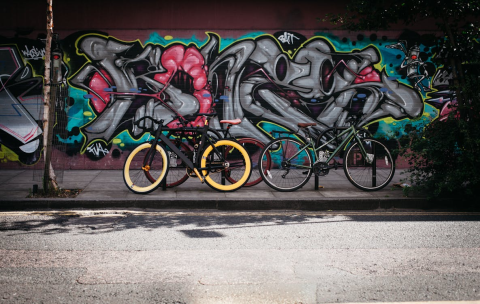
Scribbles of discontent: Graffiti and banyulatin as works of literature
The law often dismisses graffiti as “destruction,” “anarchy,” or even as mere “dirt.” But new research from Ateneo de Manila University’s Filipino Department reveals what
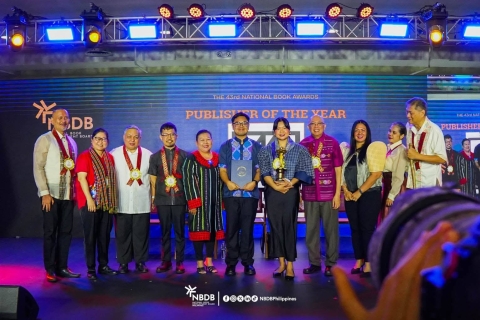
Ateneo University Press wins Publisher of the Year for 8th Consecutive Year
On 14 March 2026, the National Book Development Board along with the Filipino Critics Circle hosted the 43rd National Book Awards at the Philippine Book
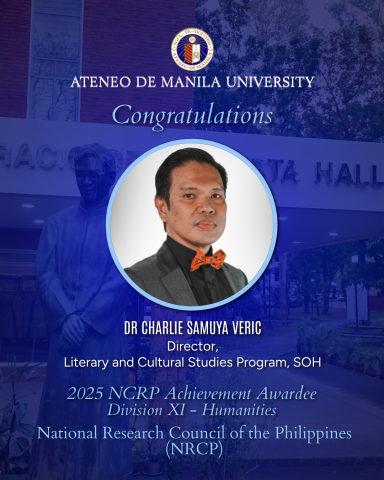
LCSP Director Dr Charlie Samuya Veric recognized as 2025 NRCP Achievement Awardee for Division XI - Humanities
Ateneo de Manila University congratulates Dr Charlie Samuya Veric, Director of the Literary and Cultural Studies Program, for being recognized as the 2025 NRCP Achievement
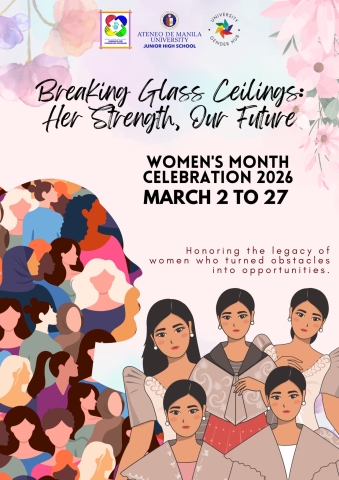
AJHS marks Women’s Month 2026 with the theme “Breaking Glass Ceilings: Her Strength, Our Future”
This March, the Ateneo Junior High School (AJHS) community proudly joins the nation in celebrating National Women’s Month, marking a special milestone in its second
UGDO bulletin - Women’s Month 2026: Celebrating gains, Championing Equality and Continuing Sustainability
Ateneo de Manila University supports the Philippine Chairship of ASEAN and the ASEAN Committee on Women, affirming the continuing fight against all forms of discrimination