Two Pseudo-nitzschia diatom species identified in Luzon
07 Nov 2024





The densely-populated island of Luzon is home to over half of the Philippines’ population, many of whom consume shellfish on a regular basis. An international team of scientists has just confirmed the presence there of two species of Pseudo-nitzschia diatoms capable of producing a neurotoxin that can cause severe sickness and memory loss.
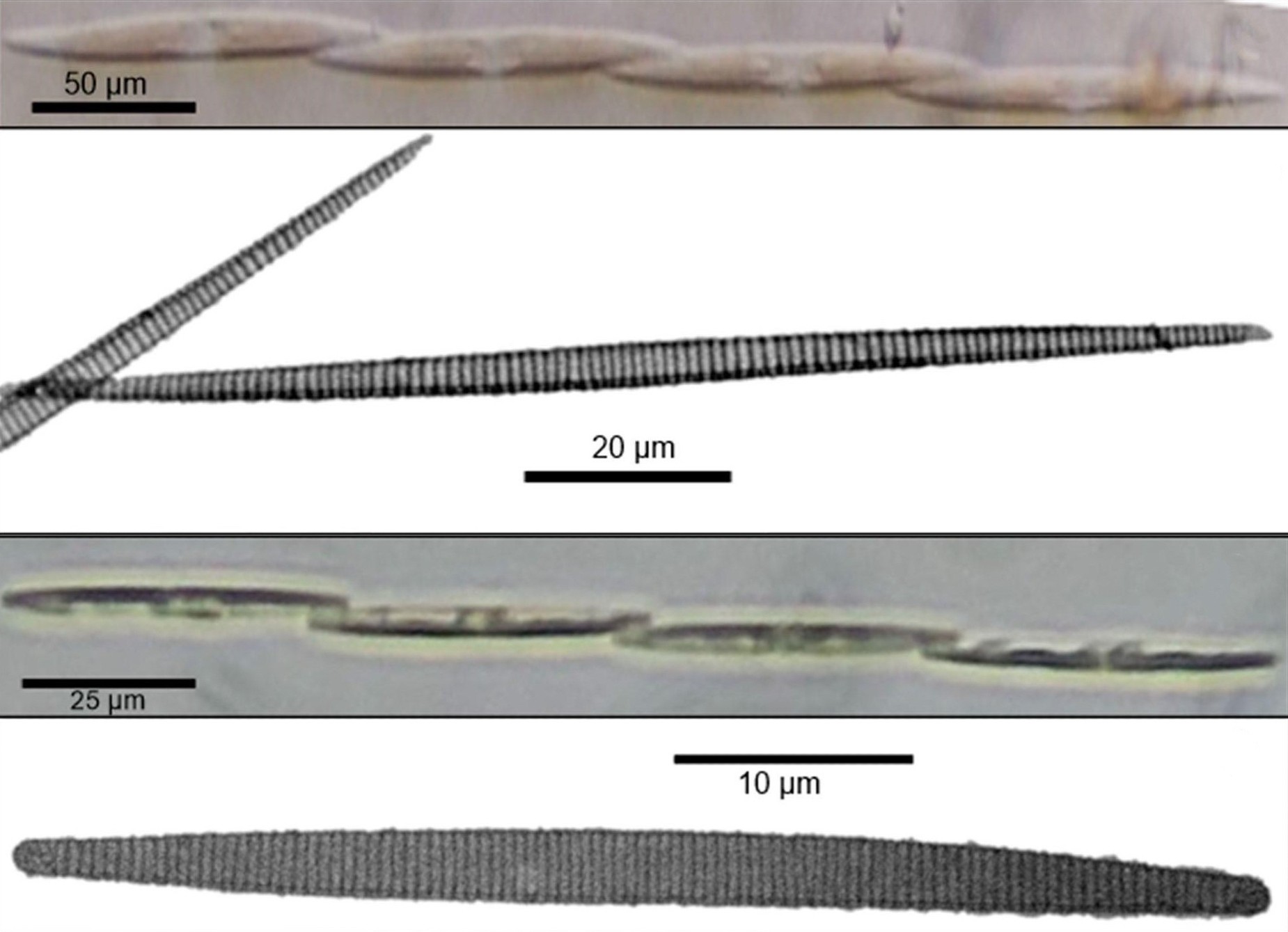
Poetically described as “algae that live in glass houses,” diatoms are microscopic aquatic organisms that cover themselves in protective milk-colored silica shells. While most diatom species are harmless, about half of the 64 known species from the genus Pseudo-nitzschia are notorious for producing domoic acid (DA). A person who has eaten DA-infected shellfish may experience vomiting, nausea, diarrhea, and abdominal cramps. In some cases, DA has even caused the permanent loss of short-term memory in a condition known as “amnesic shellfish poisoning” (ASP). However, ASP is very rare: the last documented case was in Canada in 1987.
Despite their toxin-producing potential, little is known about the extent of Pseudo-nitzschia proliferation in the Philippines. This prompted scientists from the Ateneo de Manila University Department of Biology and from Universiti Malaysia Sarawak to study the physical and genetic characteristics of the diatoms in water samples from shellfish farms in Bacoor Bay and Pagbilao Bay in Luzon.
“It is important to be aware of the toxic potential of these diatoms and to monitor them accordingly, but such efforts must begin by establishing their presence in our waters. To our knowledge, the molecular taxonomy of Pseudo-nitzschia in the Philippines is virtually nonexistent,” said researchers Lorenzo A. Botavara, Janice A. Ragaza, Hong Chang Lim, and Sing Tung Teng.
They confirmed the presence of the DA-producing diatoms Pseudo-nitzschia pungens and Pseudo-nitzschia brasiliana in the samples. They also noted that this is the first time that P. brasiliana has ever been found in Luzon.
At times of excessive growth called harmful algal blooms (HABs) or “red tide,” DA can accumulate in large amounts in filter-feeding shellfish such as mussels and clams. Thus, “Confirming species identities of a genus with half of its constituents known to produce DA is essential to HAB monitoring (in the Philippines),” the scientists underscored.
SOURCE:
https://archium.ateneo.edu/biology-faculty-pubs/170
For interview requests and other inquiries, please email media.research@ateneo.edu. Visit archium.ateneo.edu for more information about our latest research and innovations.
Recent News
You may also like these articles
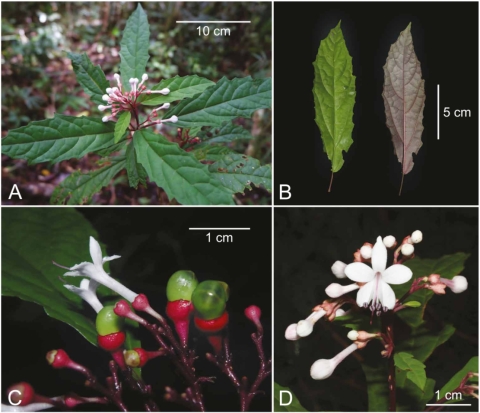
Modern science catches up with native knowledge with discovery of Clerodendrum kelli
The indigenous Bugkalot people of Nueva Ecija call it “kelli”: a plant with white, starburst-like flowers and oval-shaped leaves that are traditionally mashed and mixed

AIPO begins 2026 with an IP awareness session for Ateneo chemistry students
On 26 January 2026, the Ateneo Intellectual Property Office (AIPO) conducted an intellectual property (IP) awareness session for BS Chemistry and Materials Science Engineering students
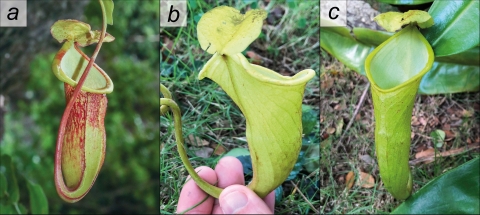
Newly discovered Philippine pitcher plant already in danger from climate change, poaching
A new species of pitcher plant found only on Palawan Island, but experts warn that it is already at risk of extinction due to frequent severe weather conditions and human encroachment.

AIS hosts “Sustainable Sustainability™: From Fail to Scale” with Mr Marty Metro
The Ateneo Institute of Sustainability (AIS) hosted a special hybrid symposium entitled “Sustainable Sustainability ™: From Fail to Scale” last 18 November 2025 at the
Eating more but growing less: Stagnant Philippine farms linked to widening rice gap
The Philippines remains mired in import dependence despite years of government support.
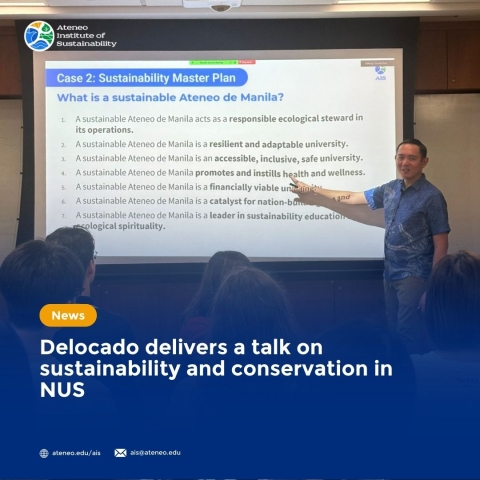
Delocado delivers a talk on sustainability and conservation in NUS
Dr Emmanuel D Delocado, Director of Ateneo Institute of Sustainability and Head of Ateneo Biodiversity Research Laboratory of the Department of Biology, gave the culminating