“Even a small candle can break the dark”: Rev Bien Cruz SJ urges AJHS students to shine brightly like St Kostka
08 Dec 2025

The following was the homily of Rev Bien Cruz SJ during the AJHS Mass for the Feast of St Stanislaus Kostka on Thursday, 13 November 2025, held at the AJHS Covered Courts, Ateneo de Manila University.
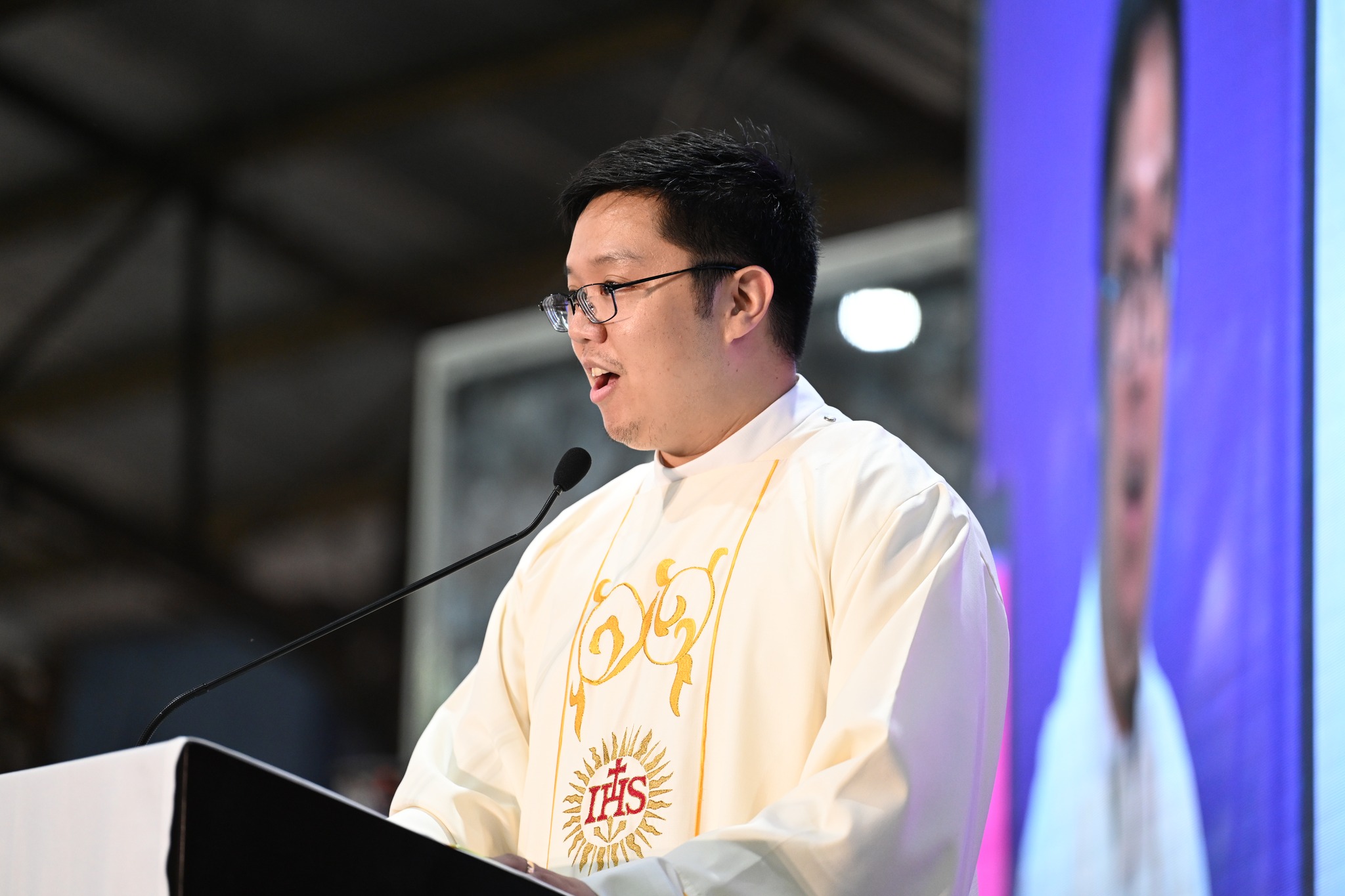
I myself was once a student like you here in the Ateneo de Manila Junior High School. Your principal now was actually my teacher when I was in first year. I still remember those afternoons when, after class, a few of us would sit under the big mango tree or stay inside the classroom while others played basketball. We would talk about anything: homework, crushes, dreams, even what we wanted to be someday. Those simple moments were part of growing up, of learning, listening, and discovering who we were. High school is amazing, full of laughter, friendship, and new experiences, but it is also difficult. There are exams that make us anxious, expectations that feel too heavy, and moments when we do not know where we fit in. Growing up is exciting but confusing, full of light yet not without shadows. And through it all, even when we do not notice, God walks quietly beside us.
That is what we see in today’s Gospel. Jesus was twelve years old, just about your age. After celebrating the Passover in Jerusalem, His parents began their journey home, but Jesus stayed behind in the Temple. When Mary and Joseph finally found Him after three days of anxious searching, He said, “Did you not know that I must be in my Father’s house?” We can imagine Mary’s worry, Joseph’s relief, and Jesus’ calm focus. He was discovering His mission, learning what it meant to belong to His Father. Jesus was growing up, just like you. It was not easy. It caused tension and misunderstanding, even with His parents. But He knew that His Father was with Him, forming and guiding Him for what was ahead.
The same is true for St Stanislaus Kostka, whose feast we celebrate today. He was a teenager too, only a few years older than you. Born to a wealthy Polish family in the 1500s, he studied hard, prayed deeply, and desired to give his whole life to God. But when he told his family he wanted to become a Jesuit, they refused. They wanted him to live a life of comfort and power. Yet Stanislaus did not give up. He walked hundreds of kilometers from Vienna to Rome to follow God’s call. He faced hunger, cold, and loneliness, but he never lost faith. He believed God was walking beside him. His courage, trust, and perseverance show us that holiness is possible even in youth.
Like Jesus in the Temple and Stanislaus on the road, we are all growing. We face our own struggles: family issues, misunderstandings, difficult classes, and the pressure to prove ourselves. Beyond these, we live in a world wounded by sin and selfishness. We see corruption and greed around us, like the recent flood-control scam where funds meant to protect communities were misused. We see the environment degrading: rivers choked with garbage, forests cut down, and the poor suffering most from climate disasters. These realities can make us angry or numb.
But the Gospel and the life of St Stanislaus call us not to despair but to conversion, a change of heart and vision. Conversion means turning toward God, learning to see as He sees. It begins when we ask, even in small things, is there a kinder, more loving, less self-centered way to respond? Stanislaus teaches us that holiness is not escaping the world’s problems but living differently within them: to include when others would rather exclude, generous when others are selfish, faithful when others give up. That is what it means to live the Ignatian ideal of magis, not simply doing more but being better, choosing the more loving and generous path. When others cheat, be honest. When others gossip, choose kindness. When others give up, keep trying. That is the difference holiness makes.
This path of conversion is closely tied to gratitude. Gratitude opens our eyes to God’s presence and moves our hearts to change. Often, we thank God only for the big things, for passing exams, winning games, or reaching goals. But true gratitude goes deeper. It sees grace in small victories: waking up each morning, having a friend who listens, a teacher who patiently explains, or a parent who still worries even when we argue. We can even be grateful for our persistence, that we are still here, still trying, still growing. Gratitude makes life brighter.
I remember when I was in high school, I had a difficult groupmate. Whenever we did projects or studied together, he did not contribute much. But he would always make us laugh, offer small help, and keep the group’s spirits up. When I began to notice his small e orts and decided to be grateful instead of annoyed, it changed how I related to him. Gratitude does not deny problems, but it transforms the way we see others. It makes things better.
We must learn gratitude. Even with family problems, school struggles, or the corruption and destruction around us, there are still people who care, serve, and rebuild with hope. We think only big lights matter, but even a small candle can break the dark. A simple “thank you,” a short prayer, helping a classmate, or standing up for what is right are small lights that reveal God with us—in our homes, schools, and friendships. Gratitude opens the heart to conversion. When we are thankful, we see what needs healing and begin to love, serve, and hope again.
This was the heart of St Stanislaus Kostka. His gratitude for God’s love moved him to courage, and his conversion made him a light for others. He teaches us that holiness is not about age but about desire, about saying yes to God today, right where we are. So today, as we celebrate this young saint, let us remember: growing is never easy, but we are never alone. God walks with us in our laughter and in our tears, in our victories and in our struggles. When we see things with gratitude and conversion things can be better.
Even in our youth, we can make a difference. Like St Stanislaus Kostka, let us walk with courage, live with gratitude, and let our small lights shine.
Recent News
You may also like these articles
QS Subject Rankings 2026: Ateneo in top 100 for theology; ranked in 7 subject areas
Ateneo de Manila University is among the top institutions in seven subject areas, and among the top 100 for theological and religious studies, according to
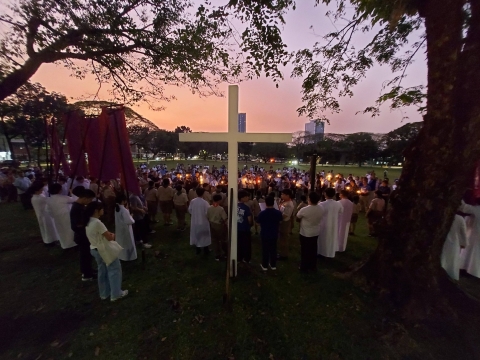
AJHS sponsors annual Way of the Cross gathering
Sponsored by the Ateneo de Manila Junior High School, the annual University Way of the Cross (Stations of the Cross) was held on the afternoon
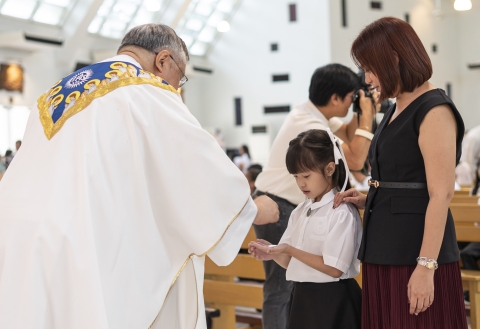
Another First: AGS girls receive their First Holy Eucharist
Ateneo de Manila Grade School’s Grade 2 students received their First Holy Communion on 7 and 14 February 2026 at the Church of the Gesù
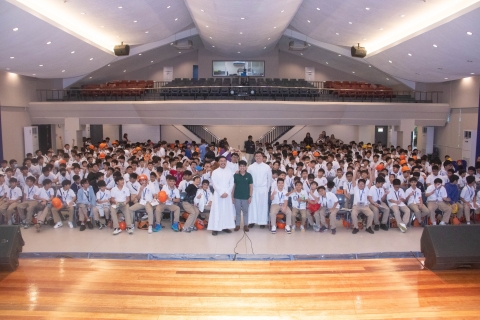
An encounter with faith: Grade 6 Ateneans "Meet the Jesuits"
The following reflections were written by two Grade 6 students who participated in the recent “Meet the Jesuits” activity. In their personal accounts, they share
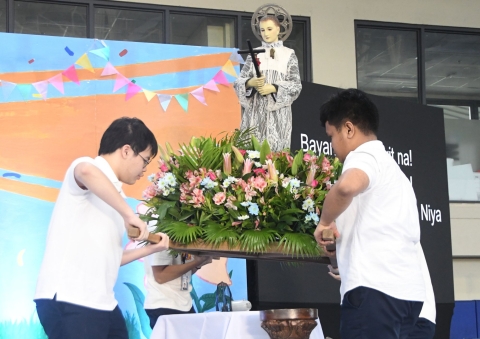
What really matters
On 27 January 2026, the Ateneo de Manila Senior High School commemorated its patron saint, Saint Aloysius Gonzaga, in a special way. Although his feast
University Way of the Cross 2026 (Memo U2526-060)
(Memo U2526-060)All members of the community (students, faculty, professionals, staff, administrators, parents, and alumni) are invited to participate in the University Way of the Cross on Friday, 27 February 2026, at the Loyola Heights Campus.