Ateneo, La Salle, UPD, Columbia hold forum probing Oplan Tokhang’s legal framework
04 May 2019

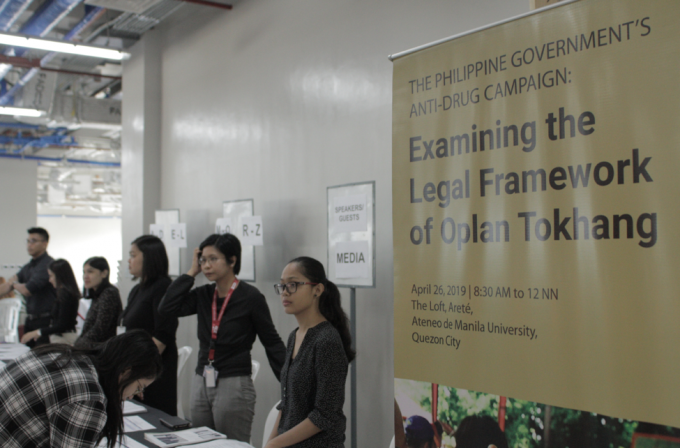
Continuing its thrust for the generation of empirical studies and evidence-based analysis on the government’s anti-drug campaign, the Ateneo de Manila University (ADMU), through the Ateneo School of Government, held a forum titled “The Philippine Government’s Anti-Drug Campaign: Examining the Legal Framework of Oplan Tokhang” last April 26, 2019 at The Loft, Areté, Ateneo de Manila University.
The forum, organized in partnership with researchers from De La Salle Philippines (DLSP), University of the Philippines-Diliman (UPD), and The Stabile Center for Investigative Journalism at Columbia University’s Graduate School of Journalism (SCIJ), released a research led by Ateneo Human Rights Center, which provided legal analyses of policies related to the Philippine government's anti-drug campaign after nearly three years of implementation.
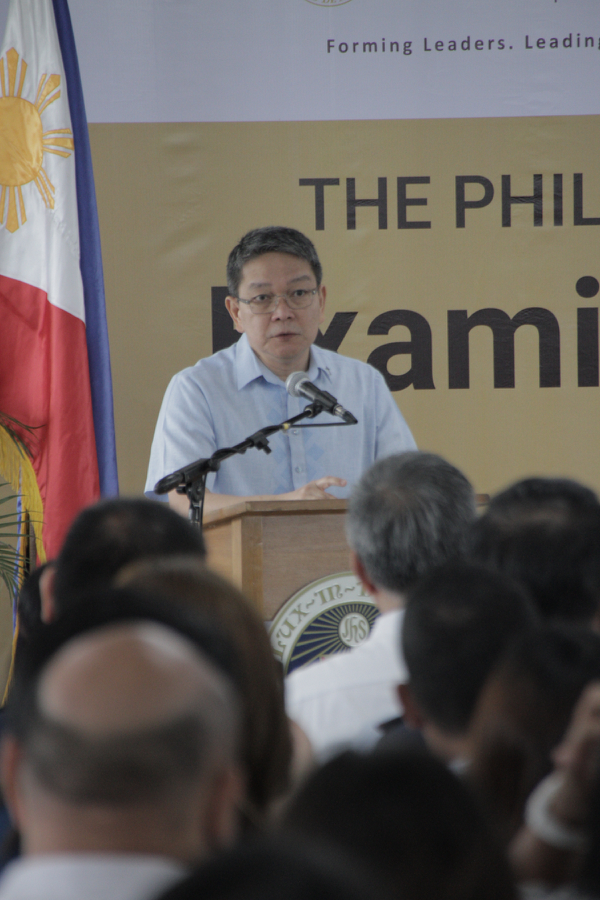
Fr. Jose Ramon T. Villarin, SJ, President of the Ateneo de Manila University, opened the forum with his message stressing the importance of human rights lens in examining the legal framework of the government’s anti-drug policies anchored to the belief on the “priceless value of the life of every human person - saints or sinner.”
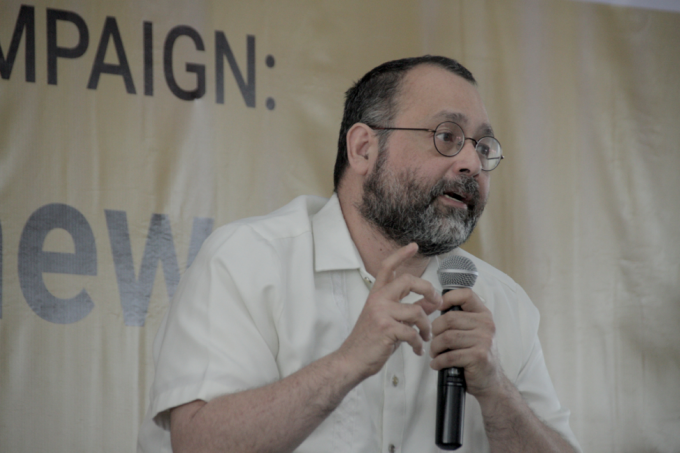
Atty. Ray Paolo J. Santiago
The first session, led by Atty. Ray Paolo J. Santiago, Executive Director of the Ateneo Human Rights Center, tackled how unclear parameters and absence of accompanying guidelines on operationalizing Tokhang made human rights more vulnerable. The vague directive of the PNP CMC No. 16-2016 to “conduct house to house visits to persuade suspected illegal drug personalities to stop their illegal drug activities,” which was not included in the 2013 PNP Manual on Anti-Illegal Drugs Operations, “becomes dependent to the character of interaction and presupposes that the law enforcers know the rights of suspects,” said Atty. Santiago.
Atty. Ma. Araceli B. Habaradas, Faculty of the Ateneo Law School, continuing the presentation, questioned the “voluntariness” of the surrender of the suspected users. Atty. Habaradas said that Tokhang operations use same operational guidelines used in documenting “criminals” contrary to the documentation of drug users stated under Republic Act No. 9165 (Comprehensive Dangerous Drugs Act of 2002). Atty. Habaradas also questioned the provision of DDB surrender guidelines, which include the signing of a template affidavit and a waiver that makes the surrenderer divulge personal, and possibly incriminating, information. She then asks, “if surrendering builds criminal liability to the surrenderer, what is surrendering for?”
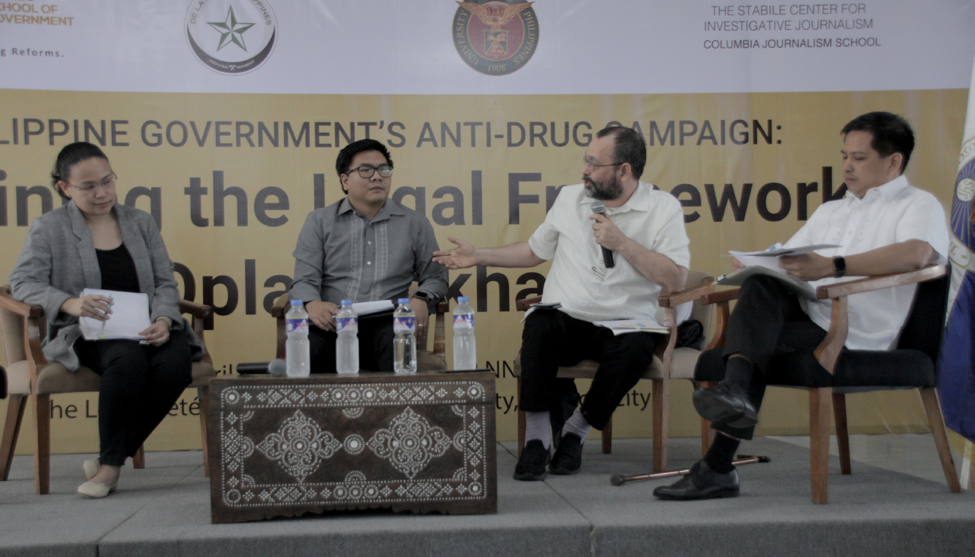
Reacting to the analyses presented, Hon. Jose Luis Martin C. Gascon, LL.M., Chairperson, Commission on Human Rights, said that there is also a need to study the accountability vis-à-vis the anti-drug campaign. “If these guidelines are not followed, what should we do and who should be held accountable?” said Hon. Gascon. Atty. Raymond Marvic C. Baguilat, LL.M., Law Reform Specialist of the Institute of Human Rights, UP Law Center, on the other hand, commented that it is also integral to look how the general public grasps human rights. “We need to make the people realize that human rights are universal and inalienable. We need to make sure that the language to be translated to the language that is understood by everyone, not only in the academe or legal community,” he ended. In the message of Atty. Domingo Egon Q. Cayosa, Executive Vice President and incoming National President of the Integrated Bar of the Philippines, presented by Atty. Minerva M.B. Ambrosio, National Director for Legal Aid of the IBP, he assured that IBP, as the official organization of all Philippine lawyers, shall continue to be heard and seen in justice sector and human rights arena and will ensure that immediate justice be the battlecry of Philippine lawyers.
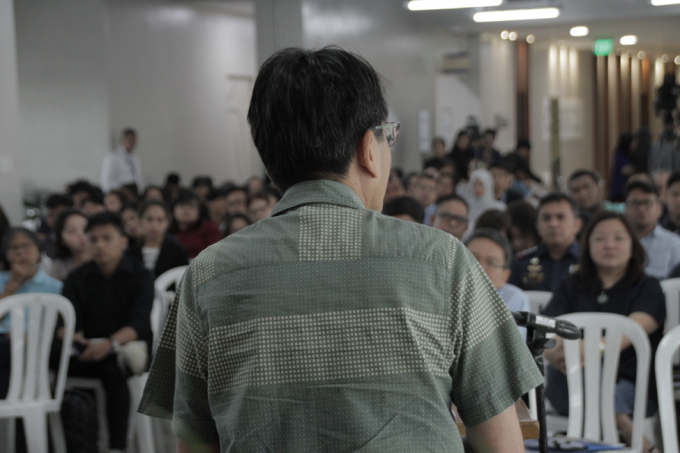
Giving a message, Dr. Michael L. Tan, DVM, PhD, Chancellor of the University of the Philippines-Diliman, expressed his fear on how the country’s drift from its human rights framework is becoming part of the Filipino culture. “We need a new kind; a new war on drugs that is based on human rights,” concluded Chancellor Tan, underscoring the importance of strengthening community education and educational institutions.
In the second session, Ms. Jenna Mae L. Atun, Research Associate of the Ateneo Policy Center (APC), Ateneo School of Government, presented updates on the School’s work on building a comprehensive dataset of drug-related killings related to the anti-drug campaign. From the initial dataset of 5,021 drug-related killings released last June 2018, an updated dataset of 7,029 killings as of December 31, 2018 was released during the forum.
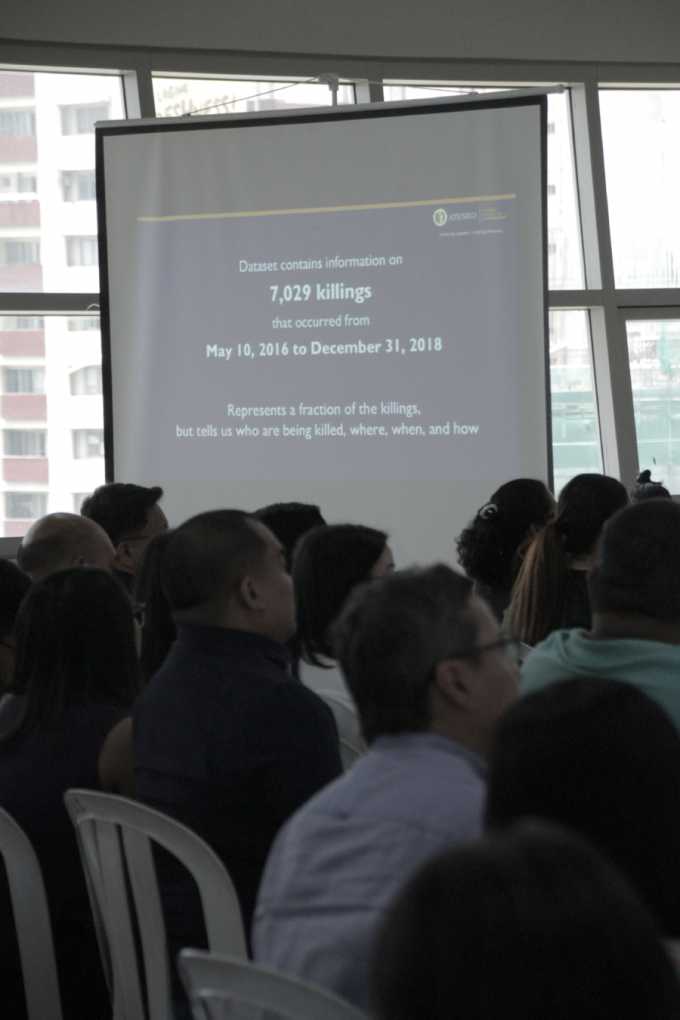
In the updated dataset, the victims are still mostly male. Based on the 17% that had identified occupation, it is also evident that most victims were poor. She also presented how the killings in 2018 have shifted away from Metro Manila and became more rampant in the provinces, specifically in CALABARZON and Central Luzon. The dataset also showed that out of the 3,152 incidents related to police operations, 22% resulted to killings of more than two people; the deadliest operations happened in Mindanao.
Br. Armin A. Luistro, FSC, President of De La Salle Philippines, reminded everyone to not only stay as academics, statisticians, and legal counsels, among others. He said that it is the role of everyone to respond to the grievances and questions of those who were orphaned and widowed by the anti-drug campaign. Closing the event, he posed a question: “mahirap gumalaw; mahirap magsalita; hanggang kalian tayo maghihintay?”, referring to the state of fear and impunity in the Philippine society.
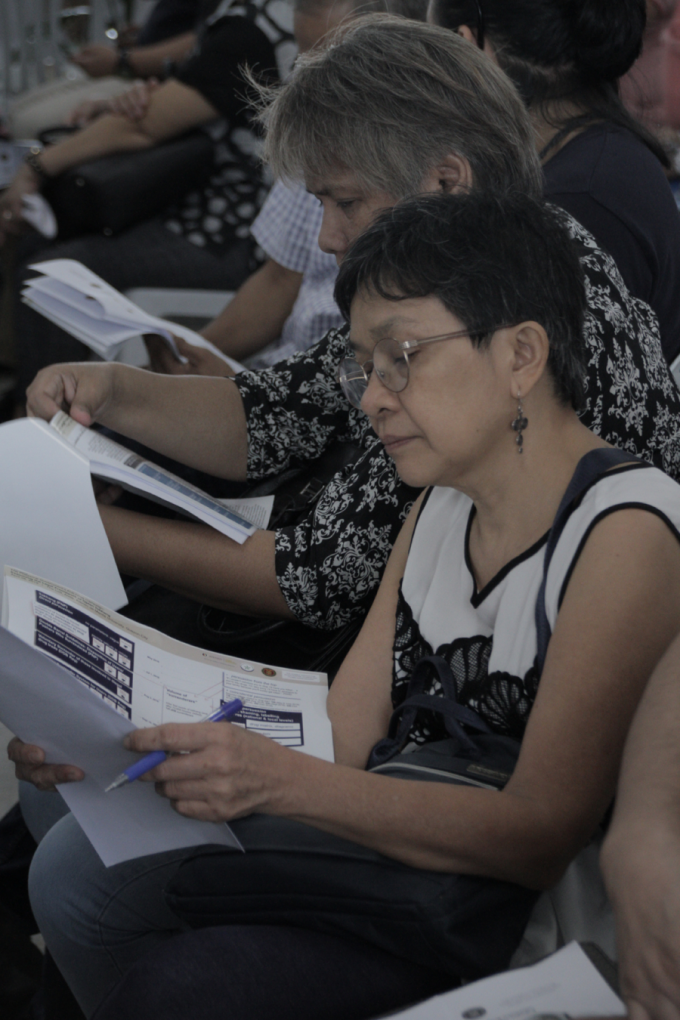
An open forum between sessions as well as a press conference immediately after the event was conducted with the representatives of the consortium and speakers. The event was attended by more than 200 participants from the academe, government, uniformed service, media, and civil society.
The Working Paper for How Change Rendered Human Rights More Vulnerable: Examining the Anti-Drug Campaign Legal Framework with a Human Rights Lens may be accessed at https://papers.ssrn.com/sol3/papers.cfm?abstract_id=3378016.
Briefer of Ateneo Human Rights Center
Recent News
You may also like these articles
ASOG’s Tobacco Control initiatives spotlighted in DOH National Technical Working Group for Tobacco Prevention and Control
On March 10 to 12, 2026, the Ateneo School of Government (ASOG), through its research and public policy unit, the Ateneo Policy Center, participated in
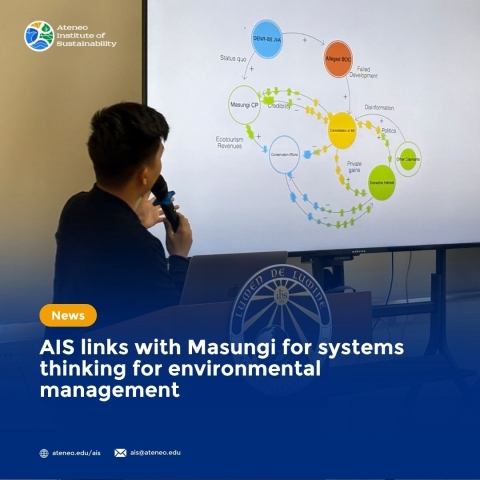
AIS links with Masungi for systems thinking for environmental management
Last 23-24 March 2026, the Ateneo Institute of Sustainability (AIS) , which manages the My Climate Risk – Ateneo de Manila University Regional Hub
BIR and Ateneo sign MOU for academic cooperation and research collaboration
The Bureau of Internal Revenue (BIR) and Ateneo de Manila University recently signed a memorandum of understanding (MOU) for academic cooperation and research collaboration. The
ASOG meets with Department of Health—Bureau of International Health Cooperation to strengthen institutional partnership
On 27 February 2026, the Ateneo School of Government (ASOG), through its research and public policy unit, the Ateneo Policy Center, held a courtesy meeting
ASOG Executive Education Program Leads Open Training Course on Public-Private Partnerships for the People: By and For Local Government Units
The Ateneo School of Government, through its Executive Education Program, conducted a two-day training course on Public-Private Partnerships for the People (PPPP): By and For

Dr Alfredo RA ‘Alran’ Bengzon (20 October 1935 – 3 March 2026 ) (Memo U2526-076)
(Memo #U2526-076) With deep sadness, we inform the University community of the passing of Dr Alfredo RA ‘Alran’ Bengzon on 3 March 2026.