The Illicit Cigarette Trade in Malaysia: Does Cigarette Tax Matter?
04 Aug 2021

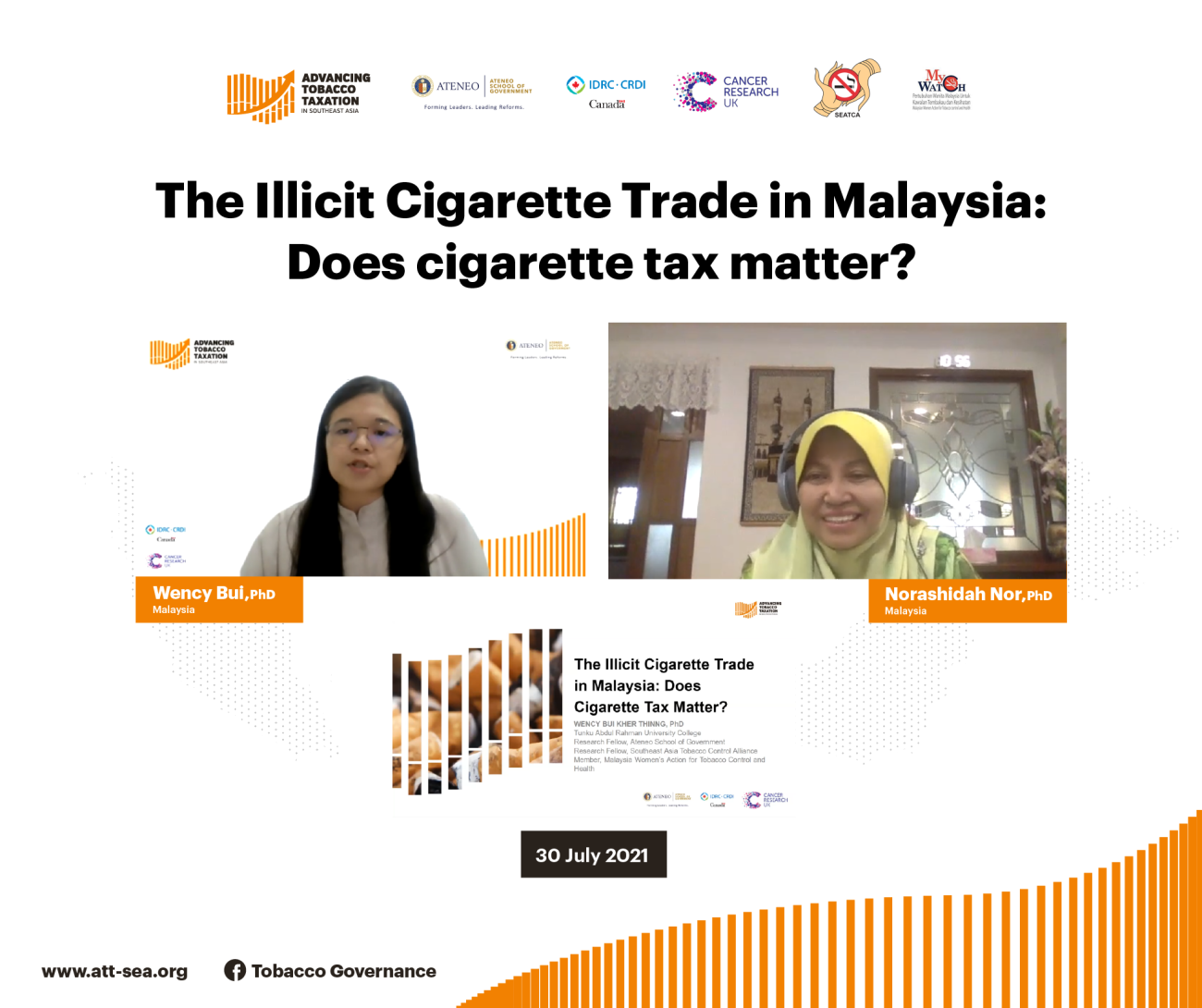
On July 30, 2021, The Ateneo School of Government through its project Advancing Tobacco Taxation in Southeast Asia (ATTSEA), funded by the International Development Research Centre (IDRC), spearheaded a webinar entitled “The Illicit Cigarette Trade in Malaysia: Does Cigarette Tax Matter?,” authored and presented by its Research Fellow, Wency Bui, PhD. The online event was attended by various stakeholders, including members of the Malaysian Council for Tobacco Control, Stopping Tobacco Organization and Products, Southeast Asian Tobacco Control Alliance, and representatives from Malaysian Government agencies, namely Ministry of Health, Ministry of Finance, and the Royal Malaysian Customs Department.
In Malaysia, smoking is the leading cause of preventable deaths, and imposes a heavy burden on medical care and productivity losses. The government has implemented tobacco control policies, including through taxation. Even as the excise tax rate in Malaysia has remained the same since 2015, the tobacco industry claims that the high excise tax rate inevitably fuels the spread of illicit cigarette trade, given the resort to cheaper illicit cigarettes. However, estimations from theses studies are likely inflated, since they are commissioned by the tobacco industry and the methodologies used are not articulated. The tobacco industry further claimed that the ease of obtaining cheaper illicit cigarettes reduces government tax revenues. But numerous studies have debunked these claims.
The research by Dr. Wency Bui provided an estimate of the illicit cigarette trade in Malaysia, based on the gap between legal sales and actual consumption; investigated the impact of legal retail price and institutional quality (transparency index) on illicit cigarette trade; and analyzed the impact of price indicators on the cigarette market in Malaysia, considering the retail price from neighboring countries.
The results of her study revealed that the estimated consumption level of illicit cigarettes was consistently higher than legal sales after 2006, indicating cigarette smuggling activities. While industry estimates show a significant increasing trend on illicit cigarette market share (Nielsen, ITIC and OE/OE and Euromonitor), the estimates in her study are lower than those claimed. The estimates also show a fluctuating trend throughout the years, even as the escise tax remained the same. This shows that higher excise tax rate is not the primary driver of illicit trade. The study also found that legal retail price is statistically insignificant in driving the illicit cigarette trade. On the other hand, reducing corruption would lead to an improvement in the detection and reduction of illicit cigarette trade activities. Lastly, it was further revealed that the retail price of cigarettes is statistically significant in reducing legal cigarette sales in Malaysia. On average, a 10% increase in the real cigarette price per pack would decrease cigarette sales by 7.7%, but only in the long run. This suggests that an increase in legal cigarette price through taxation leads to an increase in the government revenue, as well as a reduction in total cigarette sales, particularly among adults.
Th study therefore concludes that first, the illicit cigarette market is not driven by a higher excise tax rate. Second, institutional quality, including lower corruption levels, is the most significant determinant of illicit cigarette trade. Thus, an increase in taxes does not affect illicit cigarette trade. On the contrary, it does reduce both demand and consumption for legal cigarettes, and generates higher tax revenues for the country. As such, the Malaysian government can pursue a stronger tobacco tax policy without fear of an influx of illicit cigarettes. Ultimately, the excise tax in Malaysia has remained at RM0.40 per stick since November 2015. The Malaysian government should consider raising the current cigarettes excise tax, given the results that overall price elasticity for both legal cigarette demand and cigarette consumption in Malaysia is inelastic. Furthermore, the Malaysian government should also consider an annual increment in the excise tax on cigarettes. An effective taxation policy would not only reduce cigarette consumption, it would generate higher tax revenues to focus on institutional quality.
At the end of the presentation, the need to advocate for taxation as a means to lessening cigarette use and to conduct further research on these issues were raised. The discussion also elicited the consideration that illicit tobacco trade is closely related to the tobacco industry, and that they have some level of control in its prevalence in Malaysia. The call for government to take into account these research findings in improving policies and pushing for reforms to for a more effective and stringent tobacco contol, especially an increase in tobacco taxation, was also laid down. Given the present context, it was also tackled that cigarette smoking significantly increases the risk of severe Covid-19, and increased taxation not only works to lessen use, but also makes funds for improved Covid-19 response available to the government.
To learn more about the research and its findings, visit www.att-sea.org. For updates on ATTSEA project, like and visit its official Facebook Page: www.facebook.com/tobaccogovernance
Recent News
You may also like these articles

ASOG’s Tobacco Control initiatives spotlighted in DOH National Technical Working Group for Tobacco Prevention and Control
On March 10 to 12, 2026, the Ateneo School of Government (ASOG), through its research and public policy unit, the Ateneo Policy Center, participated in
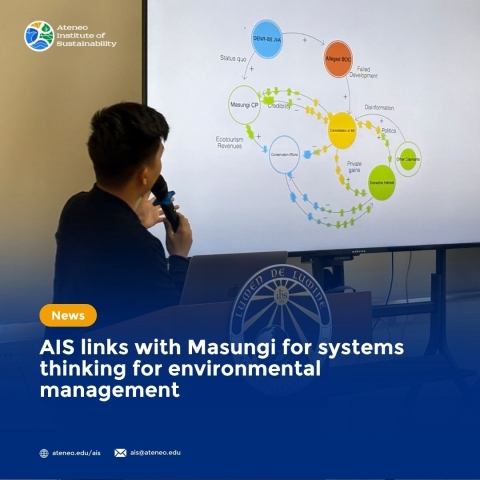
AIS links with Masungi for systems thinking for environmental management
Last 23-24 March 2026, the Ateneo Institute of Sustainability (AIS) , which manages the My Climate Risk – Ateneo de Manila University Regional Hub

BIR and Ateneo sign MOU for academic cooperation and research collaboration
The Bureau of Internal Revenue (BIR) and Ateneo de Manila University recently signed a memorandum of understanding (MOU) for academic cooperation and research collaboration. The

ASOG meets with Department of Health—Bureau of International Health Cooperation to strengthen institutional partnership
On 27 February 2026, the Ateneo School of Government (ASOG), through its research and public policy unit, the Ateneo Policy Center, held a courtesy meeting
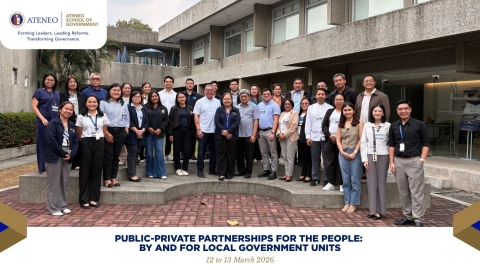
ASOG Executive Education Program Leads Open Training Course on Public-Private Partnerships for the People: By and For Local Government Units
The Ateneo School of Government, through its Executive Education Program, conducted a two-day training course on Public-Private Partnerships for the People (PPPP): By and For

Dr Alfredo RA ‘Alran’ Bengzon (20 October 1935 – 3 March 2026 ) (Memo U2526-076)
(Memo #U2526-076) With deep sadness, we inform the University community of the passing of Dr Alfredo RA ‘Alran’ Bengzon on 3 March 2026.