ASOG Dean Ronald U Mendoza presents paper on participatory budgeting during 21st session of UN-CEPA
08 Apr 2022



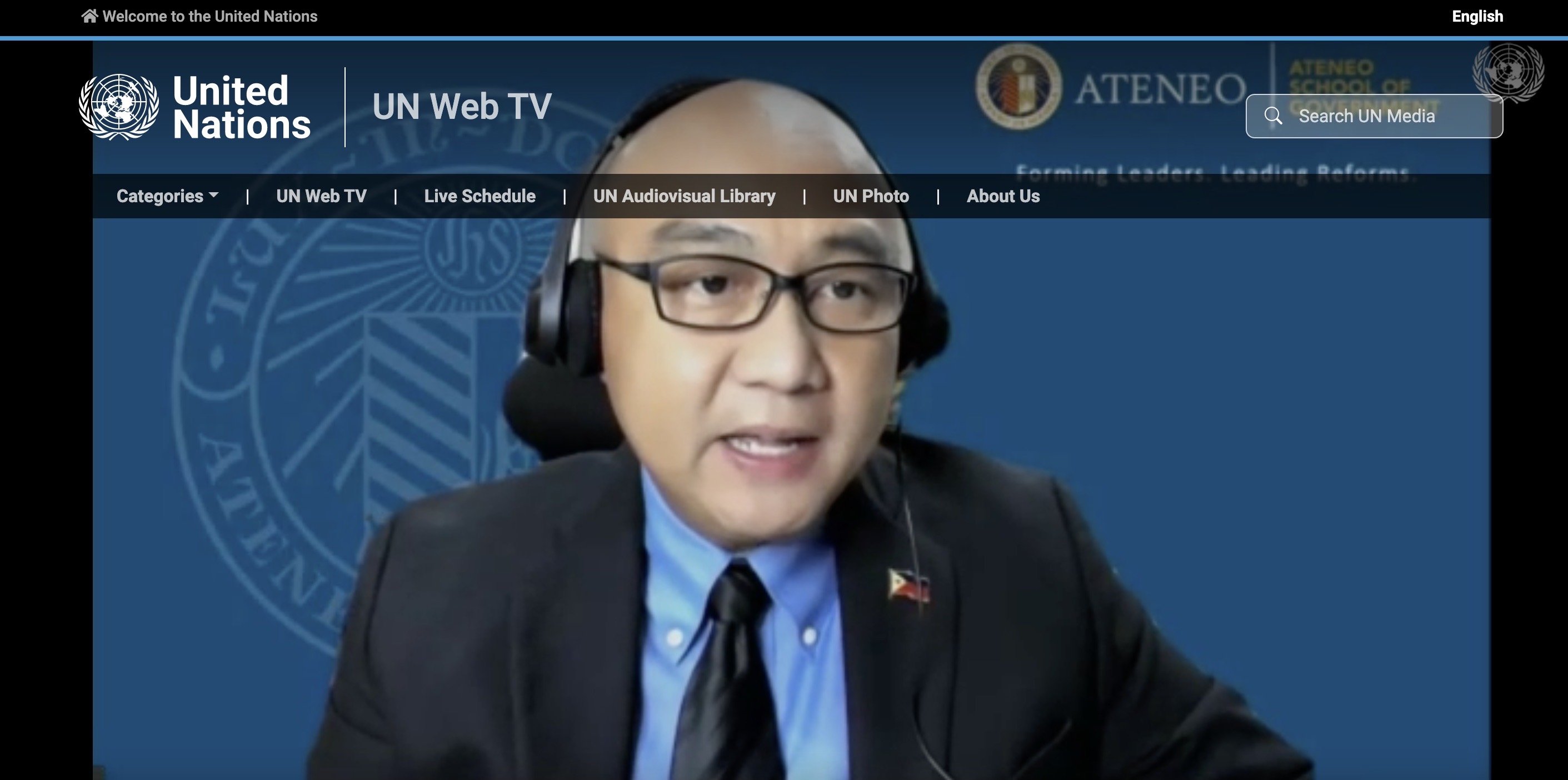
Ateneo School of Government (ASOG) Dean Ronald U Mendoza participated in the 21st Session of the Committee of the Experts on Public Administration (CEPA) held at the United Nations in New York, using hi-flex format, from 4-8 April 2022. He submitted a paper on participatory budgeting and public finance featuring the Philippines' experience; and he also served as an expert in a roundtable discussion of voluntary local and national reviews of progress towards achieving the Sustainable Development Goals (SDGs).
In early 2021, the United Nations Economic and Social Council (UN ECOSOC) approved Dean Mendoza’s appointment to serve with the 24-person UN Committee of the Experts on Public Administration (CEPA) where he is expected to serve as a member with specializations in economic development, governance, political economy and institutional reforms until 2025.
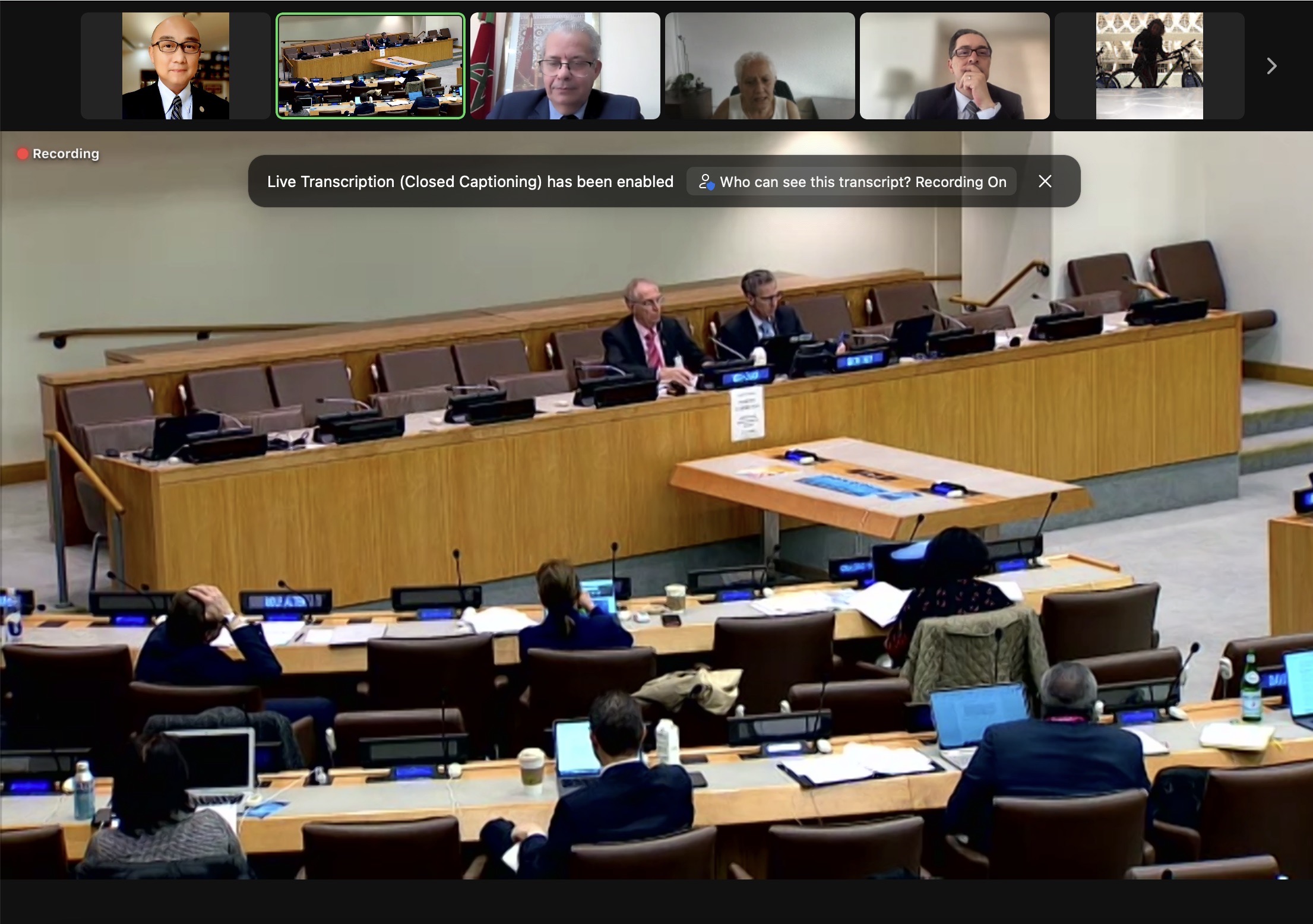
His remarks on the voluntary local review of the progress of Shah Alam City, Malaysia towards the SDGs, are attached below, and the meeting can be viewed on UN Web TV here: https://media.un.org/en/asset/k17/k173jp5uah?fbclid=IwAR0UUI08x0DXhAiPKHWlxb0icP_ZQyTeuKxayu6zGMvIp9Jfpp9fHjLajOQ.
Comments on the Shah Alam City Voluntary Local Review
Ronald U Mendoza PhD
Dean and Professor of Economics
Ateneo de Manila University School of Government (rumendoza@ateneo.edu)
UN ECOSOC, 7 April 2022
The voluntary local review for Shah Alam City revealed a number of impressive gains to achieve the SDGs despite the challenges brought about by the pandemic period of the last 2 years. Some elements were quite striking.
First, the institutional and partnership links across national and local policy planning and execution reflected strong efforts towards coherence. Clearly, effective decentralization is necessary to achieve the SDGs and this seems well reflected in the Shah Alam City VLR (e.g. MBSA Local Plan 2019; Shah Alam Draft Local Plan 2035).
Second, the development of clear measures for SDGs both at the national and local levels was a work in progress but nevertheless pointed in the right direction as far as the Shah Alam VLR.
And finally, the emphasis on disaggregated data in order to make sure that no one is left behind is important. Leveraging this data in a strategy that builds on transparency and citizens’ engagement offers pathways for citizens to better appreciate and sustain the reform.
The pandemic, however, has raised a number of challenges, similar to many other countries facing the last two pandemic years. For Shah Alam, these included:
1) The pandemic impact on the local economy and community livelihoods;
2) The concurrent challenges in resources to budget effectively for the SDGs;
3) The impact of mobility restrictions on local service delivery, as well as its effect on more proactive citizens’ engagement;
4) And finally the impact of the pandemic disruption on decision-making processes at the city-level.
These pandemic consequences are not unique to Shah Alam. The World Public Sector Report notes that: “The COVID-19 pandemic has impacted SDG monitoring, follow-up and review. It has negatively affected the fulfillment of monitoring responsibilities and the routine operation of national statistical systems and oversight bodies. It has also imposed new challenges to the participation of stakeholders, and disrupted VNR preparations as a result of social distancing measures. Innovation, new partnerships and digital technologies have been crucial to support SDG monitoring. However, structural bottlenecks related to communications infrastructure and access to digital devices should be addressed to ensure inclusive and effective SDG monitoring, follow-up and review going forward (UN 2021).”
Fortunately, the SDGs bring some guiding principles during these volatile and uncertain times, and it is reassuring to see in the Shah Alam VLR some very positive actions to keep on track and counteract the unequalizing and disempowering after-effects of the pandemic. Key issues that still need addressing but are nevertheless adequately identified and flagged in the Shah Alam VLR include, for example:
1) Responding to growth and demand for safe and efficient transport and housing;
2) Addressing peri-urban inequality and risks (e.g. flood and drought):
3) Raising citizens’ awareness and behavioral change in response to urbanization challenges (waste creation/disposal);
4) Responding in general to inequality in resilience against shocks and crises, which, if left unchecked, will likely fuel a non-inclusive recovery and worsen inequality.
In order to meet these challenges, and as regards moving forward, the World Public Sector Report suggests several strategies for strengthening efforts to achieve the SDGs. These include regular capacity gap analyses and metrics on capacity building to better address the needs to strengthen implementation of the SDGs policies. In addition, the VLRs and VNRs can serve as high profile vehicles to communicate to the public capacity building assessments and needs; as well as push for stronger coherence across policies and galvanize efforts to achieve the SDGs at both national and local levels of governance (UN 2021). Further, the policy toolkit for guiding a more inclusive recovery from the pandemic could be built around the experiences of different countries learning from what works, and emerging good practices.
More open and transparent discussions of these policy options could also help spur reformists and stakeholders to advance the build-back-better agenda, drawing on what other countries have managed to accomplish. This is an important ingredient as some countries are still affected by the twin-Ps of pandemic and populist tendencies. The pandemic likely threatens to exacerbate inequality, and with this, the elevates the risk for political volatility as well. Amidst uncertainty and volatility in the medium term, it is critical that citizens’ empowerment underpin the process of governing recovery—as nations wrestle with the possible over-concentration of power in the hands of government during the pandemic.
Over-all the Shah Alam VLR identifies social, economic and political inclusion among its main strategic levers: “Moving forward on this agenda of inclusion, with participation, transparency and multi-stakeholderism via various engagement and consultation process, there will be more particular emphasis on women’s leadership, gender, disability, indigenous and local knowledge, and youth and children. MBSA also continuously engage all stakeholder groups in the multi-realm (political, economic, social, environmental, and cultural governance) of development processes, upholding the gender equity and social inclusion (GESI) principle.”
References
UN. 2021. World Public Sector Report 2021. [Available at: https://www.un.org/en/desa/world-public-sector-report].
Urbanice Malaysia. 2021. Shah Alam City Voluntary Local Review: Implementing the 2030 SDG Agenda in the City of Shah Alam. [Available at: https://sdgs.un.org/sites/default/files/2021-07/VLR%20SDGs%20Shah%20Alam.pdf]
Recent News
You may also like these articles
ASOG’s Tobacco Control initiatives spotlighted in DOH National Technical Working Group for Tobacco Prevention and Control
On March 10 to 12, 2026, the Ateneo School of Government (ASOG), through its research and public policy unit, the Ateneo Policy Center, participated in
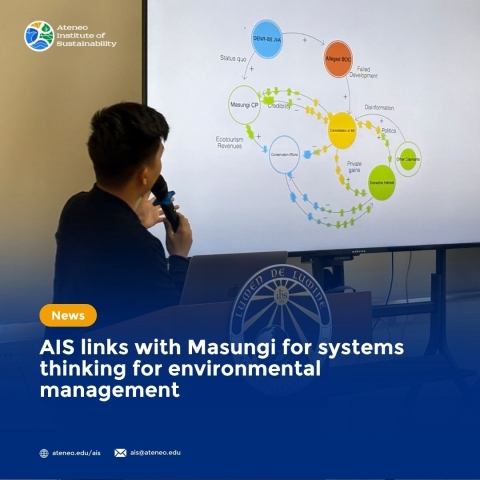
AIS links with Masungi for systems thinking for environmental management
Last 23-24 March 2026, the Ateneo Institute of Sustainability (AIS) , which manages the My Climate Risk – Ateneo de Manila University Regional Hub
BIR and Ateneo sign MOU for academic cooperation and research collaboration
The Bureau of Internal Revenue (BIR) and Ateneo de Manila University recently signed a memorandum of understanding (MOU) for academic cooperation and research collaboration. The
ASOG meets with Department of Health—Bureau of International Health Cooperation to strengthen institutional partnership
On 27 February 2026, the Ateneo School of Government (ASOG), through its research and public policy unit, the Ateneo Policy Center, held a courtesy meeting
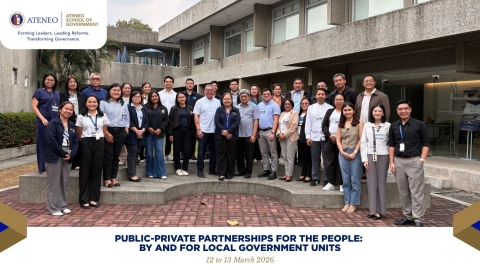
ASOG Executive Education Program Leads Open Training Course on Public-Private Partnerships for the People: By and For Local Government Units
The Ateneo School of Government, through its Executive Education Program, conducted a two-day training course on Public-Private Partnerships for the People (PPPP): By and For

Dr Alfredo RA ‘Alran’ Bengzon (20 October 1935 – 3 March 2026 ) (Memo U2526-076)
(Memo #U2526-076) With deep sadness, we inform the University community of the passing of Dr Alfredo RA ‘Alran’ Bengzon on 3 March 2026.