Defense experts, rights advocates call for long-term strategy in security reforms
13 Nov 2025


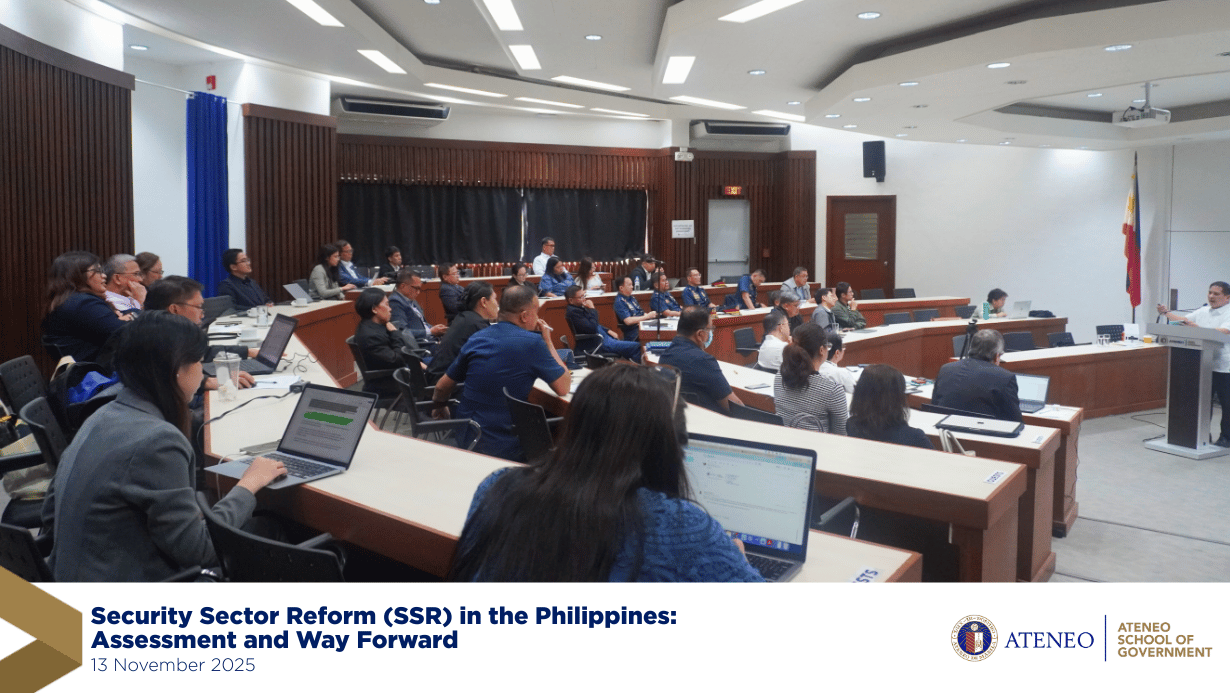
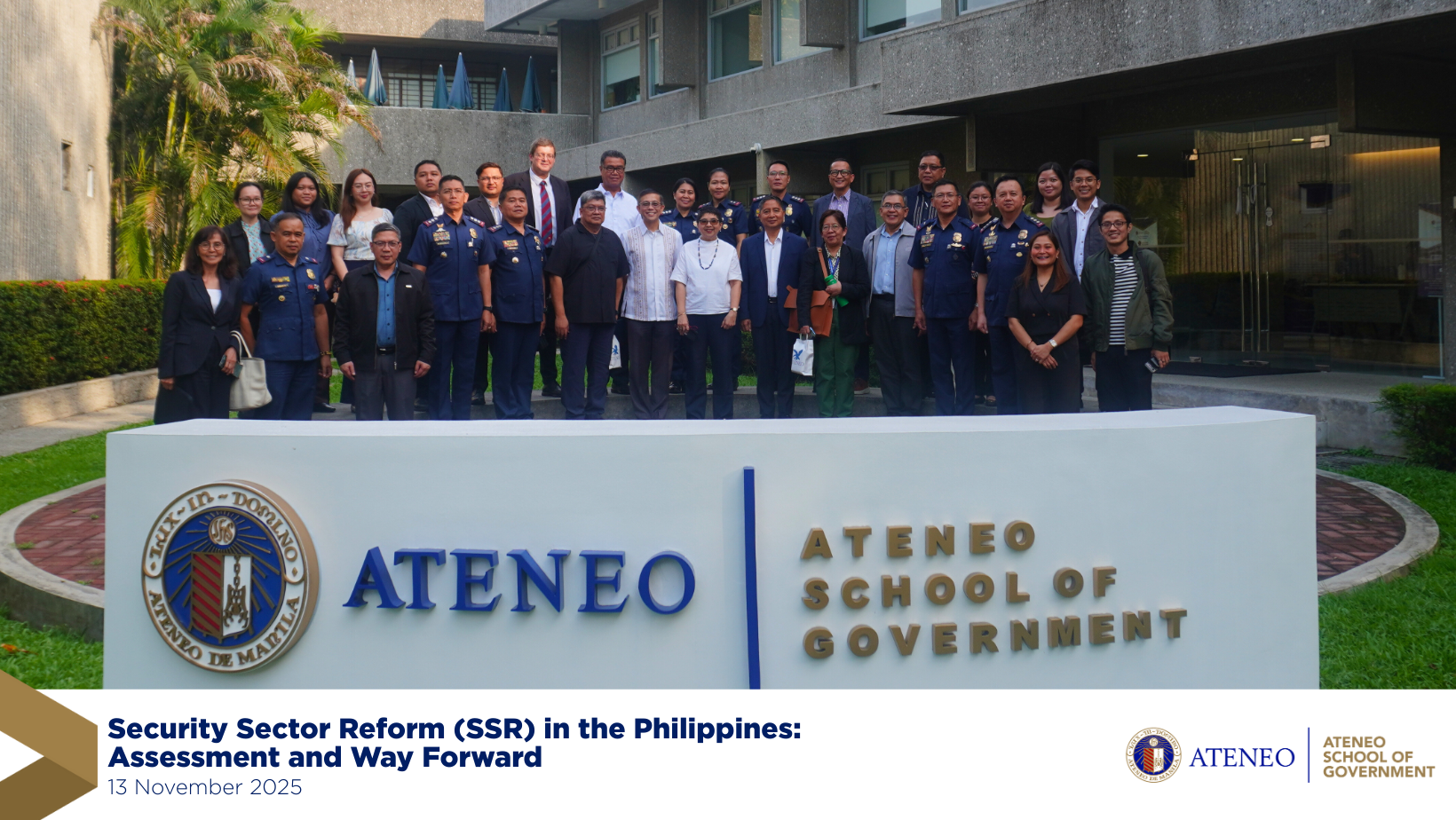
QUEZON CITY – Former defense officials, human rights advocates, academics, civil society leaders, and international partners pushed for strengthened accountability mechanisms and a long-term national strategy in security governance during a forum organized by the Ateneo School of Government (ASoG) held last November 13.
At the Security Sector Reform (SSR) in the Philippines: Assessment and Way Forward forum, ASoG Professorial Lecturer retired RAdm. Rommel Jude Ong emphasized that SSR must be understood as a political and social process rather than a purely technical undertaking.
“Security Sector Reform is about building institutions that protect our people with professionalism, accountability, and respect for human dignity,” Ong said. “Successful reforms require political continuity, sustained oversight, and the collective will to ensure that security institutions remain firmly rooted in democratic principles.”
DCAF – Geneva Centre for Security Sector Governance Head of Asia-Pacific Unit Dr. Albrecht Schnabel described the forum as timely because of global uncertainties such as cyber threats and geopolitical tensions that require security institutions to remain adaptable.
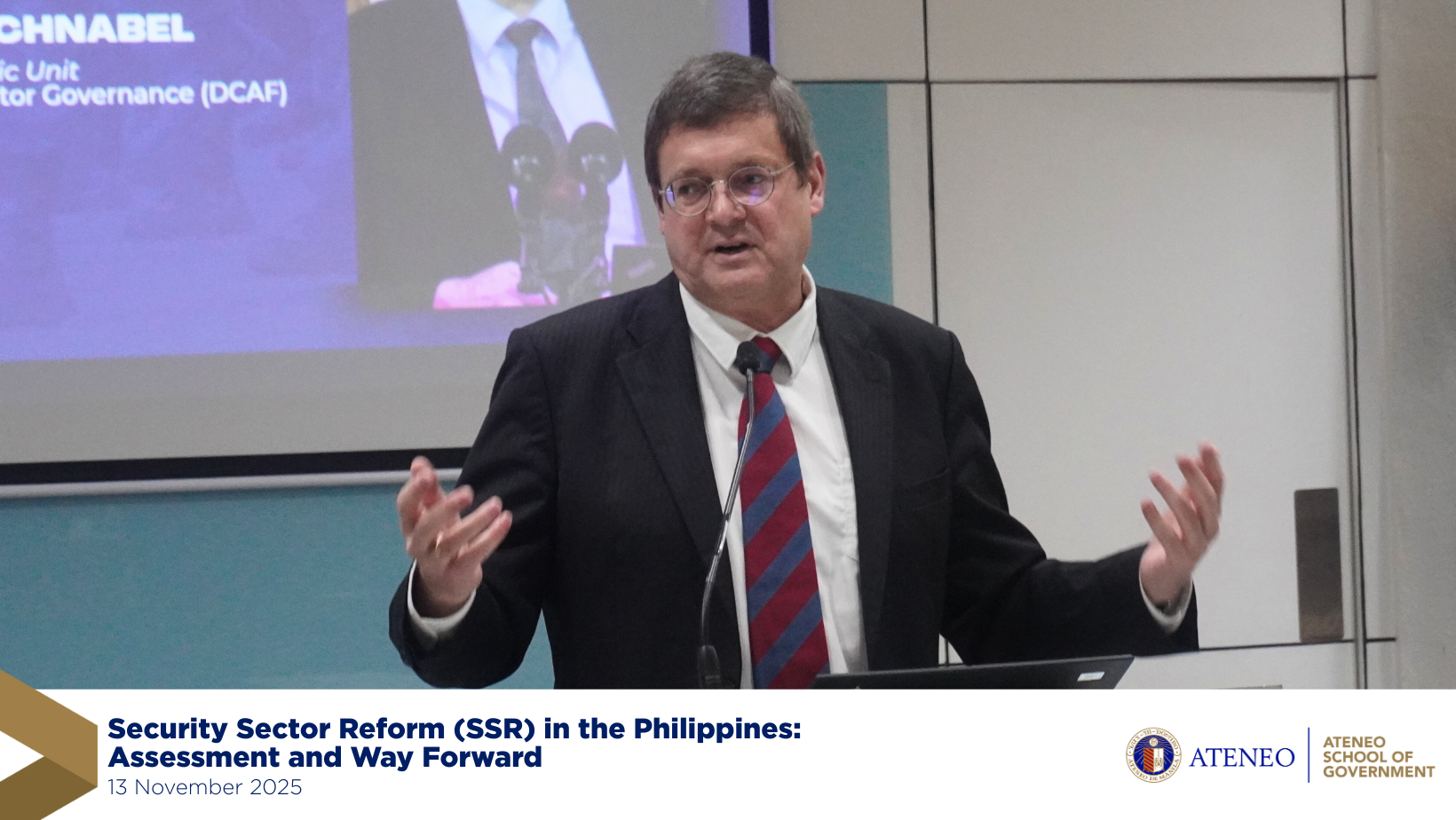
“In a rapidly changing world, even experts must learn to become students again. Trust and accountability are the foundations of effective security governance,” he said.
The forum brought together representatives from the Anti-Terrorism Council Program Management Center (ATC-PMC), Armed Forces of the Philippines (AFP), Philippine National Police (PNP), PNP Academy (PNPA), National Security Council (NSC), National Intelligence Coordinating Agency (NICA), Philippine Public Safety College (PPSC), Office of the Presidential Adviser on Peace, Reconciliation, and Unity (OPAPRU), Ateneo Human Rights Center, The Asia Foundation, Friedrich Ebert Stiftung (FES), Stratbase Albert Del Rosario Institute (Stratbase ADRi), the British Embassy Manila, DCAF – Geneva Centre for Security Sector Governance, the Ateneo de Manila University Dr. Rosita G. Leong School of Social Sciences (RGLSOSS), and the Philippine Transmarine Carriers Group.
Revisiting nearly 40 years of reform
Retired AFP BGen. Joel Paloma and PNP PLtGen. Cesar Hawthorne Binag, together with human rights advocate Atty. Ray Paolo Santiago, provided an overview of SSR efforts since 1986. They highlighted advances such as the AFP Transformation Roadmap, stronger human rights training, and gender mainstreaming initiatives but also acknowledged persistent challenges in corruption, uneven implementation, and weak civilian oversight.
“Human rights must be embedded in the DNA of our security institutions,” Atty. Santiago said. “Reforms cannot remain cosmetic. They must transform the way we value dignity, justice, and the rule of law.”
Meanwhile, former AFP Chief of Staff Gen. Emmanuel Bautista stressed that SSR must be aligned with long-term national development goals. “Reforms rise and fall with political cycles. To protect momentum, SSR has to be a whole-of-nation effort.”
Confronting present-day challenges
Highlighting maritime disputes and gray-zone operations, Ong called for a long-term national security strategy that transcends politics because “hardware without doctrine will not strengthen deterrence.”
Moreover, LtGen. Rafael Valencia noted that the involvement of the military in disaster response, development work, and support to domestic policing stretched resources and blurred civilian and military boundaries.
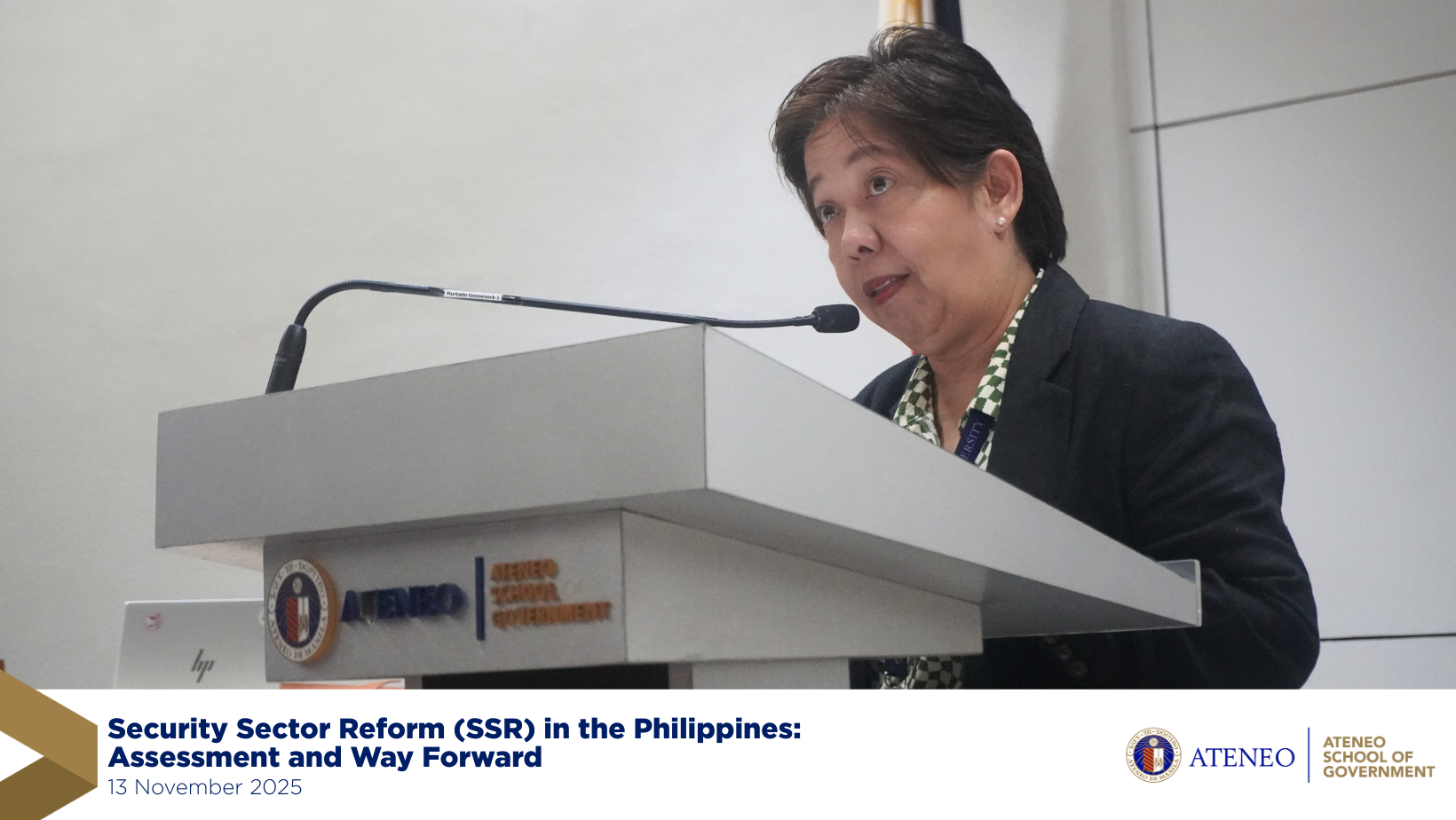
Responding to the panel discussion, Ateneo de Manila University Department of Development Studies Chair Dr. Leslie Lopez reminded participants that SSR is inseparable from development. “No country can achieve sustainable and inclusive growth without effective and accountable security institutions,” she said. “SSR is not only a security agenda but also a development agenda.”
Strengthening democratic governance
Throughout the discussions, participants underscored the need for stronger civilian oversight, depoliticized national security planning, and consistent implementation of human rights and gender policies. Civil society representatives called for greater transparency, while security officials stressed the importance of institutionalizing reforms.
In her closing remarks, ASoG Dean Dr. Jennifer S. Oreta highlighted the collective responsibility required to sustain reform momentum. “Security Sector Reform is both technical and political. It demands collaboration, vigilance, and the courage to hold our institutions and ourselves to the highest democratic standards,” she said.
Recent News
You may also like these articles
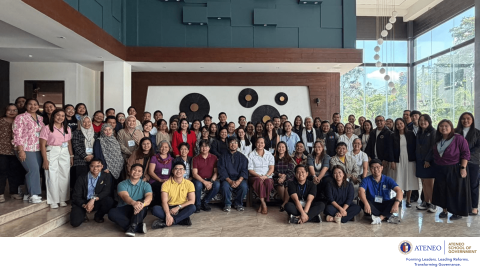
ASOG’s Tobacco Control initiatives spotlighted in DOH National Technical Working Group for Tobacco Prevention and Control
On March 10 to 12, 2026, the Ateneo School of Government (ASOG), through its research and public policy unit, the Ateneo Policy Center, participated in
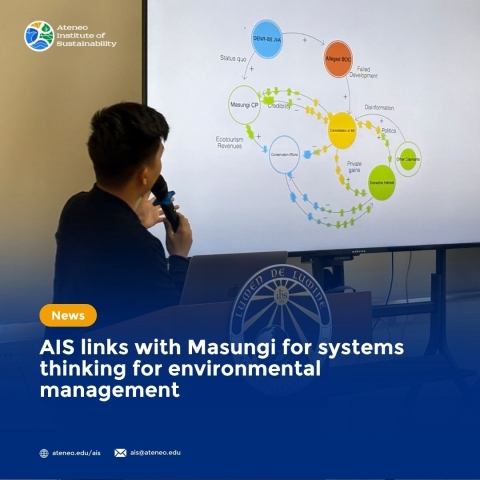
AIS links with Masungi for systems thinking for environmental management
Last 23-24 March 2026, the Ateneo Institute of Sustainability (AIS) , which manages the My Climate Risk – Ateneo de Manila University Regional Hub
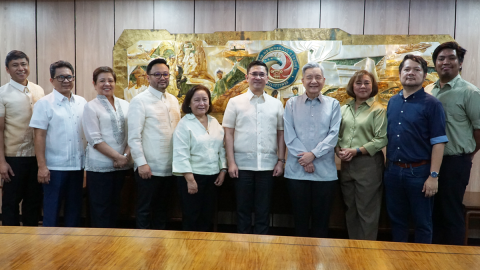
BIR and Ateneo sign MOU for academic cooperation and research collaboration
The Bureau of Internal Revenue (BIR) and Ateneo de Manila University recently signed a memorandum of understanding (MOU) for academic cooperation and research collaboration. The
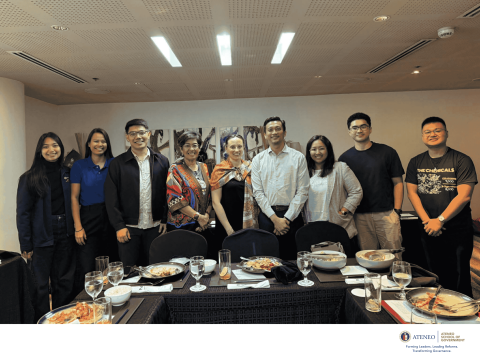
ASOG meets with Department of Health—Bureau of International Health Cooperation to strengthen institutional partnership
On 27 February 2026, the Ateneo School of Government (ASOG), through its research and public policy unit, the Ateneo Policy Center, held a courtesy meeting
ASOG Executive Education Program Leads Open Training Course on Public-Private Partnerships for the People: By and For Local Government Units
The Ateneo School of Government, through its Executive Education Program, conducted a two-day training course on Public-Private Partnerships for the People (PPPP): By and For

Dr Alfredo RA ‘Alran’ Bengzon (20 October 1935 – 3 March 2026 ) (Memo U2526-076)
(Memo #U2526-076) With deep sadness, we inform the University community of the passing of Dr Alfredo RA ‘Alran’ Bengzon on 3 March 2026.