Ateneo Breakthroughs sparks discussion on disinformation and online hate
03 Feb 2026 | Danika Geronimo, RCWI Research Communications




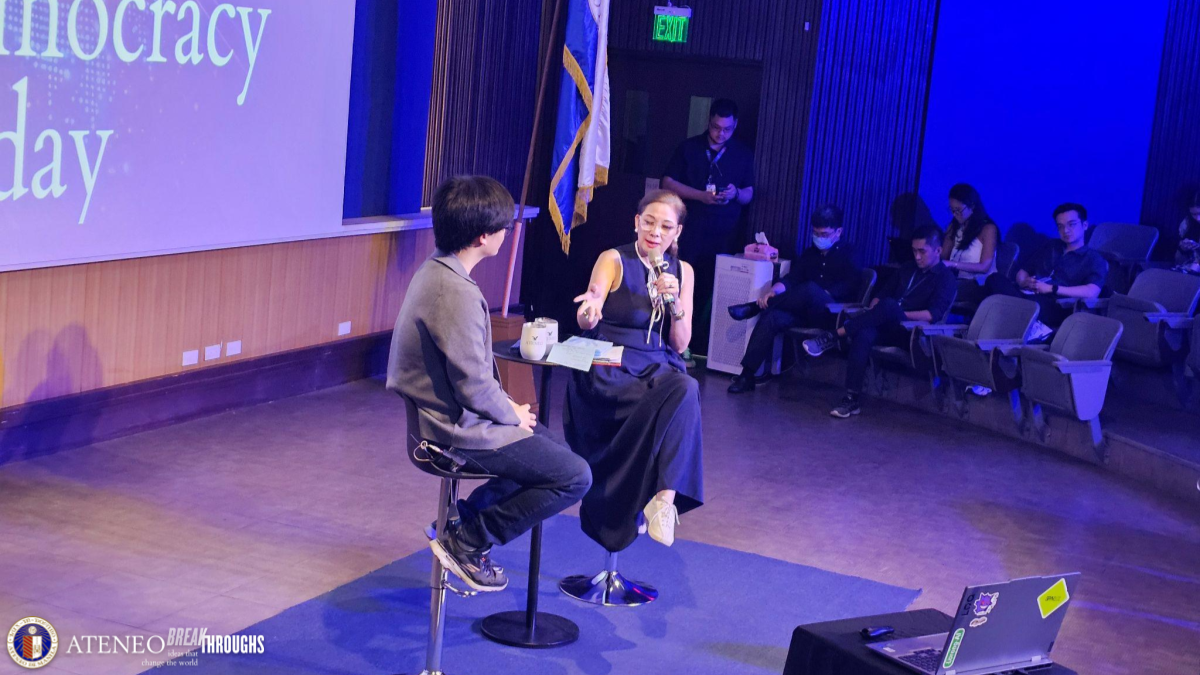
How do online and offline narratives — from political speeches to news coverage to social media talk — make and unmake a democracy?
This is what computational social scientist Dr Joshua Uyheng, director of the Ateneo Political Psychology of Democratization Laboratory and Assistant Professor at the Ateneo de Manila University Department of Psychology, and his interdisciplinary team are seeking to understand.
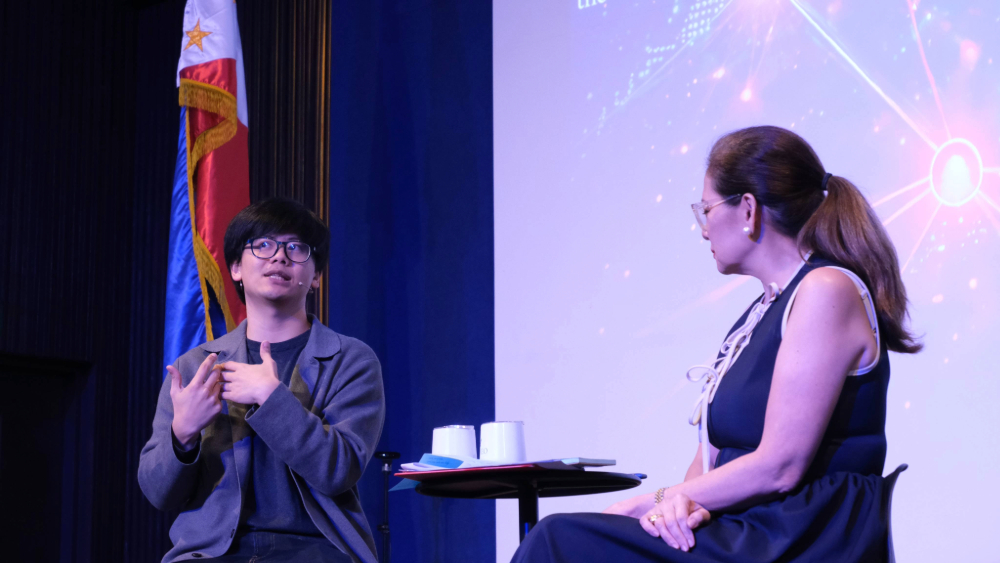
In the inaugural Ateneo Breakthroughs lecture, entitled Narratives, Networks, and Democracy Today, Uyheng touched on current issues and invited his audience to rethink what democratic life looks like when algorithms and social ties mediate attention, identity, and community.
View Uyheng’s full lecture at ateneo.edu/breakthroughs
Using computational techniques including text analysis, network analysis, and machine learning, he and his team found that Filipinos often cluster into sharply different narrative groups: the same political issue can evoke hope and euphoria in one camp, but fear and skepticism in another. Polarization can even track language use — i.e., Filipino vs English — and the values that each side holds — e.g., public security concerns and anti-elite grievances, vs human rights, rule of law, and democratic principles. He noted that people gravitate toward like-minded communities especially during crises, which can polarize and influence even offline outcomes such as policy formulation.
Importantly, Uyheng cautions that while bots and coordinated actors can accelerate division, some emotional spikes can arise largely from organic human behavior, with inauthentic accounts acting like “gasoline” on already-existing flames. Still, he offers grounded optimism: narratives of cooperation and global unity closely correlate with better collective outcomes in crises, and deliberately reshaping who talks to whom can also shift the stories groups tell about each other. This suggests that repairing democracy is, at least in part, a practical project of rebuilding meaning and relationship in online communities.
Introducing Ateneo Breakthroughs lecture series
Narratives, Networks, and Democracy Today marked the formal launch of Ateneo Breakthroughs, a public lecture series designed to ignite innovative conversations on the most urgent social questions of the day. Envisioned by Ateneo de Manila University Vice President for Higher Education Dr Maria Luz C Vilches, Ateneo Breakthroughs highlights research that engages public discourse and informs social action.
“Breakthroughs are not only the results that we publish in very prestigious journals; breakthroughs also happen when we awaken curiosity, and when we continue to hope despite evidence to the contrary,” said Dr Filomeno Aguilar Jr, Assistant Vice President for Research, Creative Work, and Innovation, on behalf of the University President, Fr Roberto Yap SJ.
For interview requests, you may reach Dr Joshua Uyheng at juyheng@ateneo.edu. For other inquiries, please email media.research@ateneo.edu. Visit archium.ateneo.edu for more information about our latest research and innovations.
Recent News
You may also like these articles
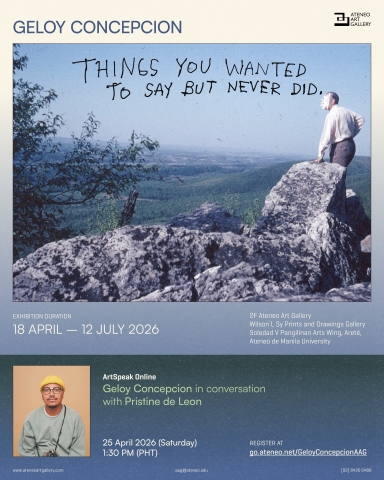
Things You Wanted to Say But Never Did: Geloy Concepcion’s six-year project makes Its exhibition debut at the Ateneo Art Gallery
Geloy Concepcion’s Things You Wanted To Say But Never Did comes to the Ateneo Art Gallery this 18 April 2026. After receiving almost 300,000 messages
QS Subject Rankings 2026: Ateneo in top 100 for theology; ranked in 7 subject areas
Ateneo de Manila University is among the top institutions in seven subject areas, and among the top 100 for theological and religious studies, according to
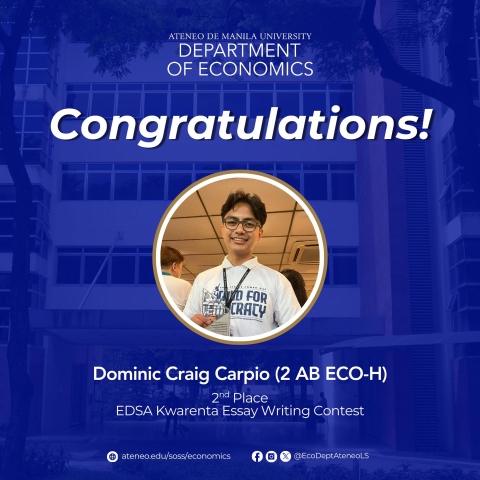
Congratulations to Dominic Craig Carpio (2 AB ECO-H) for placing 2nd in the EDSA Kwarenta Essay Writing Contest
The Department of Economics warmly congratulates Dominic Craig Carpio (2 AB ECO-H) for placing 2nd in the EDSA Kwarenta Essay Writing Contest. This achievement reflects
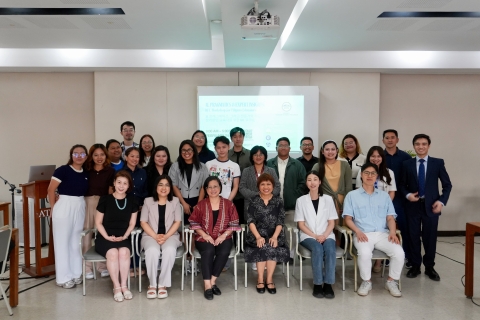
Ateneo Korean Studies Program Concludes KFL Workshop for Filipino Educators
The Ateneo Korean Studies Program, in partnership with the Global Leadership Development Institute, King Sejong Institute Quezon City 2, and the Dr. Rosita G. Leong
Deanship of the Dr Rosita G Leong School of Social Sciences (Memo # U2526-071)
(Memo # U2526-071) Following the appointment of Dr Czarina A Saloma-Akpedonu as the new Vice President for Higher Education effective 1 June 2026, I have formed a Search Committee for the next Dean of the Dr Rosita G Leong School of Social Sciences (RGLSOSS).
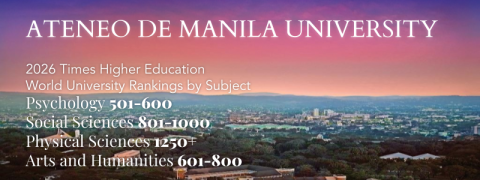
2026 THE Subject Rankings: Ateneo among top universities globally in 4 subject areas
Ateneo de Manila University is among the top higher education institutions in four subject areas in the latest Times Higher Education (THE) subject rankings. The