2016 Sustainability Policies and Specific Guidelines: Policies and Guidelines on the Use and Conservation of Materials and Energy on Built Environment
04 Dec 2021 | Ateneo de Manila University


Policy on the Use and Conservation of Materials and Energy on Built Environment
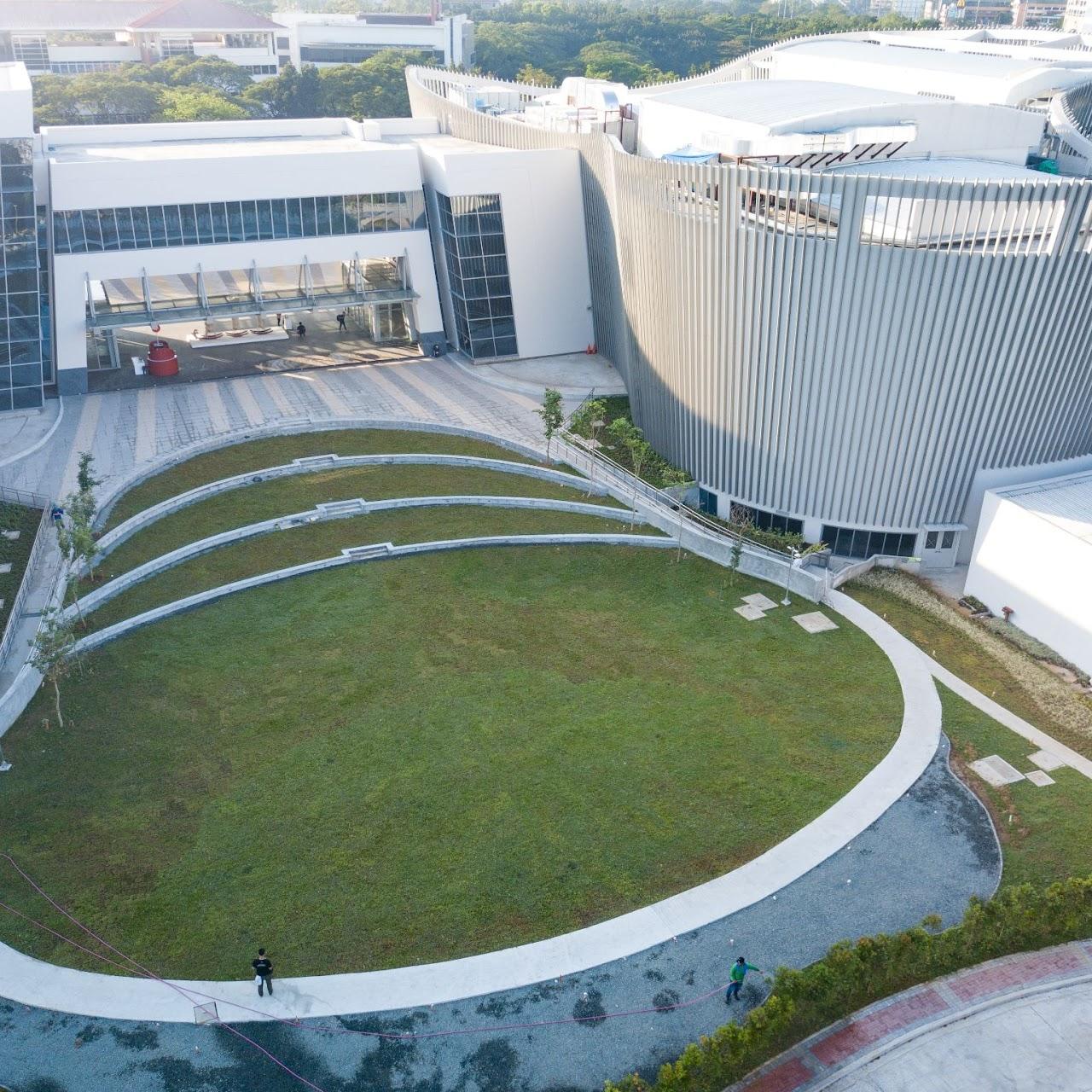
The University is committed to optimize the efficiency of the existing built environment by strictly following standards for energy-efficient and ecologically designed buildings in a tropical environment. As the University continues to expand, appropriate design and construction of projects will have to consider energy cost, energy usage, and emissions. The University is also dedicated to balance the built environment with a high degree of greenery and seamlessly connected walkways.
Guildelines on the Use and Conservation of Materials and Energy on Built Environment
Built Environment Structures
Procurement and Purchasing. New buildings/structures should incorporate Green Tropical Built Environment Principles:
-
Rainwater harvesting for dual-pipe systems or pico-hydroelectric systems
-
Roof orientation, roof design, and structural load to accommodate photovoltaic systems
-
Double envelope systems for improved insulation
-
Better window design for improved natural lighting and ventilation
-
Efficient control and design of lighting, incl. switches/bulb placement
-
Use of LED in external/ grounds lighting
-
Aerators for water taps
-
Septic tank effluent to have or be connected to sustainable wastewater treatment systems, such as the Integrated Sustainable Irrigation Systems (ISIS) and Decentralized Wastewater Treatment System (DEWATS)
-
Innovative, clean, and/or renewable technology to improve the efficiency of energy, water, and material use
Old buildings should be retrofitted according to these principles, when possible.
Usage and Maintenance. Spaces are properly utilized based on needs, functions (interrelationship), orientation, ventilation, acoustics, mobility, safety and security, and cost implications.
Waste Disposal. Waste materials should be disposed of after considering reuse, reduction, and recycling of materials, including those from demolished structures. The health and safety of stakeholders should be considered in waste management schemes. Different units are responsible for the disposal of their respectively generated waste:
-
Disposal of waste generated in the area of another unit
-
Regular disposal of hazardous waste c/o the Central Facilities and Management Office (CFMO)
-
Construction waste (c/o contractors, upon approval of CFMO)
-
Recycling of usable fixtures and furniture through different offices and units
Open grounds and roadways (mobility & transport)
Procurement and Purchasing. Grounds and pathways should incorporate sustainable design principles that encourage walkability:
-
Permeable pathways to allow water percolation
-
Perforated parking pavers and green parking lots
-
Ease and safety of navigation
-
Heavy duty roads
Usage and Maintenance. Grounds and pathways are used more efficiently, when the following are considered:
-
Conduciveness to walking, cycling, and shared transport
-
Regular maintenance of grounds and roadways
-
Smooth flow of traffic
-
Control of noise and air pollution
Waste Disposal. Road debris, yard waste, and tree maintenance are properly managed for better mobility:
-
Various forms of composting for biodegradable waste
-
Reuse of road debris for backfill and grounds improvement
In addition, the Philippine Institute of Volcanology and Seismology (PHIVOLCS) conducted an earthquake hazard assessment for the Loyola Heights campus in 2015. While all buildings are compliant with the National Building Code of the Philippines (NBCP), three older buildings identified in the hazard assessment report were retrofitted and reinforced to ensure better structural integrity. All buildings are annually checked to ensure continuous compliance with the NBCP. locations.
Related links:
Recent News
You may also like these articles
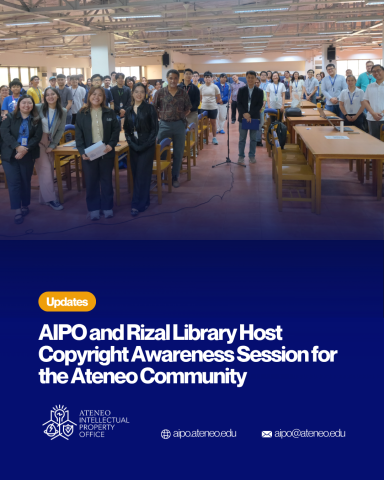
Protecting Creativity: AIPO and Rizal Library Host Copyright Awareness Session for the Ateneo Community
On March 18, 2026, the Ateneo Intellectual Property Office (AIPO), in collaboration with the Rizal Library, successfully conducted a Copyright Awareness Session held on the
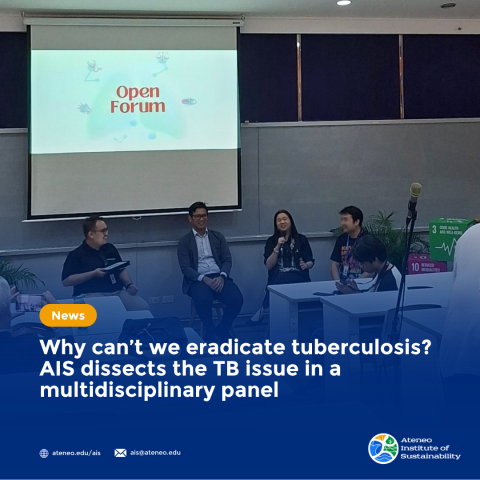
Why can’t we eradicate tuberculosis? AIS dissects the TB issue in a multidisciplinary panel
On 24 March 2026, the Ateneo Institute of Sustainability (AIS), through its Sustainable Development Goals (SDGs) Program, hosted a multidisciplinary panel in observance of World
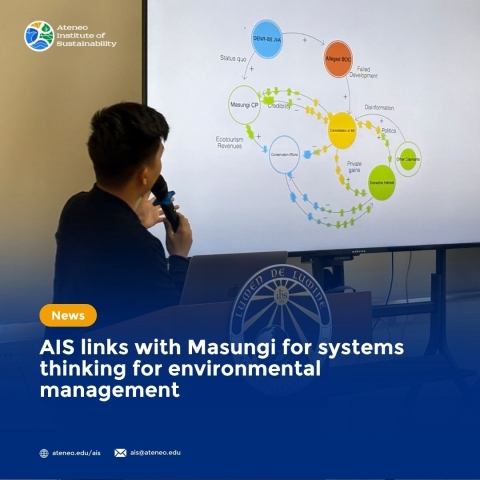
AIS links with Masungi for systems thinking for environmental management
Last 23-24 March 2026, the Ateneo Institute of Sustainability (AIS) , which manages the My Climate Risk – Ateneo de Manila University Regional Hub
Mangroves as shields of history and resilience: Insights from Dr Emma Porio
Mangrove forests have long shaped both the history and survival of coastal communities in the Philippines. According to Dr Emma Porio, Professor Emeritus (Sociology -
Professor Emeritus Dr Emma Porio to deliver keynote address at Regional Dialogue: Schools Climate Action Project
Dr Emma Porio, Professor Emeritus at Ateneo de Manila University's Dr Rosita G Leong School of Social Sciences (RGLSOSS) and Lead Author of UNFCCC-IPCC Climate
Klim@Musika
For most Filipinos, music is inseparable from daily existence. Music playlists accompany Filipinos in their commutes be it through walks, jeepneys, trains, or their private