The eyes that see you: How a TALAB activity taught us to see things often missed
25 Oct 2023 | Ignatian Spirituality Formation





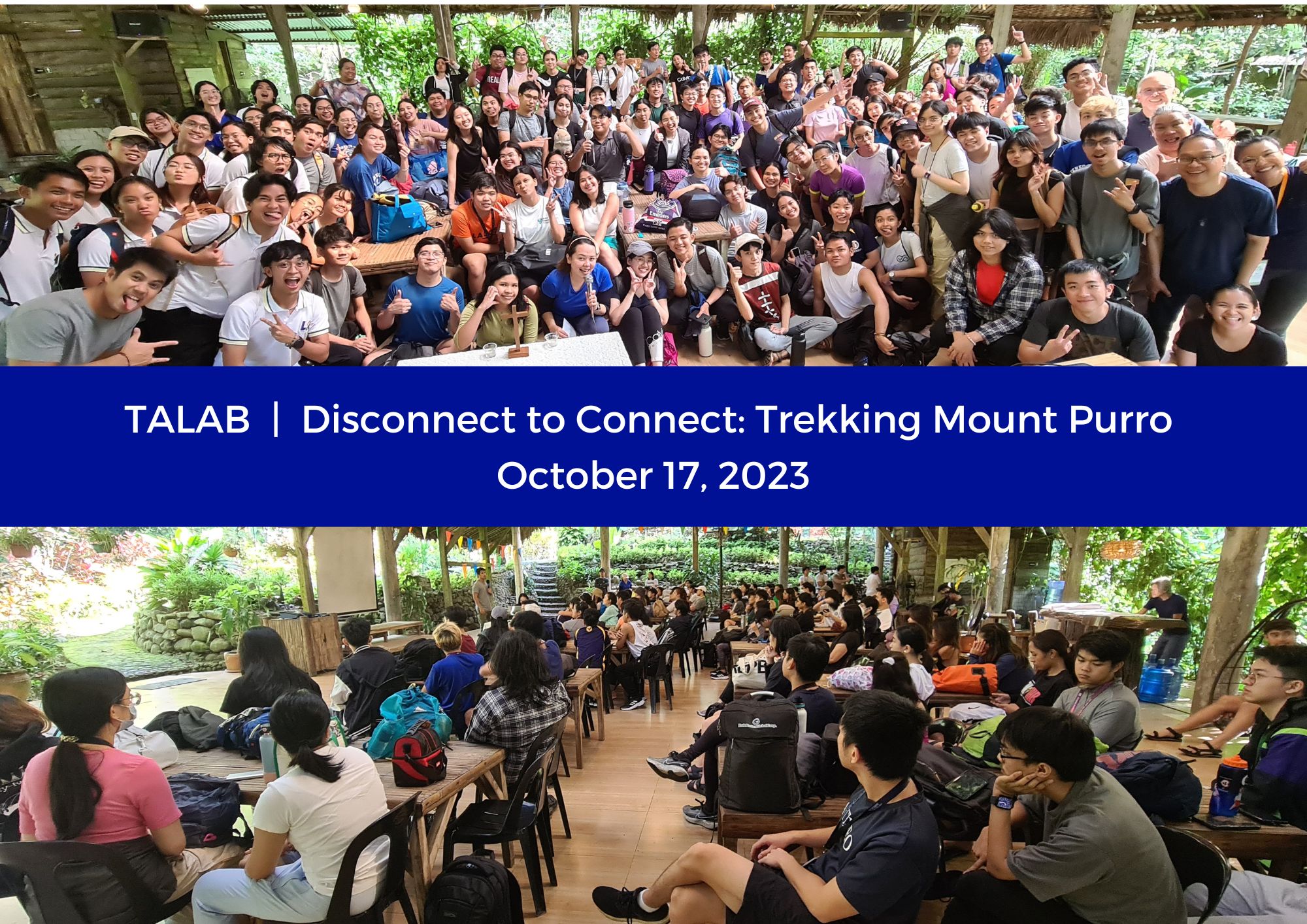
In the foothills of Sierra Madre, at the heart of the Upper Marikina watershed, sits an enchanting escape to the hustle and bustle of the city. Mount Purro Nature Reserve (MPNR), a family-run eco-park, offers some of the most beautiful sights of nature through their riverwalk and mountain hikes, heartwarming meals in Loli’s Kitchen, and eye-opening stories from the community.
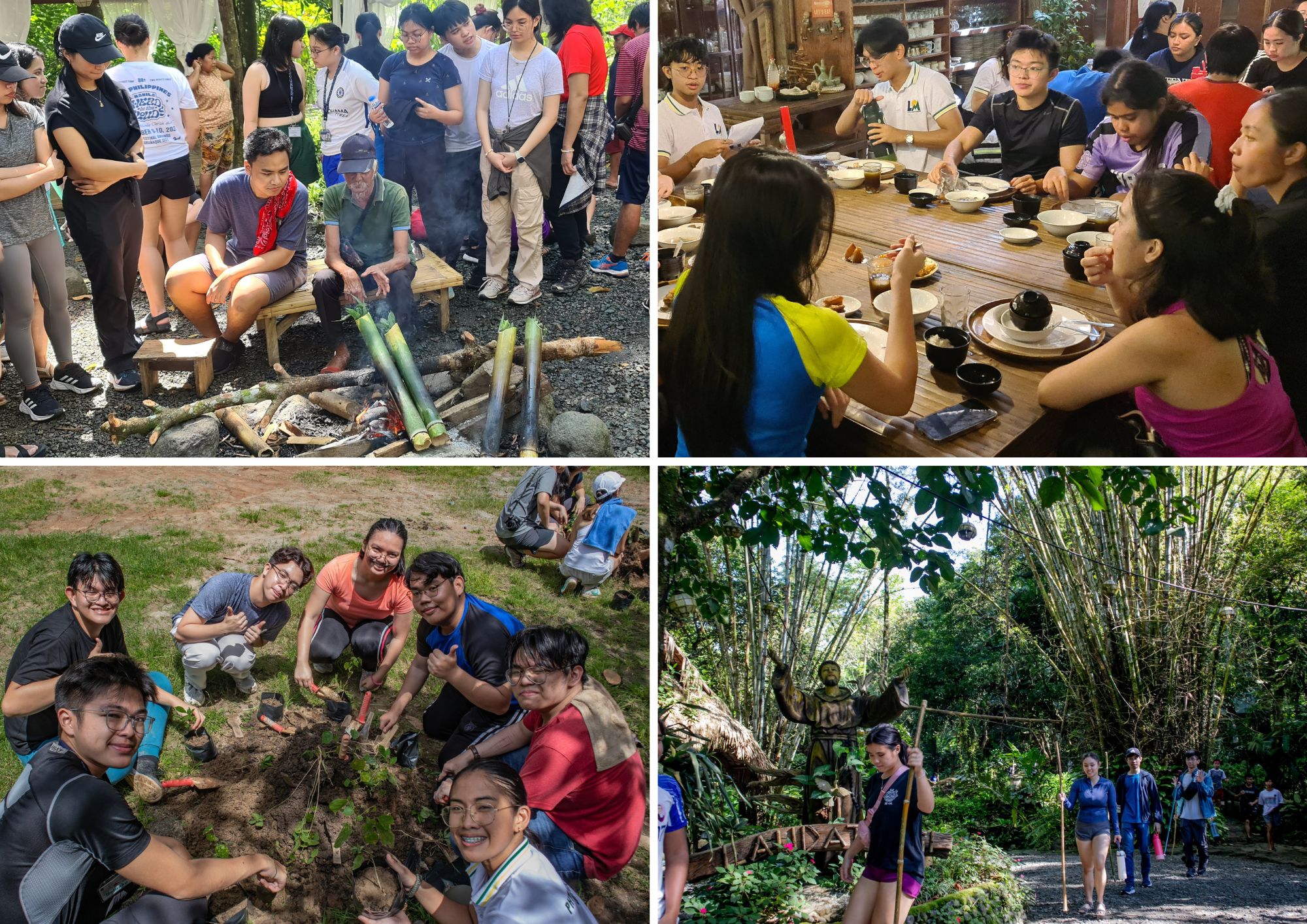
At exactly 5:30 am on 17 October 2023, students registered in the TALAB activity "Disconnect to Connect: Trekking Mount Purro" flocked to the Gonzaga parking lot, eagerly looking forward to the day’s activity. Donned in hiking attires and bags, students chatter about the countless possibilities MPNR may offer. Organized by the Office of Campus Ministry and the Office of the AVP for Ignatian Spirituality Formation, the activity promised a day of immersion in nature in order to reflect within.
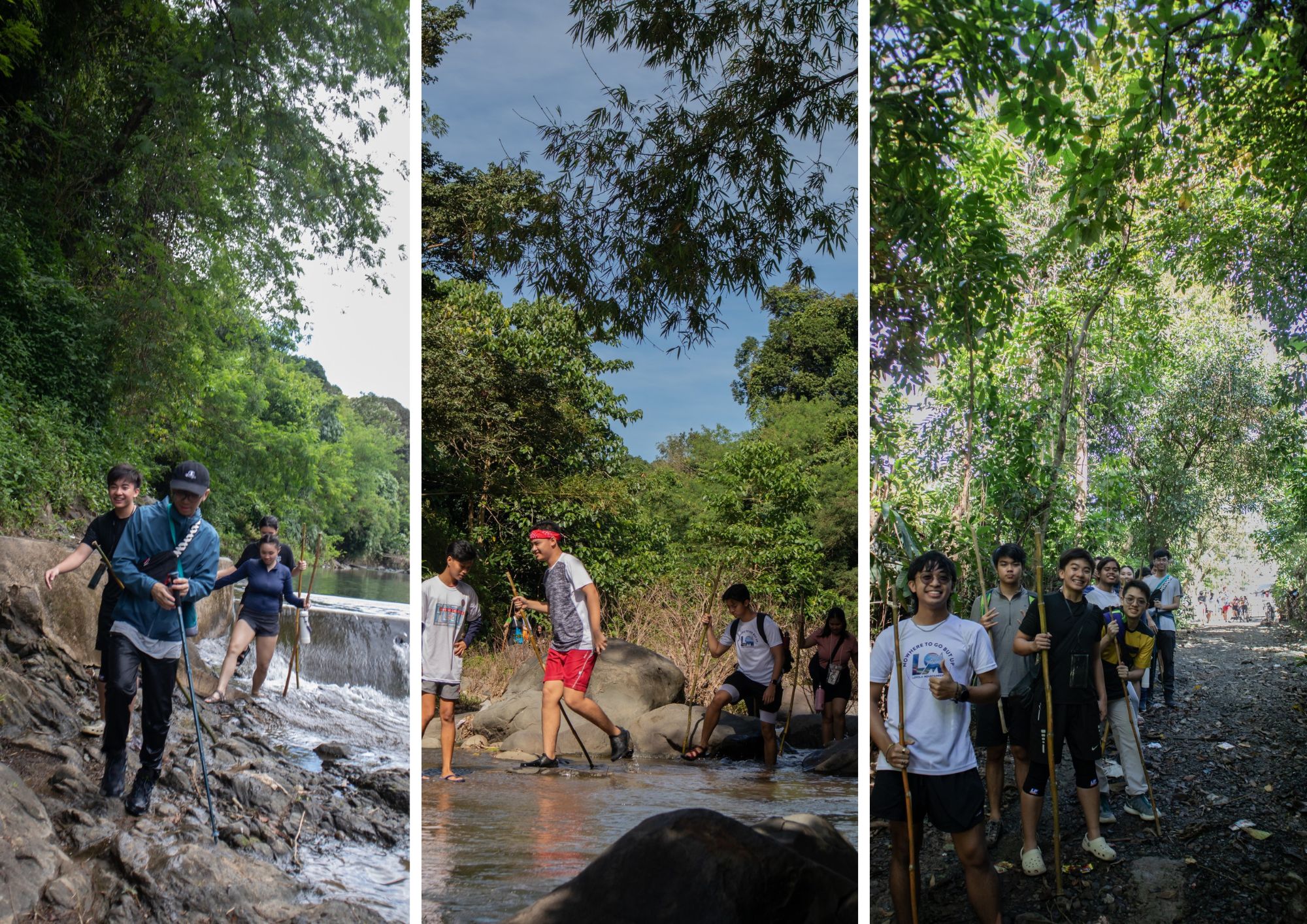
The day started with meeting the coordinators of the MPNR. Mr Toton Malvar, a second generation steward of the place, together with Mr Noel Catipon, enlightened the participants on how the MPNR started and how it came to be the sanctuary that it is today.
The legacy that his father, Toto Malvar, built along with the indigenous tribe of the Dumagats, who adopted him and his family, truly left an inspiring message. It made the hike after much more meaningful, seeing as the landscape is not just a beautiful culmination of plants, rocks, and insects, but one that tells the story of growth, community, and development.
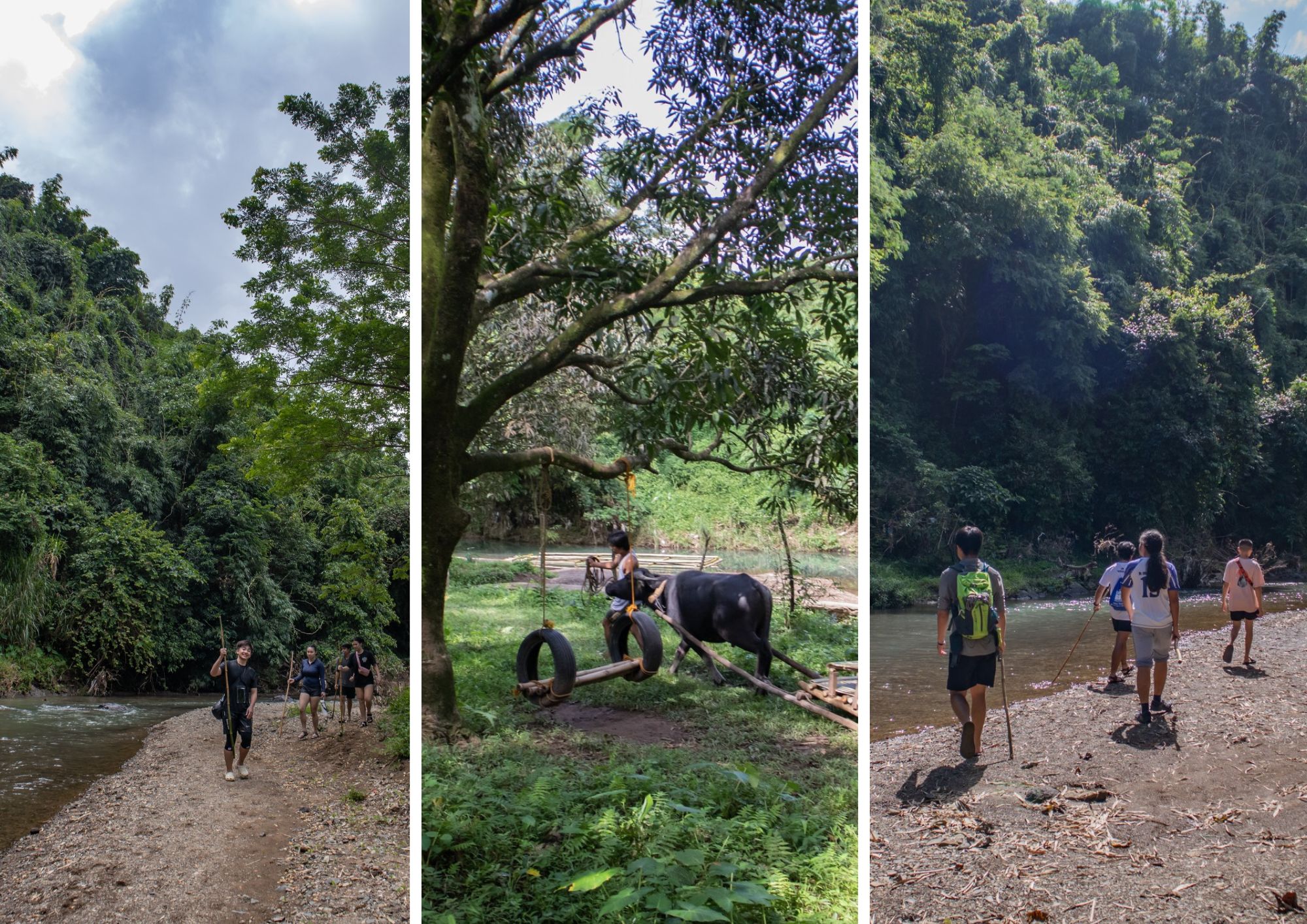
I was one of the students who joined the river hike. An almost two-hour walk, not only did we experience the marvelously clear and cool water of the river, we also observed how the locals developed a relationship with that body of water. During the hike, we noticed the numerous mothers using the river water for their laundry, making the body of water an integral part of housekeeping.
The end of the hike brought us to a mango orchard, where several carabaos idled together. The carabaos, freed from being used as transportation for the locals and tourists, were enjoying the cool water of the river. There was also a bamboo raft that the students enjoy riding, taking them on a trip around the deep parts of the lake where more flora and fauna can be discovered.
This experience was truly captivating not only because of the sight, but also because of the realization that humans depend on nature to a great extent. As students from the city, it is sometimes difficult to always keep in mind just how important nature can be, and this hike urged us to remember by making us see.
After the hike, we also got the chance to meet the community. Ka Kanor, a certified ritualist, taught us a few words in Dumagat language. Moreover, he also enlightened us about their own beliefs and culture. Specifically, he told stories of the rituals he performed.
Listening to him, I realized quickly just how important that their stories be told to the world. It is a form of keeping their culture alive as well as giving the often misunderstood community their needed representation.
Their stories and culture are even more amplified as they showed us how they usually cook and make fire using bamboo. Buho, a type of wild bamboo, is an all-purpose tree: its green shoots are used as containers for cooking, its leaves as cover, and its dried shoots as a way to start fire. I got the chance to taste their homemade sinigang and steamed rice, and I was glad I had done so. Their sinigang is unlike any other; soured by binucao, the meat of sinigang melts in your mouth and leaves a fresh and clean taste.
This meal became even more filling as Ka Kanor picked up his guitar and sang us a song he had composed. The soundscape got its inspiration from folk tunes, and the lyrics of the song itself is narrative. After the song, he told the tale of how he penned the song when they were imprisoned for days simply because of occupying their ancestral domain.
Behind the lively folk tune was a heartbreaking story of how their tribe’s homes were burned and abolished as they were once attempted to be forced out of their domain. However, Ka Kanor ends the tale on a positive tone, saying how they have triumphed since their community now has access to basic necessities such as vehicles for transportation.
This experience reminded us that we were not here just to go sightseeing, but to see real people as well.
There is a need for the Dumagat tribe to be seen, and they carry with them the often missed problem of inequality and environmental injustice.
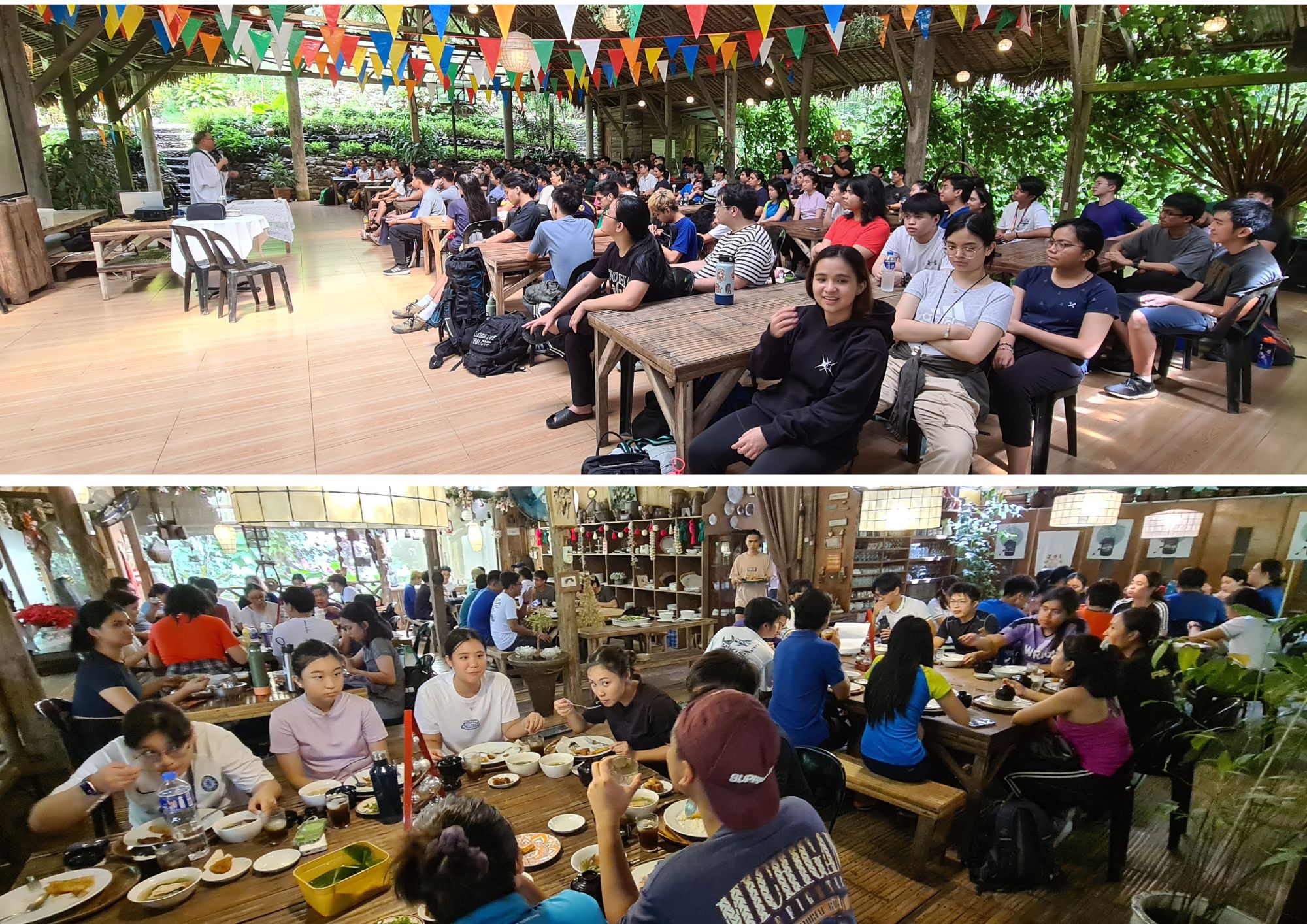
Lastly, a mass was held in time for students to reflect on their journey thus far. Fr Munching de Guzman, SJ, our presiding priest, encouraged us to think of these three words: spirituality, stewardship, solidarity. Oftentimes, we lack the time and will to reflect on what our values are and how it affects the people and environment around us.
The overall experience urged us to be more intentional on how we interact with God’s living creations. Moreover, there is also a message of solidarity and forming bonds as humans are never solitary people: there is a need to not only be a person for others, but also a person with others.
This encounter echoes just how much depth and nuance there is to nature and people. For Mount Purro, every tree tells a story of how communities come together to fight for their own lives and livelihood. Moreover, the experience allowed the student’s tired selves from the academic grind to re-evaluate their values and purpose.
It may be too easy to get blindsided and think that triumphs are won only by being good or great, but the trip to MPNR makes us see that there are things that are even more important than the hustle and bustle of the city. As the eco park’s motto tells us, “God. Nature. People.”
Written by: Kathrina Marie Catiis, 3 BS Biology
Recent News
You may also like these articles
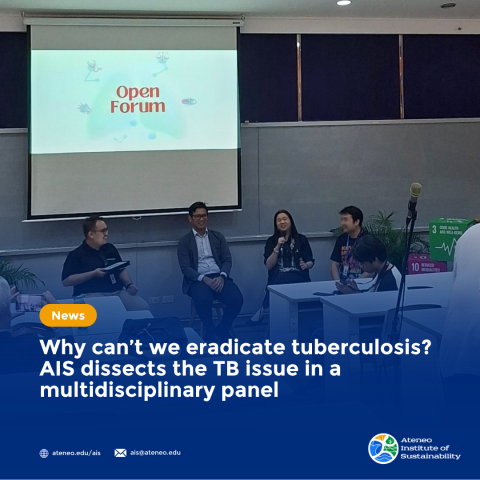
Why can’t we eradicate tuberculosis? AIS dissects the TB issue in a multidisciplinary panel
On 24 March 2026, the Ateneo Institute of Sustainability (AIS), through its Sustainable Development Goals (SDGs) Program, hosted a multidisciplinary panel in observance of World
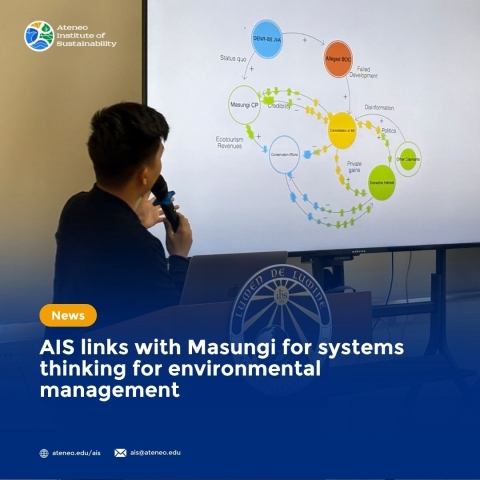
AIS links with Masungi for systems thinking for environmental management
Last 23-24 March 2026, the Ateneo Institute of Sustainability (AIS) , which manages the My Climate Risk – Ateneo de Manila University Regional Hub
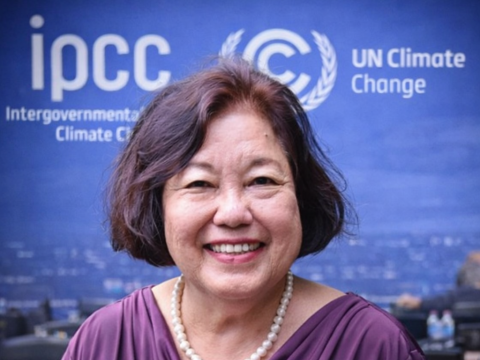
Mangroves as shields of history and resilience: Insights from Dr Emma Porio
Mangrove forests have long shaped both the history and survival of coastal communities in the Philippines. According to Dr Emma Porio, Professor Emeritus (Sociology -
Professor Emeritus Dr Emma Porio to deliver keynote address at Regional Dialogue: Schools Climate Action Project
Dr Emma Porio, Professor Emeritus at Ateneo de Manila University's Dr Rosita G Leong School of Social Sciences (RGLSOSS) and Lead Author of UNFCCC-IPCC Climate
Klim@Musika
For most Filipinos, music is inseparable from daily existence. Music playlists accompany Filipinos in their commutes be it through walks, jeepneys, trains, or their private
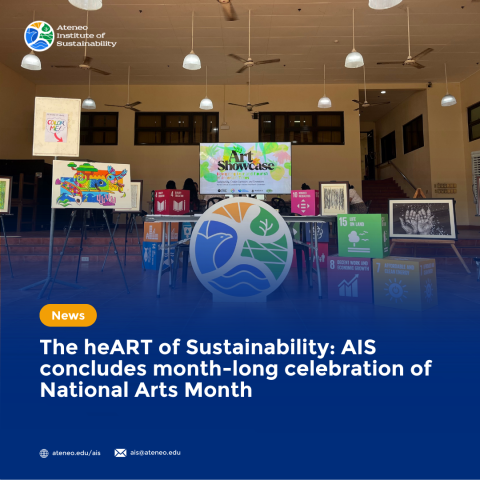
The heART of Sustainability: AIS concludes month-long celebration of National Arts Month
With the desire to make sustainability more accessible and promote its interdisciplinarity, the Ateneo Institute of Sustainability (AIS) hosted a month-long National Arts Month celebration