Ateneo leads research on digital tools for smarter health service delivery in Pasig City
28 Oct 2025




Ateneo de Manila University, through its partnership with the British Embassy Manila and the Pasig City Government, plays a central role in the Frontier Technologies Hub’s pilot project exploring how digital and data-driven tools can enhance the delivery of health and social services for vulnerable communities.
The project, titled “eTriage for Social Inclusion: Navigating Out of Vulnerability Situations” (eTSI NOVuS), aims to strengthen Pasig City’s ability to identify and support residents in need of health and social protection. The initiative embodies the Sustainable Development Goal principle of “leaving no one behind” by using technology and evidence-based methods to ensure equitable access to essential services.
Ateneo’s Role: Grounding Digital Innovation in Local Realities
Ateneo de Manila University led the user research and field scoping phase, conducting interviews with 12 key stakeholders—seven policymakers and five service providers—from various Pasig City departments. The interviews sought to understand the realities and challenges faced by local implementers of health and social programs.
Findings revealed that while Pasig City is among the most advanced local governments in the country, departments still operate in silos, with overlapping client bases and inconsistent data-sharing practices. The City Health Department serves senior citizens, persons with disabilities, and indigent populations; the City Social Welfare and Development Department supports women and children; and the Office for Senior Citizens Affairs caters primarily to older adults.
This fragmentation often leads to inefficiencies and missed opportunities for coordinated care. The interviews highlighted the need for a unified, interoperable health information system that can streamline coordination, data integration, and patient follow-up across agencies.
Technology as a Bridge to Inclusion
The eTSI NOVuS initiative builds upon the digital health infrastructure developed under the Better Health Programme, a collaboration between the British Embassy Manila and Pasig City. This earlier project established a digital patient registry and health information system for managing data under the city’s Non-Communicable Disease Program.
Building on this foundation, eTSI NOVuS introduces new digital tools that make it easier for the city to understand who needs help the most. Using a vulnerability triage feature and a simple color-coded tagging system, local officials can quickly spot residents who may require urgent support. By pulling together information from the National Household Targeting System (Listahanan) and local health records, the system paints a clearer picture of people’s needs—helping the city direct its services and resources more fairly and effectively.
Another important feature is the “loss to follow-up” tracker, which notifies health workers when patients miss their appointments or routine check-ups. By alerting providers early, the system helps prevent people from slipping through service gaps and gives the city a better chance to reconnect with patients who need continued care
From Data to Action: Strengthening Local Health Systems
Through these technological innovations, Pasig City is redefining how local governments use data to inform social policy. By integrating technology with human-centered design, the project demonstrates how digital tools can make health governance more inclusive, efficient, and responsive.
For Ateneo, the project underscores the university’s involvement and ensures that the system design reflects on-the-ground realities and addresses the nuanced social determinants of health and vulnerability.
This story is based on the blog “Leaving No One Behind: Using Digital and Data to Enable Smarter Targeting of Health and Social Services in the Philippines” by Dr. Dennis B. Batangan, Jaztine A. Calderon, and Patria D. Garcia, published on the Frontier Technologies Hub website.
Recent News
You may also like these articles
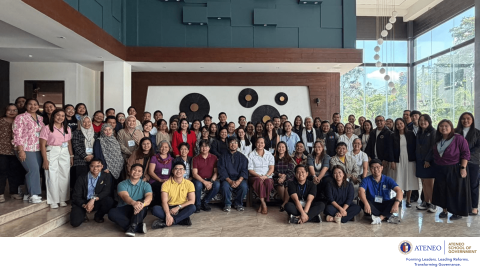
ASOG’s Tobacco Control initiatives spotlighted in DOH National Technical Working Group for Tobacco Prevention and Control
On March 10 to 12, 2026, the Ateneo School of Government (ASOG), through its research and public policy unit, the Ateneo Policy Center, participated in
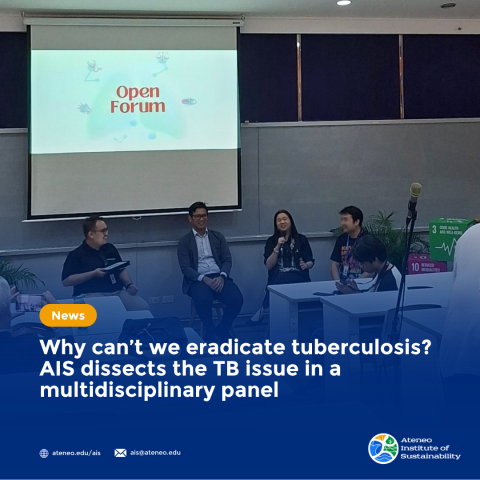
Why can’t we eradicate tuberculosis? AIS dissects the TB issue in a multidisciplinary panel
On 24 March 2026, the Ateneo Institute of Sustainability (AIS), through its Sustainable Development Goals (SDGs) Program, hosted a multidisciplinary panel in observance of World
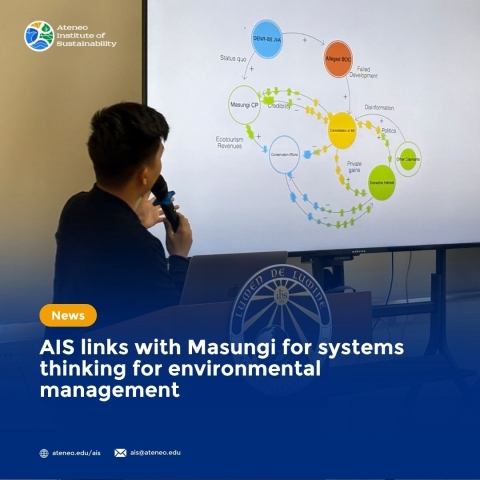
AIS links with Masungi for systems thinking for environmental management
Last 23-24 March 2026, the Ateneo Institute of Sustainability (AIS) , which manages the My Climate Risk – Ateneo de Manila University Regional Hub

BIR and Ateneo sign MOU for academic cooperation and research collaboration
The Bureau of Internal Revenue (BIR) and Ateneo de Manila University recently signed a memorandum of understanding (MOU) for academic cooperation and research collaboration. The

ASOG meets with Department of Health—Bureau of International Health Cooperation to strengthen institutional partnership
On 27 February 2026, the Ateneo School of Government (ASOG), through its research and public policy unit, the Ateneo Policy Center, held a courtesy meeting
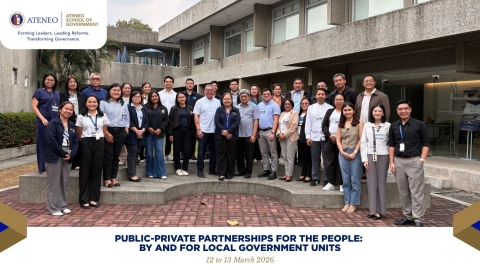
ASOG Executive Education Program Leads Open Training Course on Public-Private Partnerships for the People: By and For Local Government Units
The Ateneo School of Government, through its Executive Education Program, conducted a two-day training course on Public-Private Partnerships for the People (PPPP): By and For