ASOG conducts webinar on AI and robotics in modern military warfare
21 Feb 2023


The Ateneo School of Government (ASoG), in partnership with the National Defense College of the Philippines (NDCP) through the Philippine Center of Excellence in Defense, Development, and Security (PCEDS) and the Naval Information and Communication Technology Center (NICTC), recently concluded a Webinar entitled “Military Applications of Artificial Intelligence and Robotics: Leveraging Technologies for Philippines’ Defense Posture” on February 8 and 10, 2023 from 9:00 am to 11:00 am.
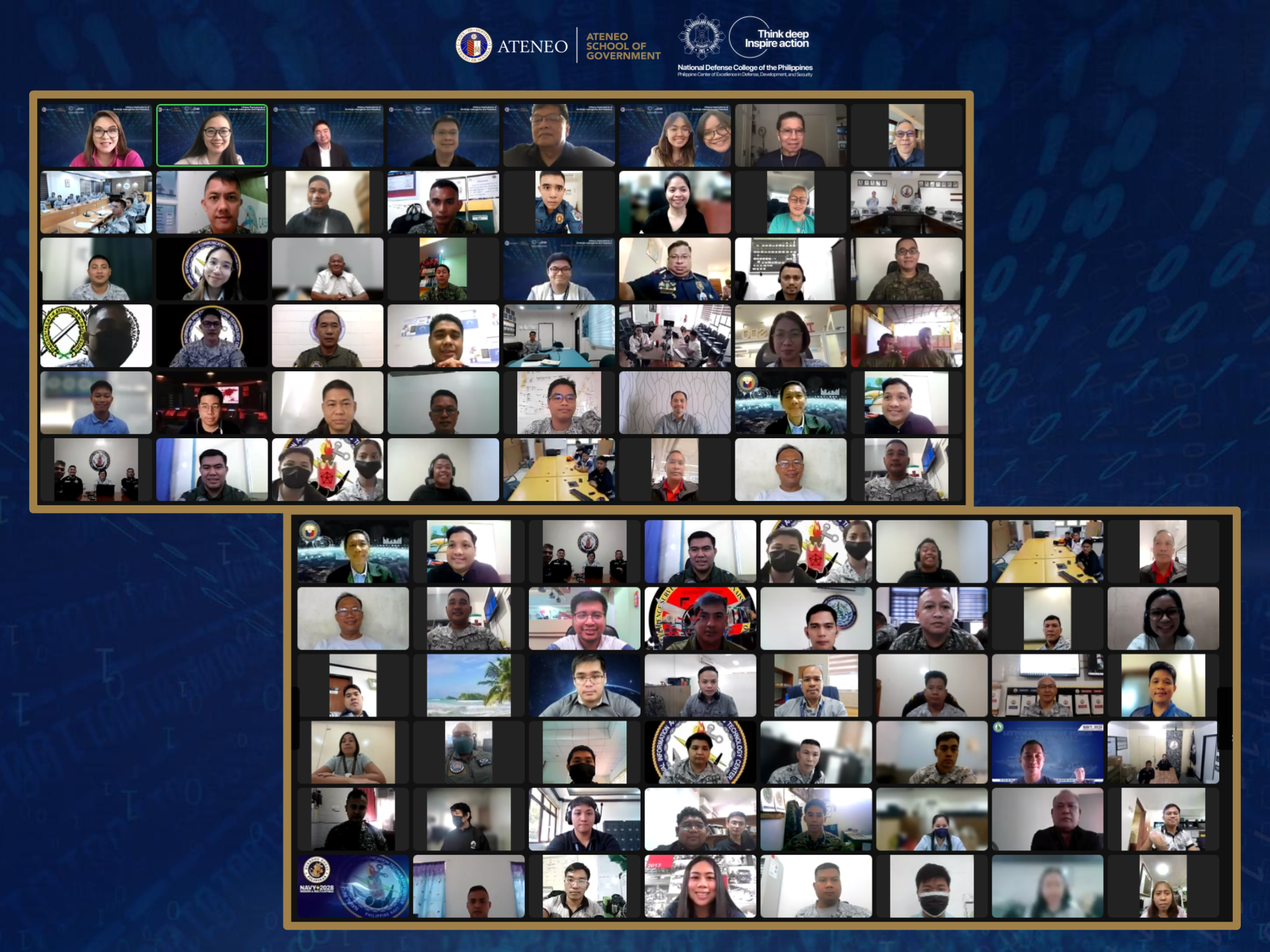
Attended by over 200 participants, the 2-day webinar highlighted the military applications of Artificial Intelligence and Robotics. It meant to provide its audience with a foundational understanding of these emerging technologies, their potential employment in modern warfare, ethical considerations in their use, and as a way ahead, a sense of the policy initiatives that the Armed Forces of the Philippines may need to adopt as part of its modernization program.
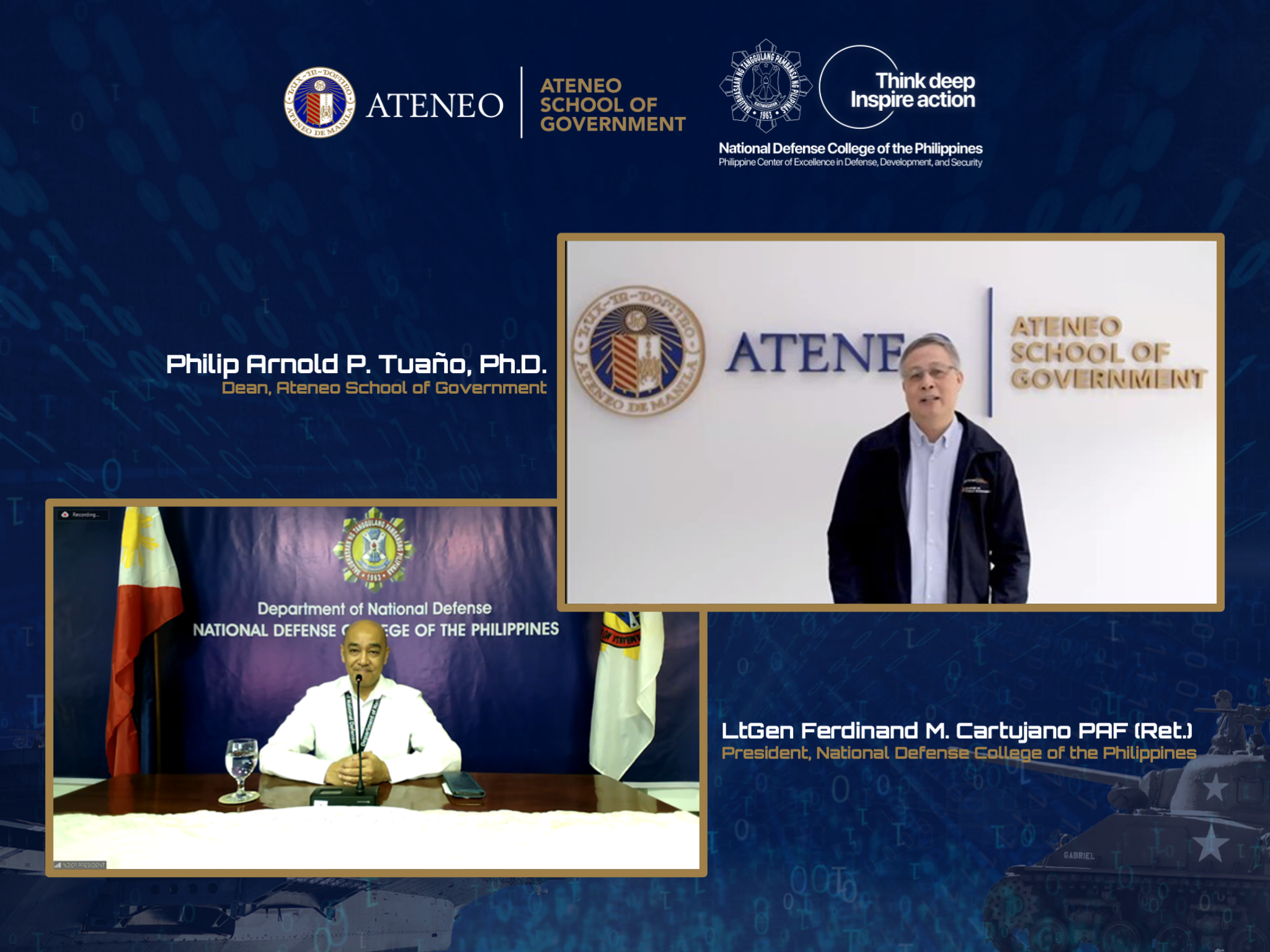
During the opening of the event on February 08, NDCP President LtGen Ferdinand Cartujano PAF (Ret) welcomed the participants from the academe and government’s national security sector. Gen Cartujano highlighted the importance of these new technologies in further strengthening the country’s defense capability. The day proceeded with the lectures about Robotics from Dr. Peter Singer, a Professor of Praxis from the Arizona State University and LTC Paul Lushenko, Deputy Director of the Cornell Brooks School Tech Policy Institute.
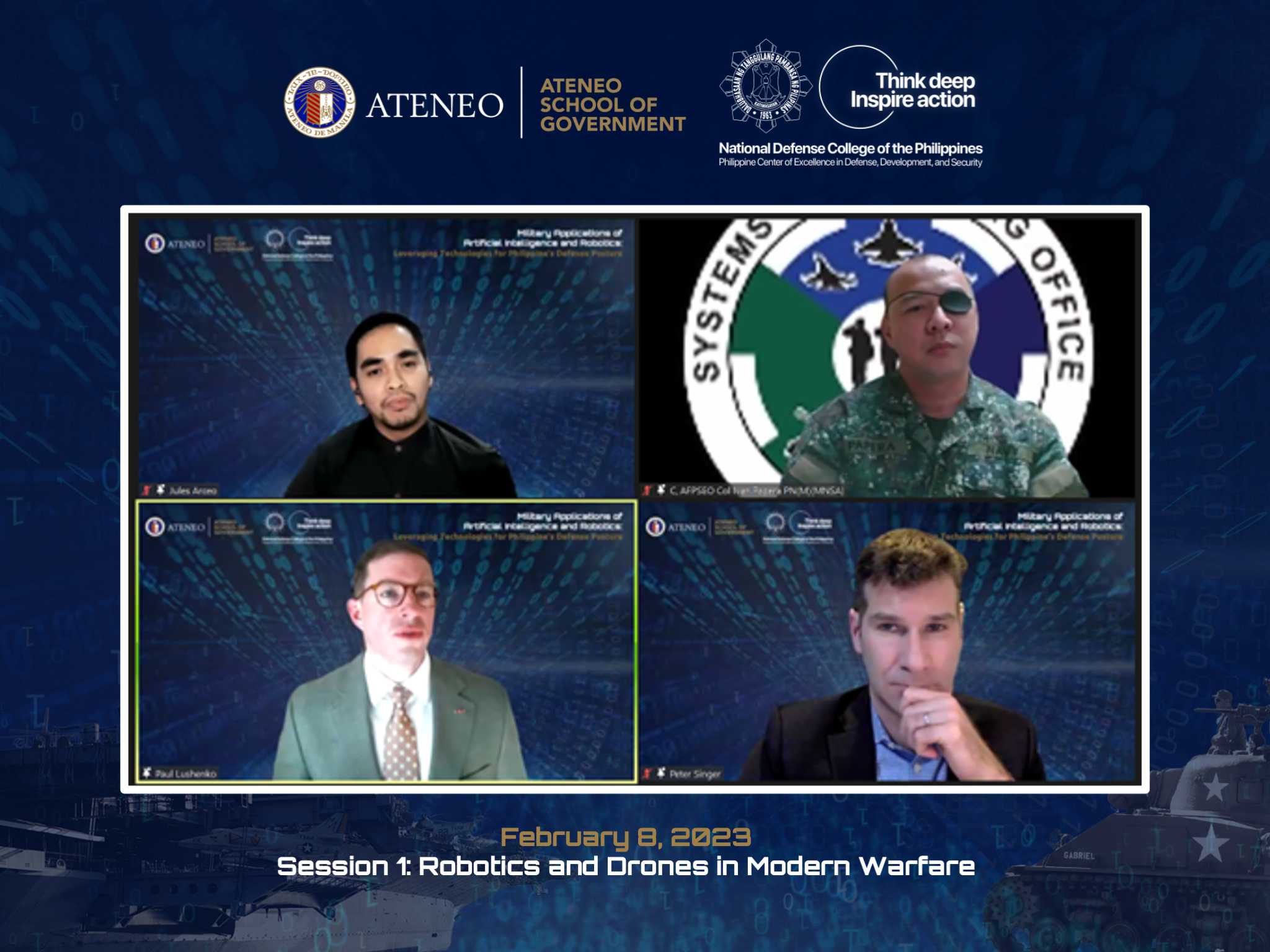
In his lecture, Dr. Singer illustrated how unmanned systems are currently being used in the battlefield citing examples from the Ukraine war. He asserted how, after decades of uncertainty and doubt, people around the world are now being more accepting in using the new technology of robotics. With these developments, Dr. Singer concluded his lecture by reminding the audience that to maximize the potential of these systems, we have to learn from other people’s experiences. He said “we’re studying what is happening in these other places so that we can both model for what works but also don't make mistakes in terms of making the same mistakes that others have as well”.
For LTC Lushenko’s session, he focused narrowly on drones as an example of robotics. In his talk, he highlighted that drone warfare is a leader-driven practice because it is the leaders and not countries that do risk calculation and mitigation. He also discussed the evolution of drone development into four waves – the proliferation, effectiveness, normative, and gaps. In explaining each wave, LTC Lushenko emphasized that in thinking about drone warfare, we must not be limited to understanding its evolving patterns. Rather, we must treat such patterns as an analytical leverage to study key questions like its legitimacy or its effectiveness in reducing civilian casualties.
After the lectures, Col. Ivan Papera, the Chief of the Armed Forces of the Philippines Systems Engineering Office, pivoted the discussion to the context of the Philippine Armed Forces. He said that in light of the AFP’s modernization program, the Philippines is now focusing on joint and integration requirements taking into account technology driven capabilities and gearing away from service centric. After the discussion, an open forum transpired where participants raised questions on ethics, feasibility, and effectiveness. The first day of the Webinar ended with a synthesis by RAdm Rommel Jude C. Ong (Ret.), ASoG Professor of Praxis.
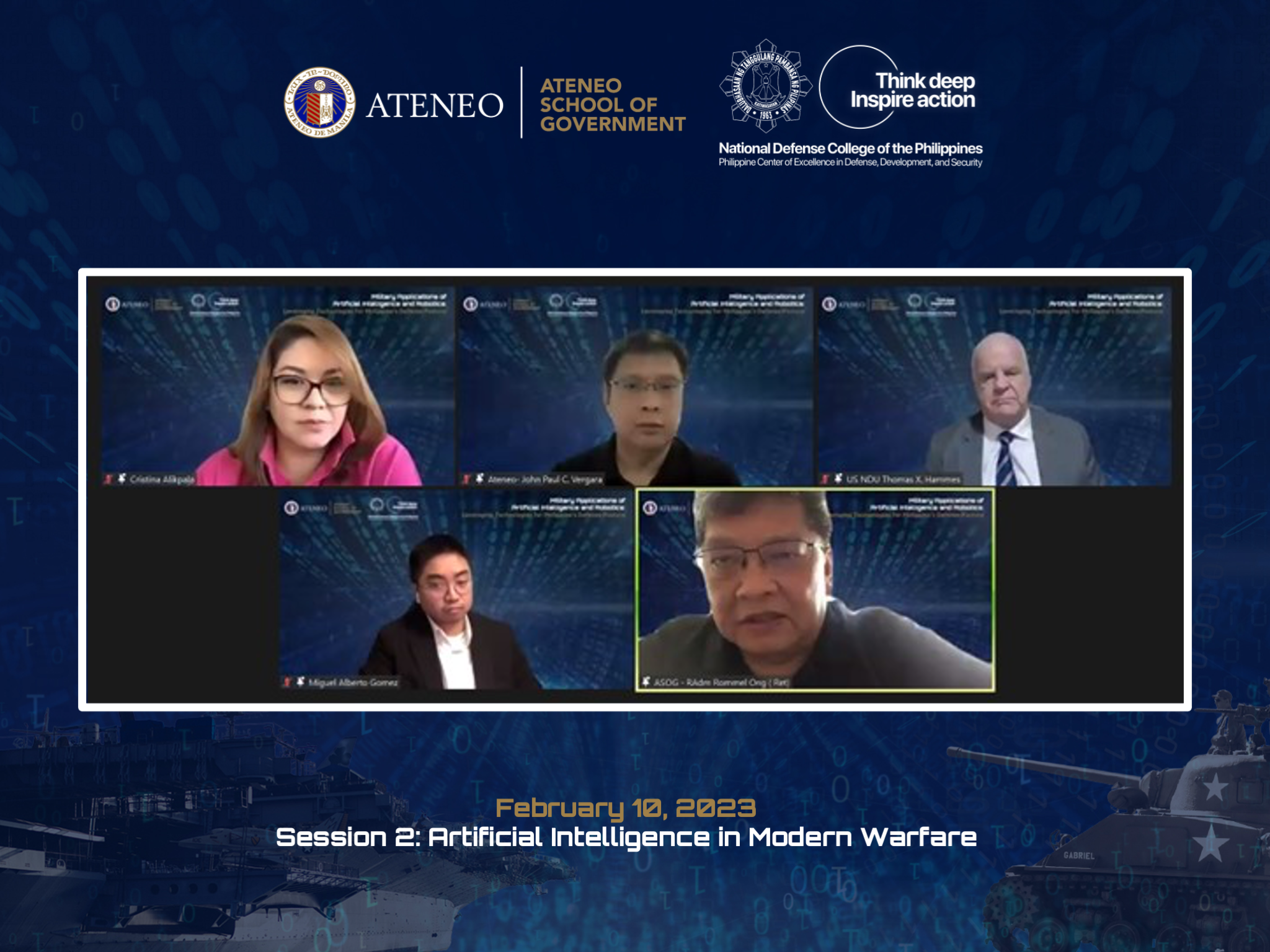
On February 10, 2023, the second day of the Webinar. Adm. Ong opened the floor with a recap of the key points of the February 08 sessions. This was shortly followed by the lectures on artificial intelligence by COL Thomas Hammes of the Institute for National Strategic Studies, National Defense University and Dr. Miguel Gomez, researcher at the Center for Security Studies of the Swiss Federal Institute of Technology.
The first session was about the tasks that Artificial Intelligence does today in the context of the military sector. COL Hammes captured it into three – the pervasive surveillance, mass with precision, and artificial intelligence assisted command and control. He said that when the military was able to tie these three, defense dominance at the tactical level will be realized. For the second session, Dr. Gomez’ lecture focused on the concept of trust and human behavior in utilizing artificial intelligence. Since humans are the brains behind these technologies, it is important to keep humans in the decision-making loop if we are to maintain trust that these innovations will achieve what they are programmed to do.
Like the first day, a discussion of the topic was done by Dr. John Paul C. Vergara of the Department of Information Systems and Computer Science, School of Science and Engineering, Ateneo. Dr. Vergara highlighted that “there many ways or many areas where AI can help but at the same time, we need to identify the most relevant areas for us in our context, keeping in mind that humans are involved, users are involved at the end of the day and we need to make sure that their involvement will decide which ones apply in our context”. After the discussion, questions from the audience were entertained. Adm. Ong also synthesized the session afterwards.
At the last part of the webinar, Ateneo School of Government Dean Dr. Philip Arnold P. Tuaño closed by posing a challenge to the participants. He said that at the height of the fourth industrial revolution where Robotics and Artificial Intelligence are further put to fore, we as humans must likewise develop and find better and more applicable solutions to the ever changing world that are not within machines’ limited perception.
Recent News
You may also like these articles
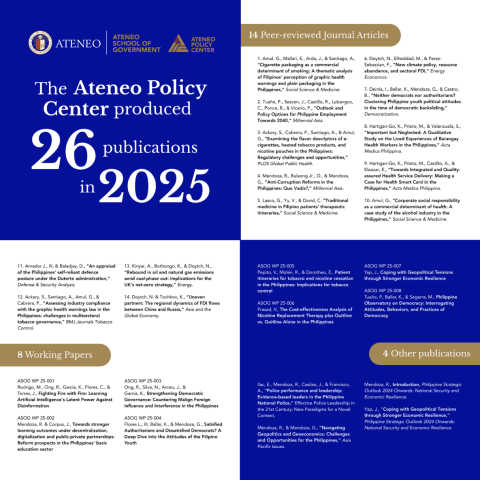
ASoG, through the Ateneo Policy Center, delivers 26 publications in 2025
As the research and public policy unit of the Ateneo School of Government (ASoG), the Ateneo Policy Center (APC) has continued to pursue cutting-edge research
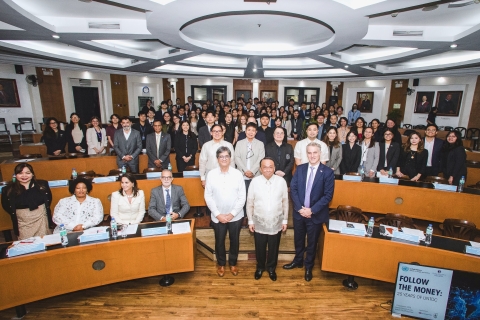
Follow the money: UNODC and Ateneo Law School mark 25 years of UN Convention Against Transnational Organized Crime
On 14 November 2025, the United Nations Office on Drugs and Crime (UNODC), together with the Ateneo de Manila University School of Law, and with
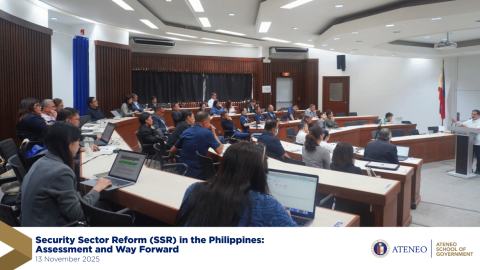
Defense experts, rights advocates call for long-term strategy in security reforms
QUEZON CITY – Former defense officials, human rights advocates, academics, civil society leaders, and international partners pushed for strengthened accountability mechanisms and a long-term national
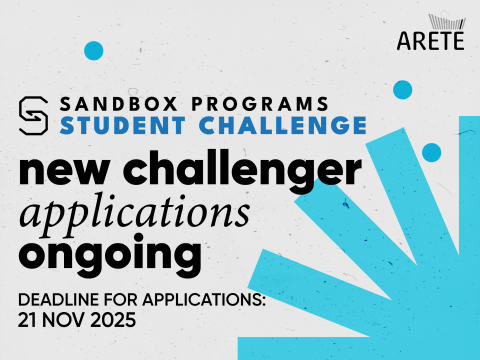
Call for Applications: Sandbox Student Challenge Cycle 2026
Areté's Sandbox Student Challenge invites visionary undergraduate and graduate students of Ateneo de Manila University to bring innovative ideas to life. This initiative provides funding
Call for Applications: Sandbox Residency Cycle 2026
Do you have an idea you’ve always wanted to explore but are unsure of its outcome? Or an ongoing project that could benefit from interdisciplinary
Ateneo, AFP renew partnership commitment
This partnership aims to enhance knowledge sharing and capacity building, leveraging the strengths of each institution, and underscoring their shared commitment to strengthening governance and promoting peace and development.