AIS and AUN-EEC sign the Statement of Support for Climate Information Services during the SSCE launch
16 Aug 2025 | by Rizzie Rapada



ASEAN University Network on Ecological Education and Culture (AUN-EEC), housed at the Ateneo Institute of Sustainability (AIS), signed the Statement of Support for Climate Information Services (CIS) last 8 August 2025 at the PAGASA Science Garden. The statement recognizes the value of effective communication on climate change issues “for climate-resilient development in the Philippines and across the global South.”
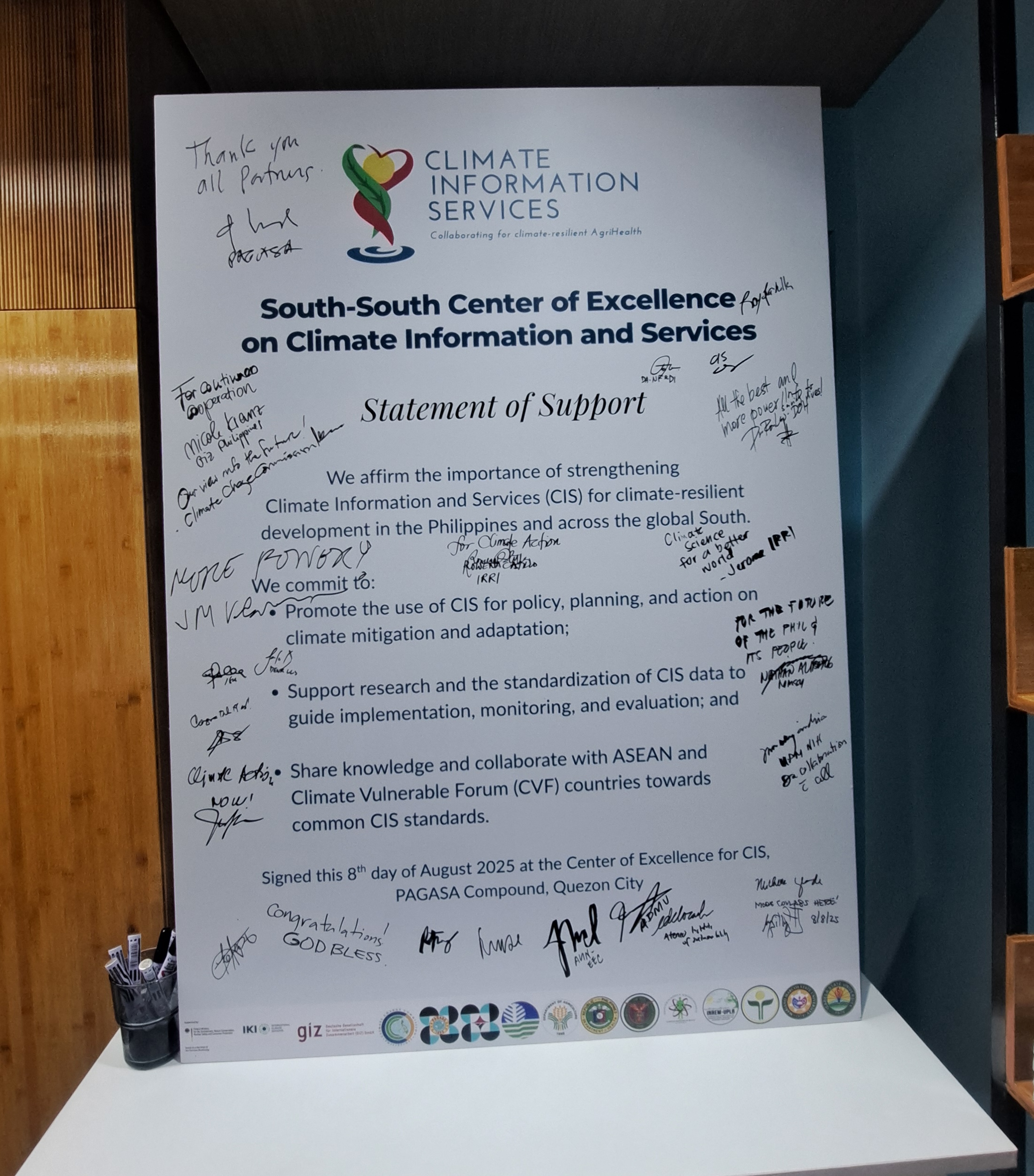
The signing of the Statement of Support is a portion of the launch of the South-South Center of Excellence for Climate Information and Services in the Philippines (SSCE). The SSCE is designed to be the central hub for consolidating expertise and resources related to climate information services through linkages with established competence centers in fields related to and affected by climate change, such as health, agriculture, and fisheries, as well as regional networks such as the AUN-EEC.
AUN-EEC was represented by Dr Emman Delocado (Executive Director), Ms Chris Lacdao-Umali (Secretariat Head), and Ms Rizzie Rapada (Secretariat Member), who are also affiliated with AIS. Other signatories were representatives from Deutsche Gesellschaft für Internationale Zusammenarbeit - South-South Collaboration on Climate Information Services project (GIZ - SSCIS), German Embassy, Department of Science and Technology (DOST), Philippine Atmospheric, Geophysical, Astronomical Services Administration (PAGASA), Department of Environment and Natural Resources (DENR), Department of Agriculture - Bureau of Fisheries and Aquatic Resources (DA-BFAR), Climate Change Commission (CCC), University of the Philippines Manila National Institutes of Health (UP NIH), Isabela State University (ISU), and Mariano Marcos State University (MMSU).
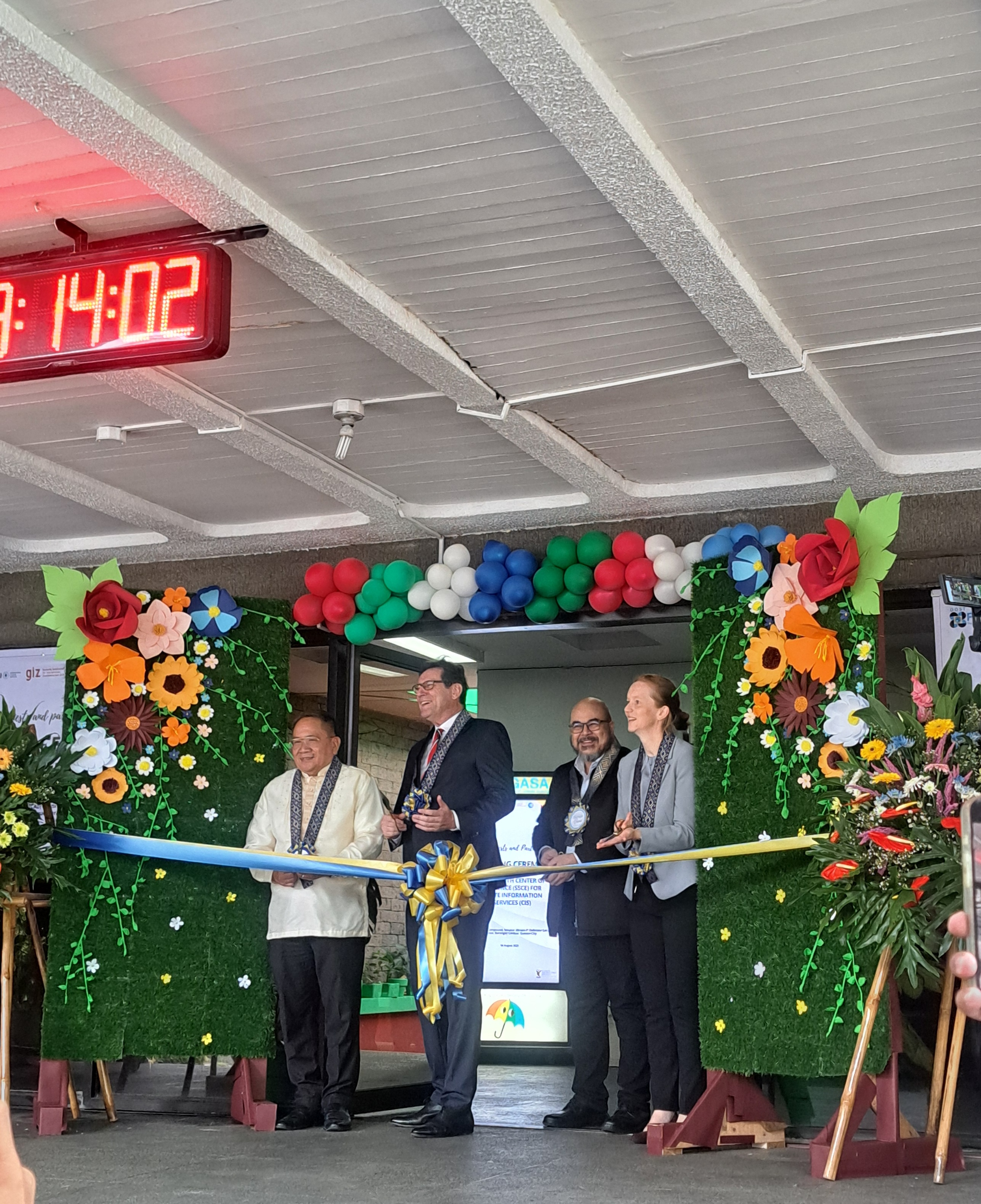
The Launch started with a ribbon-cutting ceremony at the Climatology and Agrometeorology Division (CAD) of the PAGASA Weather & Flood Forecasting Center, where the SSCE hub is located. Afterwards, the guests were led inside for a tour of the SSCE room and the signing of the Statement of Support.
Following this, partner institutions shared updates on their work at the PAGASA Science Garden with opening messages by Dr Nathaniel Servando, the Administrator of DOST-PAGASA, Dr Nicole Kranz, the Principal Advisor of GIZ SSCIS, and Atty. Romell O. Cuenca, Assistant Secretary and Deputy Executive Director of the Climate Change Commission. An inaugural address was also delivered by Mr. Mathia Kruse, the Deputy Head of Mission of the German Embassy.
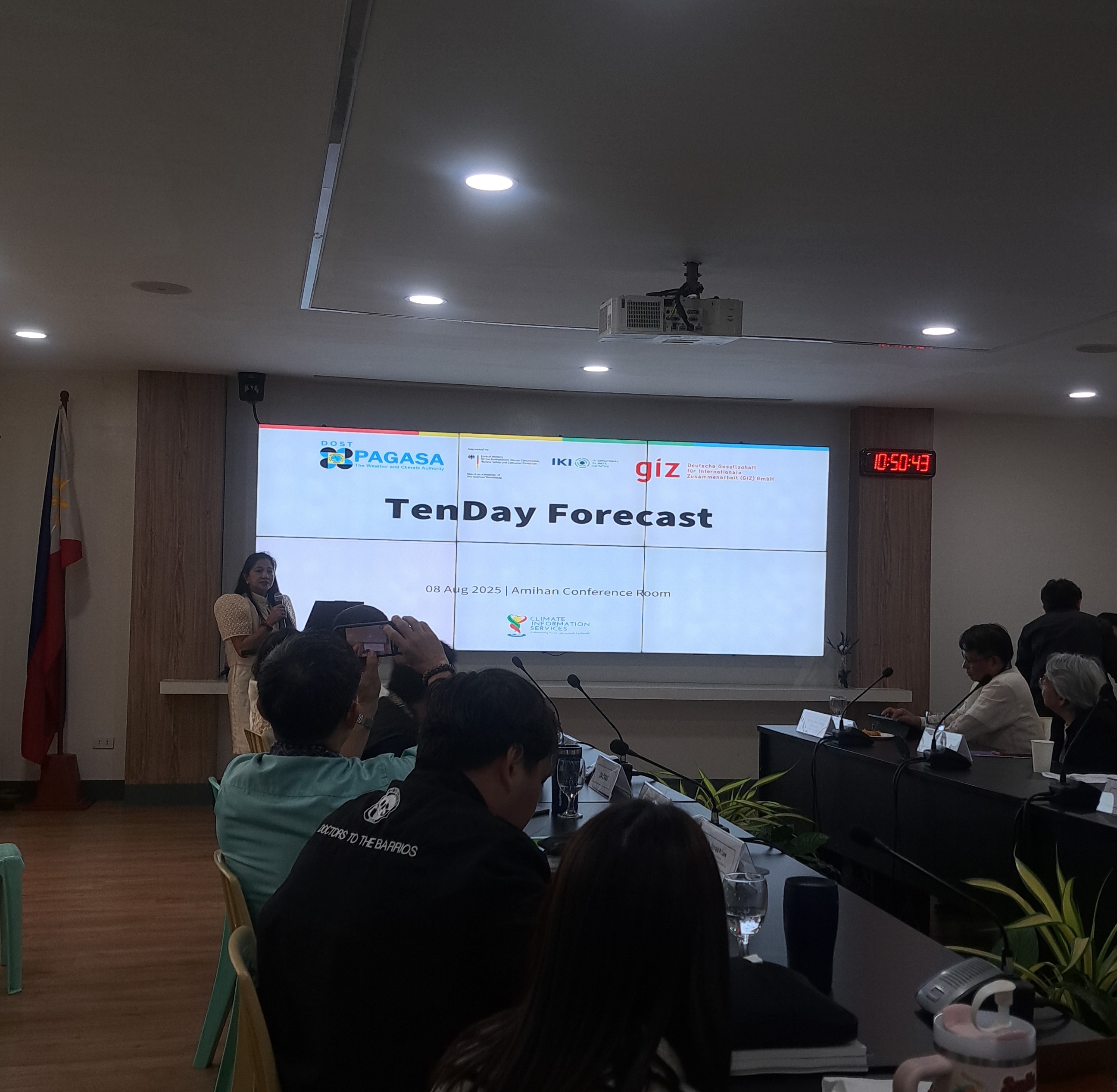
Another event highlight was the presentation of various projects and outputs related to climate information systems by representatives from the partner institutions. This segment was kicked off by a demonstration of the Ten-Day Forecast AP and Visualization Tool, a joint project of the Climate Monitoring and Prediction Section (CLIMPS) of PAGASA and the International Rice Research Institute (IRRI). Representatives from CLIMPS and IRRI discussed the evolution of the Ten-Day Forecast from the earliest Excel-based system to its current mobile-ready and API-ready visual map version. A key feature of the Ten-Day Forecast is its ability to send regular localized agri-weather advisories via SMS to farmers all over the Philippines. This can help agricultural workers effectively plan their farm operations for increased productivity and resilience.
Up next was the introduction of the CIS Knowledge Products by GIZ SSCIS. These knowledge products include not only formal instructional materials such as modules, reports, and research articles, but also public-friendly information, education, and communication (IEC) materials like posters, infographics, and children’s books. As demand for effective climate communication continues to grow, so too does the need to ensure the reliability, accuracy, relevance, and usability of CIS. This point was emphasized by Dr. Rosa Perez, a GIZ consultant, in her presentation on the Guidance Documents for the Quality Assurance of CIS Data.
Finally, researchers from UP NIH and UPLB-INREM shared their experiences and insights from working with various sectors and grassroots communities across the country for their respective research projects. UP NIH, in partnership with MMSU, conducted a series of studies exploring the effects of climate change on a wide range of health issues in the Philippines, including vector-borne diseases (e.g. malaria and dengue), hypertension, malnutrition, and cholera. Following months of research and public consultations, the team produced several knowledge products and papers, which were later presented at national and international conferences. Meanwhile, UPLB-INREM collaborated with ISU to model the application of CIS in the agriculture and fisheries sectors. Their work involved conducting multiple needs assessment and capacity building activities, which culminated in the establishment of a climate information center and the development of a sustainability plan.
As part of the multilateral partnerships for climate change communication, AIS and GIZ are jointly organizing a conference on 27-28 August 2025. Interested individuals may register UNTIL FRIDAY via https://go.ateneo.edu/ConferenceReg.
Recent News
You may also like these articles
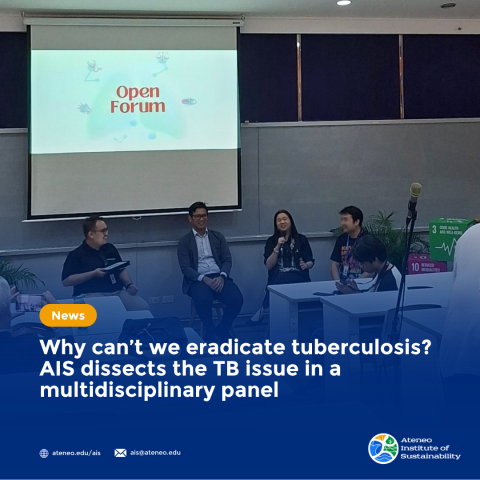
Why can’t we eradicate tuberculosis? AIS dissects the TB issue in a multidisciplinary panel
On 24 March 2026, the Ateneo Institute of Sustainability (AIS), through its Sustainable Development Goals (SDGs) Program, hosted a multidisciplinary panel in observance of World
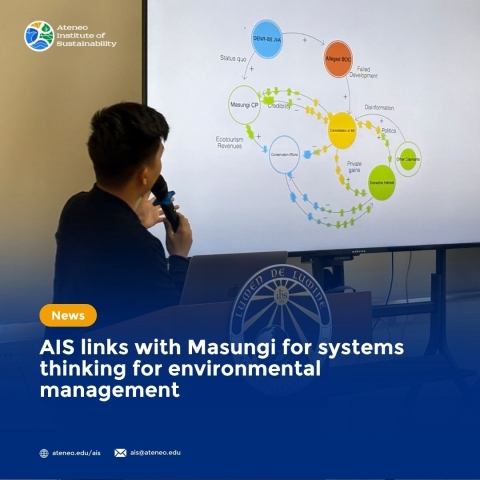
AIS links with Masungi for systems thinking for environmental management
Last 23-24 March 2026, the Ateneo Institute of Sustainability (AIS) , which manages the My Climate Risk – Ateneo de Manila University Regional Hub
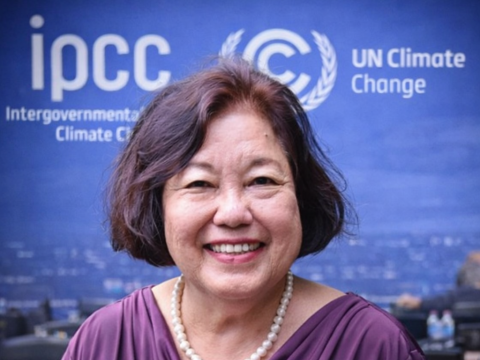
Mangroves as shields of history and resilience: Insights from Dr Emma Porio
Mangrove forests have long shaped both the history and survival of coastal communities in the Philippines. According to Dr Emma Porio, Professor Emeritus (Sociology -
Professor Emeritus Dr Emma Porio to deliver keynote address at Regional Dialogue: Schools Climate Action Project
Dr Emma Porio, Professor Emeritus at Ateneo de Manila University's Dr Rosita G Leong School of Social Sciences (RGLSOSS) and Lead Author of UNFCCC-IPCC Climate
Klim@Musika
For most Filipinos, music is inseparable from daily existence. Music playlists accompany Filipinos in their commutes be it through walks, jeepneys, trains, or their private
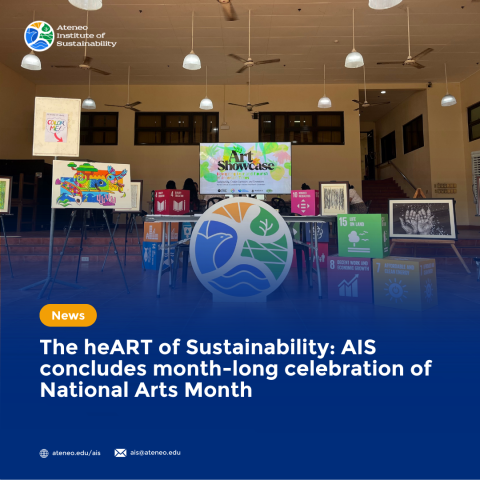
The heART of Sustainability: AIS concludes month-long celebration of National Arts Month
With the desire to make sustainability more accessible and promote its interdisciplinarity, the Ateneo Institute of Sustainability (AIS) hosted a month-long National Arts Month celebration