Workshop on firms and economic development | Organized by TEMPEST: Typhoon effects on enterprises in the Philippines
22 Aug 2025






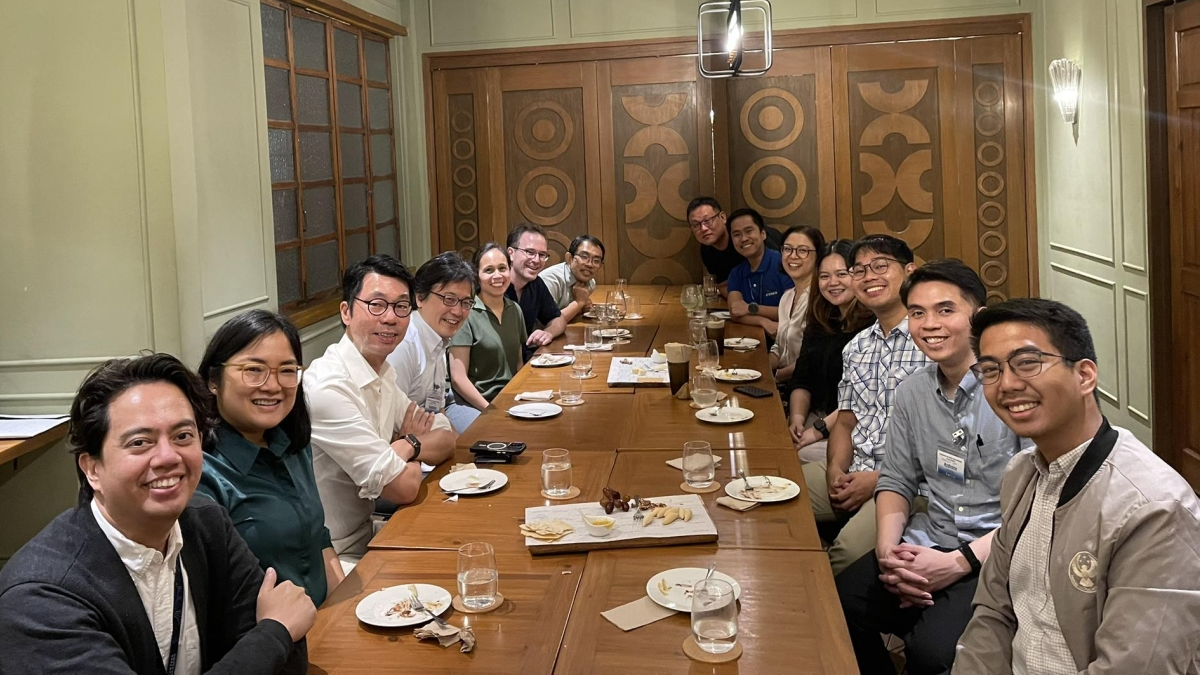
How do typhoons impact firms, workers, and the broader economy in the Philippines? That’s the central question of TEMPEST (Typhoon Effects on Enterprises in the Philippines) a global research initiative tackling one of the most urgent and underexplored challenges in disaster-prone economies. With the Philippines experiencing frequent and intense typhoons, the consequences go far beyond damaged infrastructure. These shocks disrupt business operations, displace workers, fracture supply chains, and threaten productivity and long-term development.
The TEMPEST Project investigates how these shocks affect firms in practice:
How are operations disrupted?
What strategic decisions are made—closure, relocation, or adaptation?
How are workers impacted in terms of employment, wages, and job security?
And most importantly—what makes some firms more resilient than others?
Funded by the Research Council of Norway, TEMPEST (RCN Project Number 352508) is an interdisciplinary collaboration among five leading institutions. Ateneo de Manila University, one of TEMPEST’s external partners, is represented by Dr. Maire Carroline Magante, whose expertise in migration and labor economics strengthens the local research capacity and deepens the understanding of the Philippine context.
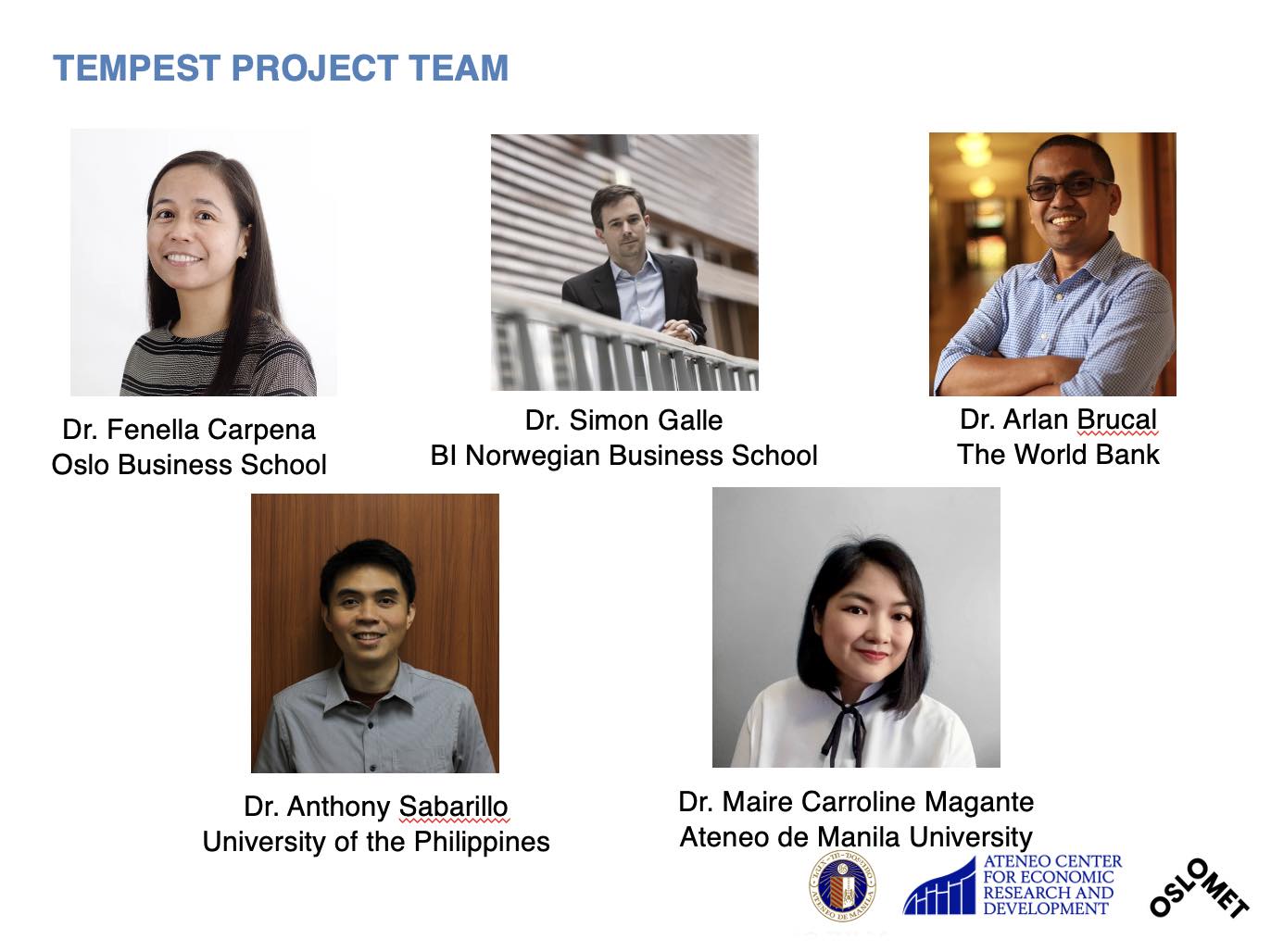
The full TEMPEST team includes:
Oslo Business School (Project Lead) – Dr Fenella Carpena
BI Norwegian Business School – Dr Simon Galle
The World Bank – Dr Arlan Brucal
Ateneo de Manila University – Dr Maire Carroline Magante
University of the Philippines – Dr Anthony Sabarillo
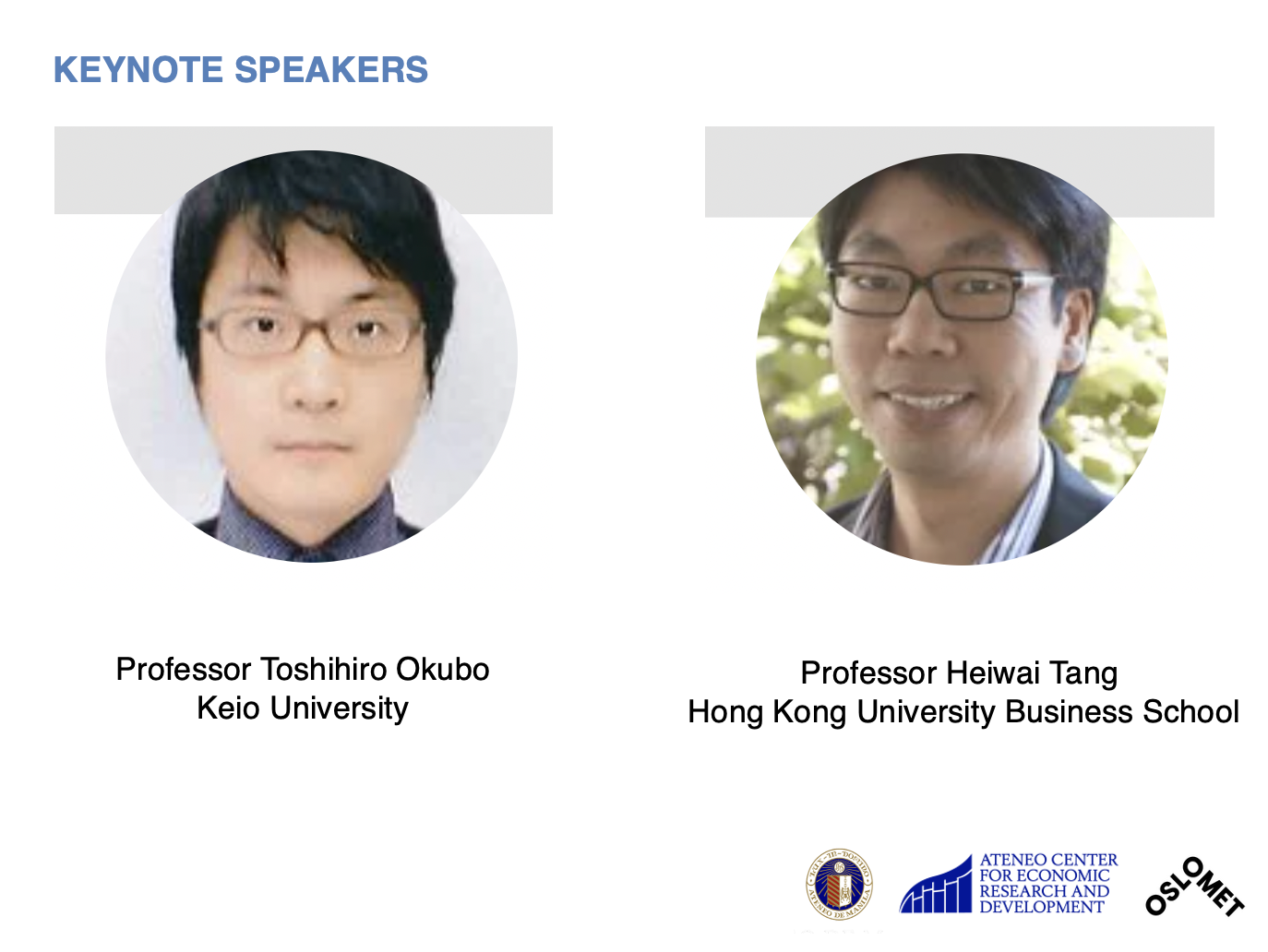
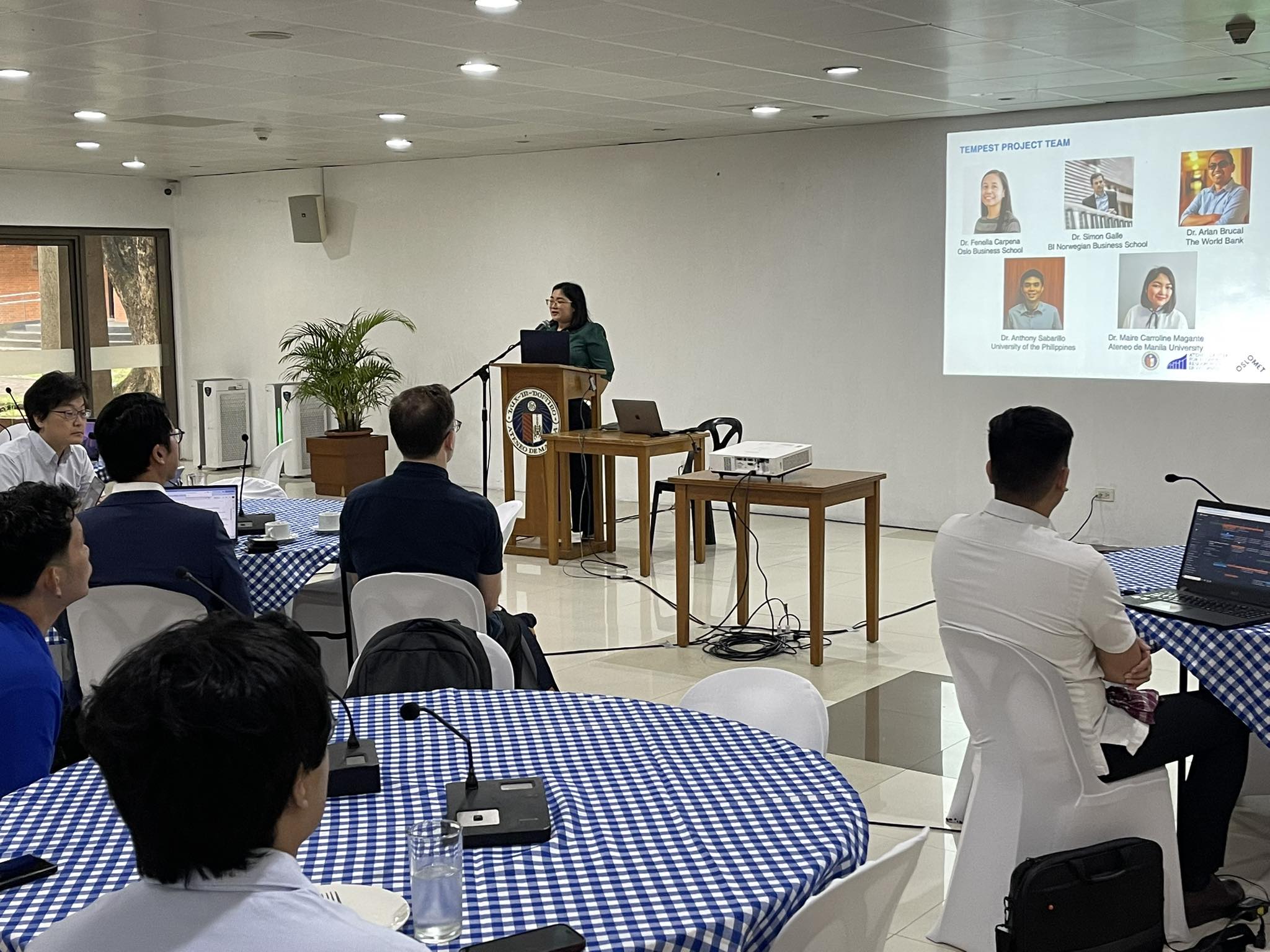
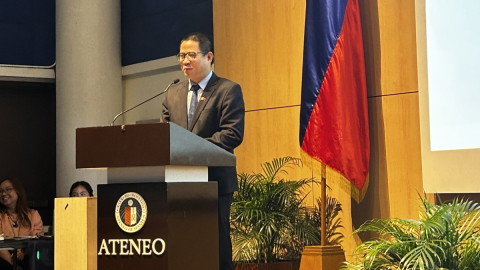
Our recent workshop, held at Faber Hall in the Loyola Heights campus of Ateneo de Manila University last 4 August, featured keynote talks from Prof Toshihiro Okubo (Keio University) and Prof Heiwai Tang (HKU Business School), along with presentations from scholars at the World Bank, Bangko Sentral ng Pilipinas, Seoul National University, the University of the Philippines as well as Ateneo de Manila University. By combining firm-level data, economic theory, and policy insights, TEMPEST aims to generate rigorous evidence and insights with the hope of contributing to more responsive, inclusive disaster policies—for businesses and the people who depend on them.
See more photos from the event here.
Recent News
You may also like these articles
QS Subject Rankings 2026: Ateneo in top 100 for theology; ranked in 7 subject areas
Ateneo de Manila University is among the top institutions in seven subject areas, and among the top 100 for theological and religious studies, according to

Congratulations to Dominic Craig Carpio (2 AB ECO-H) for placing 2nd in the EDSA Kwarenta Essay Writing Contest
The Department of Economics warmly congratulates Dominic Craig Carpio (2 AB ECO-H) for placing 2nd in the EDSA Kwarenta Essay Writing Contest. This achievement reflects
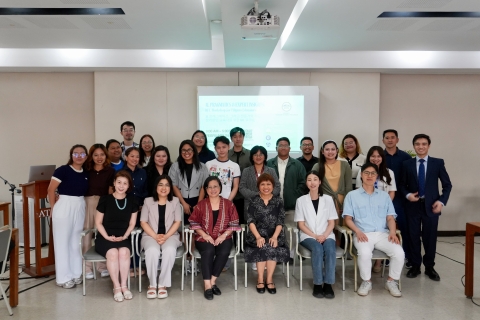
Ateneo Korean Studies Program Concludes KFL Workshop for Filipino Educators
The Ateneo Korean Studies Program, in partnership with the Global Leadership Development Institute, King Sejong Institute Quezon City 2, and the Dr. Rosita G. Leong
Deanship of the Dr Rosita G Leong School of Social Sciences (Memo # U2526-071)
(Memo # U2526-071) Following the appointment of Dr Czarina A Saloma-Akpedonu as the new Vice President for Higher Education effective 1 June 2026, I have formed a Search Committee for the next Dean of the Dr Rosita G Leong School of Social Sciences (RGLSOSS).
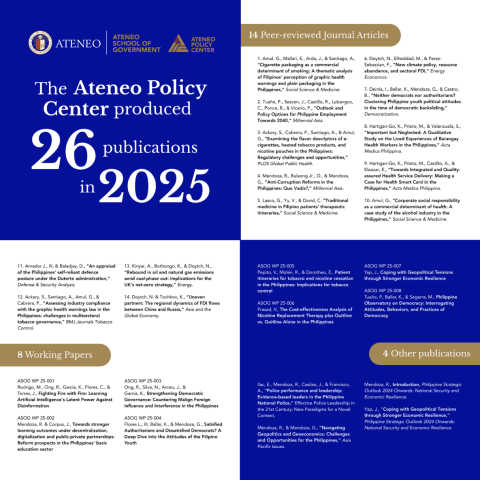
ASoG, through the Ateneo Policy Center, delivers 26 publications in 2025
As the research and public policy unit of the Ateneo School of Government (ASoG), the Ateneo Policy Center (APC) has continued to pursue cutting-edge research
"The Lotus Path” In-Country Field Study to Vietnam culminates with a Forum and Exhibit
On 18 and 19 November 2025, the Ateneo Initiative for Southeast Asian Studies (AISEAS) hosted an exhibit called “The Lotus Path” to conclude the activities