The Ricardo Leong Institute for Global and Area Studies presents the 2025 Leong Institute Fellows Forum
10 Sep 2025



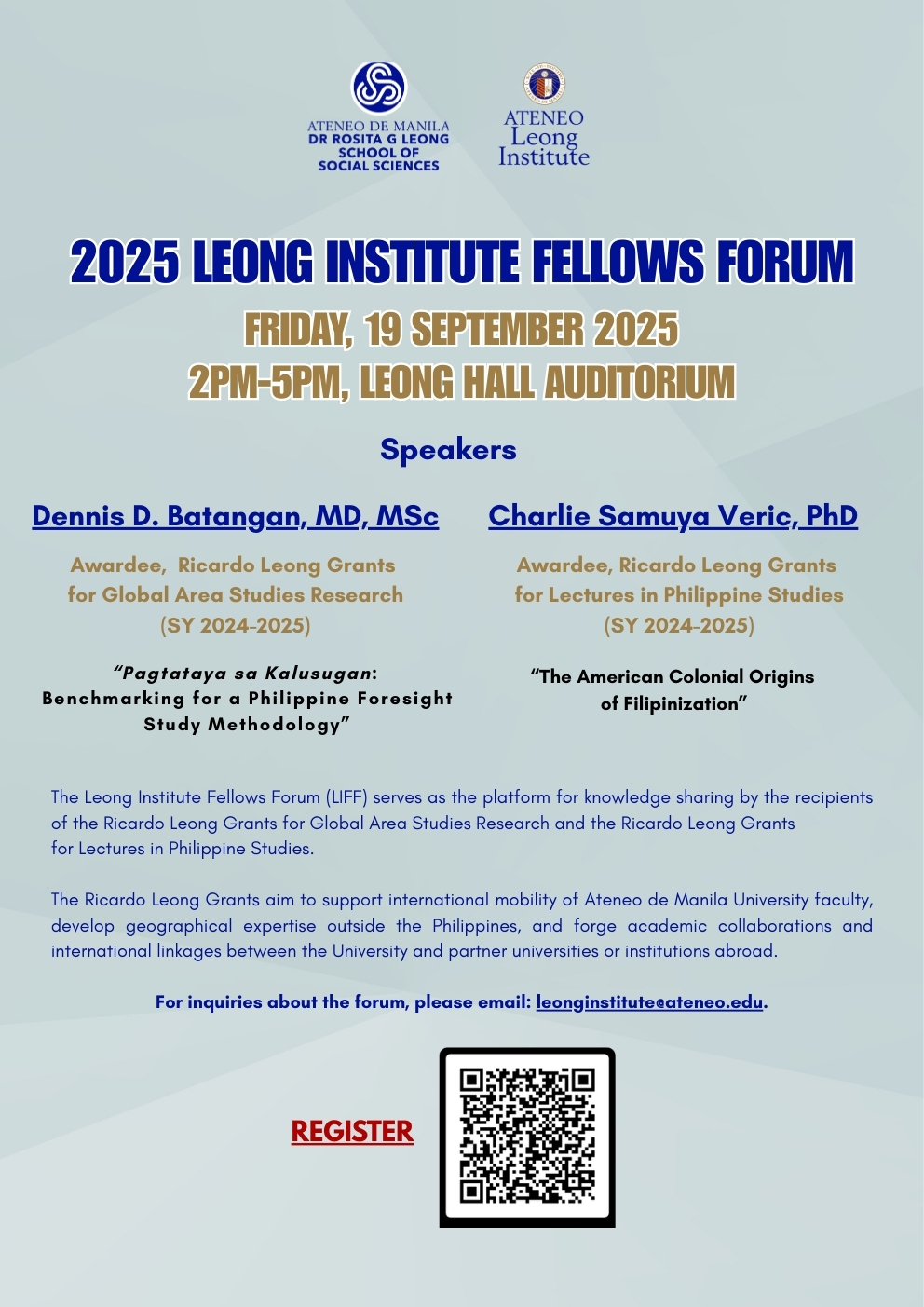
The Ricardo Leong Institute for Global and Area Studies of the Dr Rosita G Leong School of Social Sciences invites you to the 2025 Leong Institute Fellows Forum on 19 September 2025 (Friday) from 2:00 PM to 5:00 PM at the Leong Hall Auditorium.
This year’s forum brings together two outstanding Ateneo scholars whose work tackles urgent issues in health and identity. Dr Dennis B Batangan, public health specialist and awardee of the 2025 PhilAAST Lourdes Campos Award for Public Health, will present his research on “Pagtataya sa Kalusugan: Benchmarking for a Philippine Foresight Study Methodology.” His study looks at how the Philippines can anticipate future health needs by drawing lessons from foresight methodologies in South Korea, Vietnam, and Thailand. Using an innovative electronic Delphi Survey, he frames pressing health issues and explores possible interventions to strengthen the country’s health systems.
On the cultural front, Dr Charlie Samuya Veric, poet, critic, and Associate Professor at Ateneo, will deliver his lecture on “The American Colonial Origins of Filipinization.” Dr Veric traces how U.S. colonial policies shaped the very idea of being Filipino, arguing that decolonization unfolded not after, but alongside colonial rule. His work sheds new light on how history, identity, and politics intersect in the making of the Filipino nation.
The Fellows Forum is a yearly event that highlights the research journeys of Leong Institute fellows. More than an academic gathering, it is a space for dialogue—connecting scholarship with the public, and global perspectives with local realities. Everyone is welcome to join and be part of the conversation.
Abstracts:
Pagtataya sa Kalusugan: Benchmarking for a Philippine Foresight Study Methodology
Dennis B Batangan, MD, MSc.
Leong Institute Global Area Studies Research Fellow
As a methodological study, this RLIGAS Research Fellowship conducted benchmarking activities with foresight study methodologies in South Korea, Vietnam, and Thailand. The Philippines’ Ambisyon Natin 2040 and Pagtanaw 2050 were referenced as well in piloting an emerging foresight methodology using an electronic Delphi Survey platform. The 2022 National Health Demographic Survey (NDHS) major health issues were framed as Delphi survey questions with indicators in identifying possible health interventions and its realization through WHO’s health system building blocks. Thirteen (13) Delphi survey respondents using the eDelphi platform assessed the urgency of each major issue as an anticipated health need and evaluated the importance, awareness, and realization of identified possible health interventions. The research process and results of the pilot study will be presented in this public lecture.
The American Colonial Origins of Filipinization
Charlie Samuya Veric, PhD
Leong Institute Lectures in Philippine Studies Fellow
The lecture reconstructs how Filipinization as a colonial policy became the basis of postcolonial identity. Contrary to conventional wisdom, I argue that decolonization did not take place after colonization. Rather, Filipino decolonization evolved with US colonialism. The story of how Filipinization came to be is, in short, the yet untold story of the strange but successful American experiment with a new form of governmentality in the 20th century: Imperialism without imperialists. Looking at American colonial policies following the successful occupation of the Philippines in 1898, I will reconstruct the twin rise of US colonialism and Filipino decolonization, demonstrating how the former became the enabling context for the emergence of the latter. Using historiographical methods in American Studies and Philippine Studies, as well as archival documents and newspaper accounts, I will track the emergence of Filipinization and shed light on its development as a colonial policy and, later, as a political thought from 1898 to 1946 when the US granted independence to the Philippines. Contained in this evolution—wherein Filipinization, independence, and decolonization bled into each other—was the dual development of the colonial US into a neocolonial power, and of the colonized Philippines into a postcolonial nation.
We look forward to seeing you!
Register here: https://go.ateneo.edu/2025LIFF
Recent News
You may also like these articles
ASOG’s Tobacco Control initiatives spotlighted in DOH National Technical Working Group for Tobacco Prevention and Control
On March 10 to 12, 2026, the Ateneo School of Government (ASOG), through its research and public policy unit, the Ateneo Policy Center, participated in
ASMPH welcomes incoming VPHE, honors the service of VP Marlu Vilches
The Ateneo School of Medicine and Public Health (ASMPH) recently held a transition meeting marking an important leadership shift within the University’s Higher Education cluster
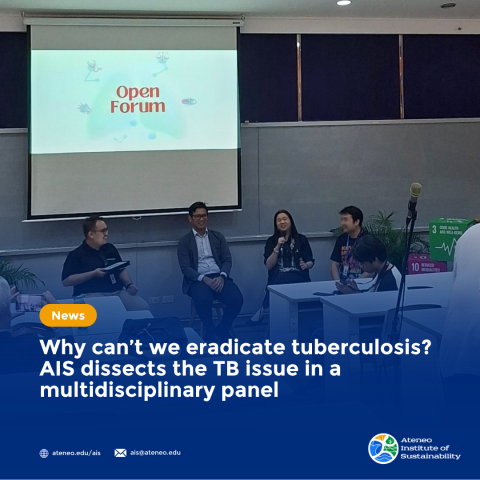
Why can’t we eradicate tuberculosis? AIS dissects the TB issue in a multidisciplinary panel
On 24 March 2026, the Ateneo Institute of Sustainability (AIS), through its Sustainable Development Goals (SDGs) Program, hosted a multidisciplinary panel in observance of World
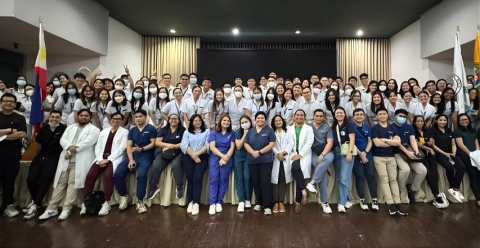
Vertical integration in ASMPH: A shared neurology preceptorial experience
In the Ateneo School of Medicine and Public Health (ASMPH), the commitment to vertical integration continues to grow stronger. This meaningful collaboration brings together YL6
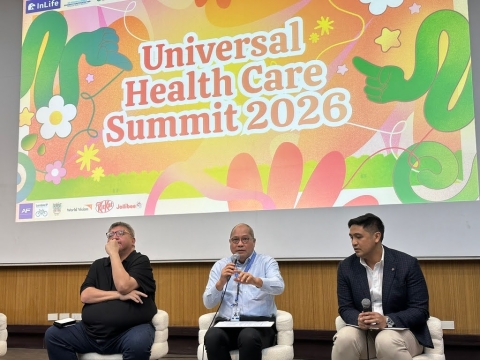
Interweaving disciplines for a healthier future together: Highlights from the UHC Summit 2026
The Rosita G Leong Primary Healthcare Hub (RGL Hub) co-presented the flagship initiative of Project LAAN, the Universal Health Care Summit (UHC Summit), on 14
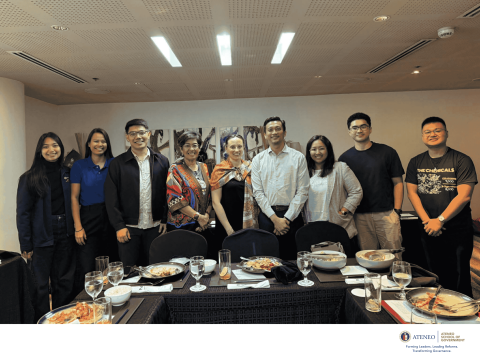
ASOG meets with Department of Health—Bureau of International Health Cooperation to strengthen institutional partnership
On 27 February 2026, the Ateneo School of Government (ASOG), through its research and public policy unit, the Ateneo Policy Center, held a courtesy meeting