AIS, CFMO partner for university-wide waste audits
06 Oct 2025 | By Mi Jung Pak









The Ateneo Institute of Sustainability (AIS), in partnership with the Central Facilities Management Office (CFMO) Custodial Services Group, conducted a University-wide Waste Analysis and Categorization Survey (WACS), or Waste Audits for short, running from September to October 2025. The participating schools and units were the Ateneo Grade School, Ateneo Junior High School, Ateneo Senior High School, Higher Education, University Dormitories, Ortigas Campus, Salcedo Campus, and Rockwell Campus. The initiative, conducted at each school’s Materials Recovery Facility (MRF), marks another step towards the University’s long-term sustainability goals.
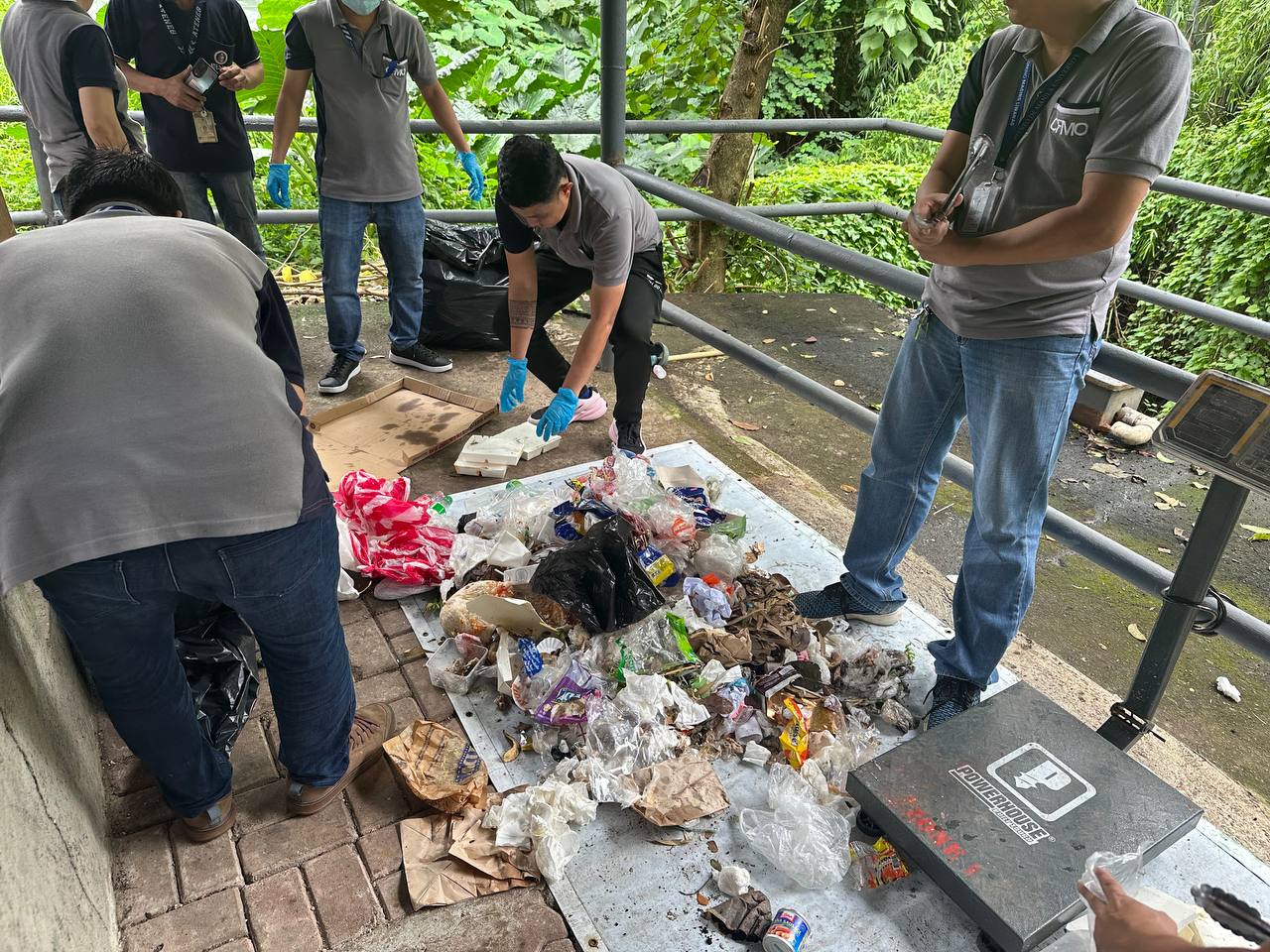
This round of Waste Audit aims to measure the University’s waste generation during the wet season. The data gathered will inform policies and action plans on improving waste management practices. The activity also served to re-orient CFMO staff on the importance and procedures of proper waste segregation and to improve the overall efficiency of MRFs. The very first Waste Audit conducted in the Ateneo Loyola Heights campus was in June 2008, which paved the way to initiatives such as prohibiting single-use packaging on campus, Bring-Your-Own Baunan (B.Y.O.B), and eventually the publication of the 2016 Ateneo Sustainability Policies and Specific Guidelines.
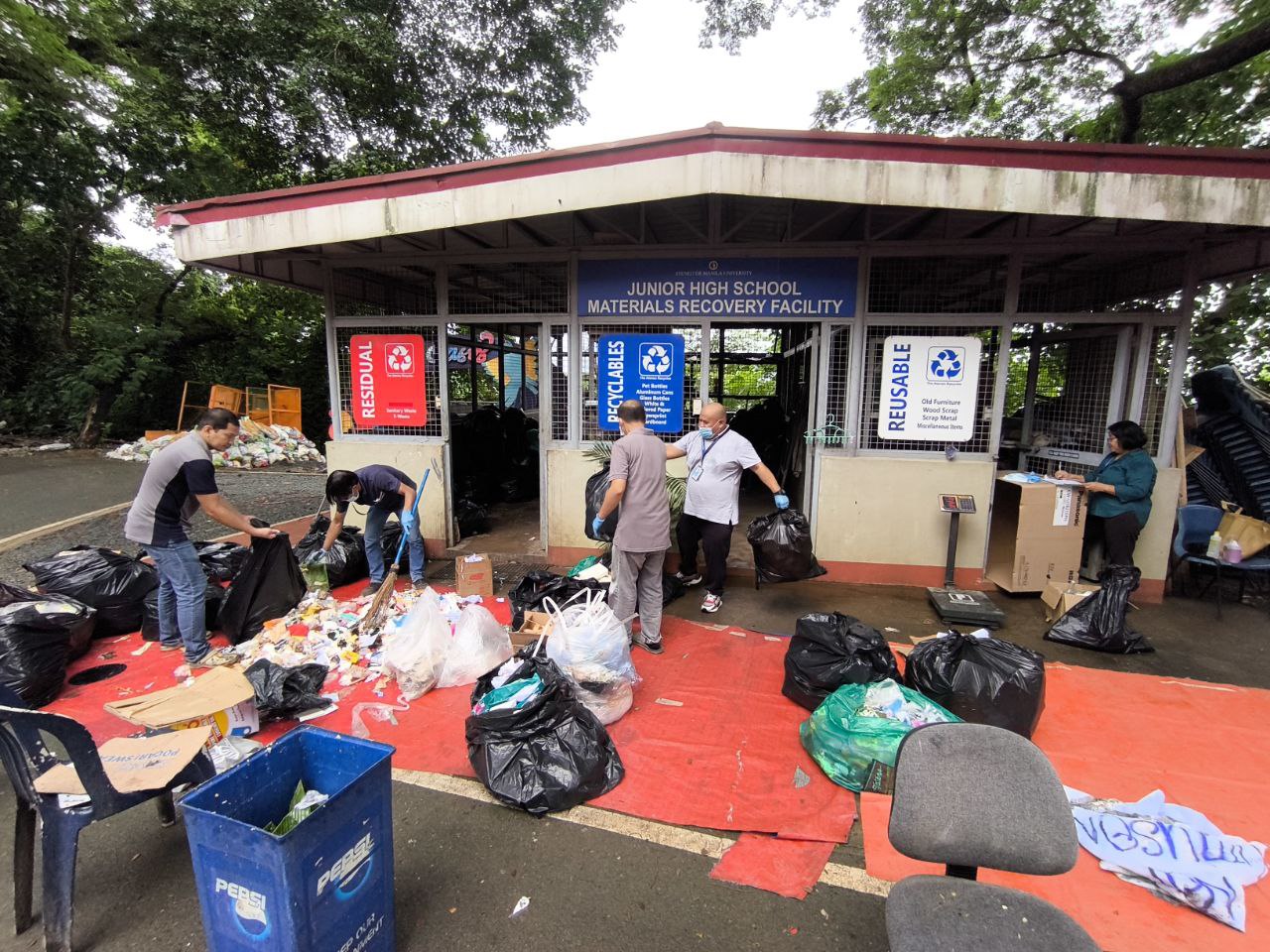
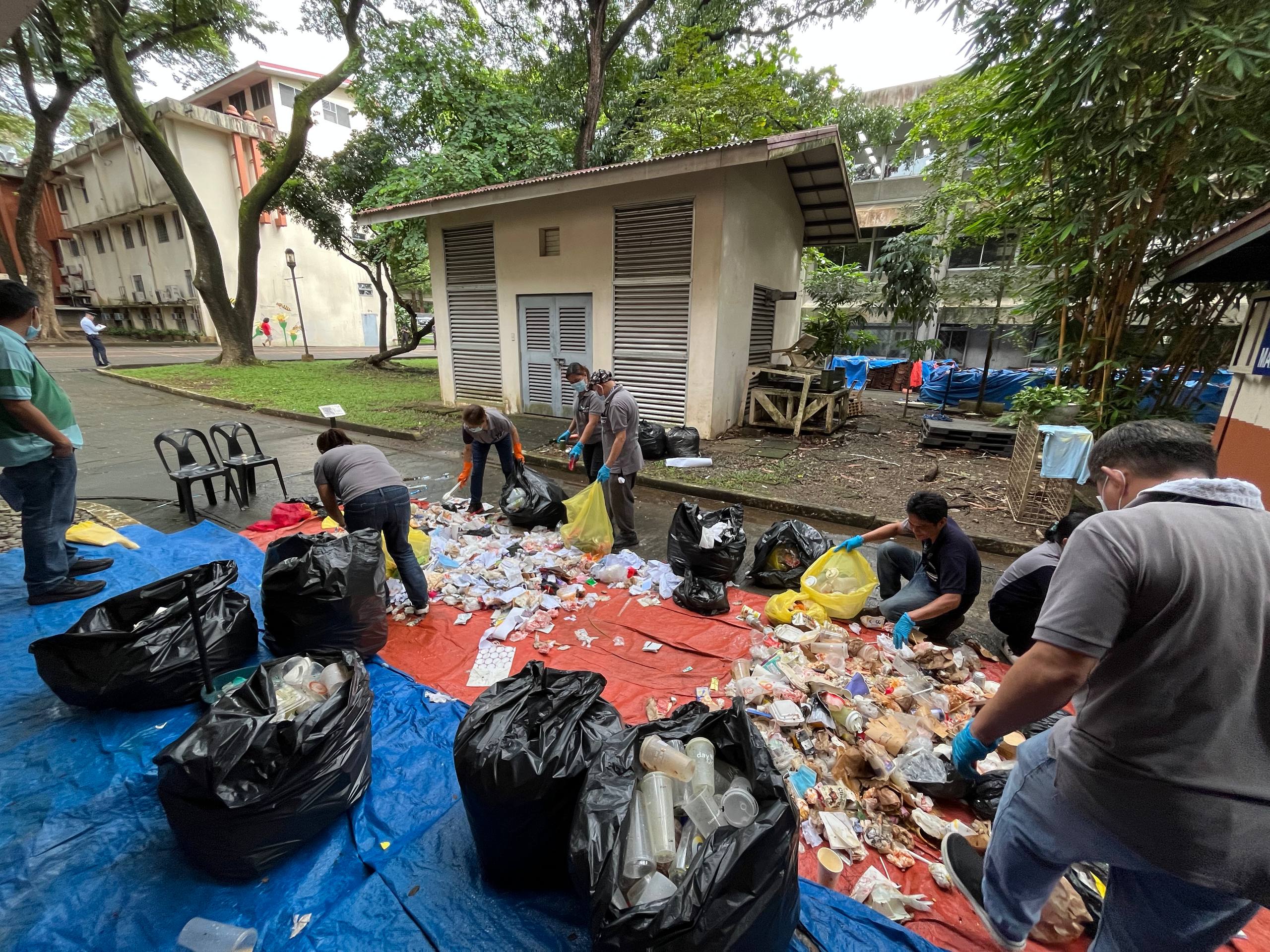
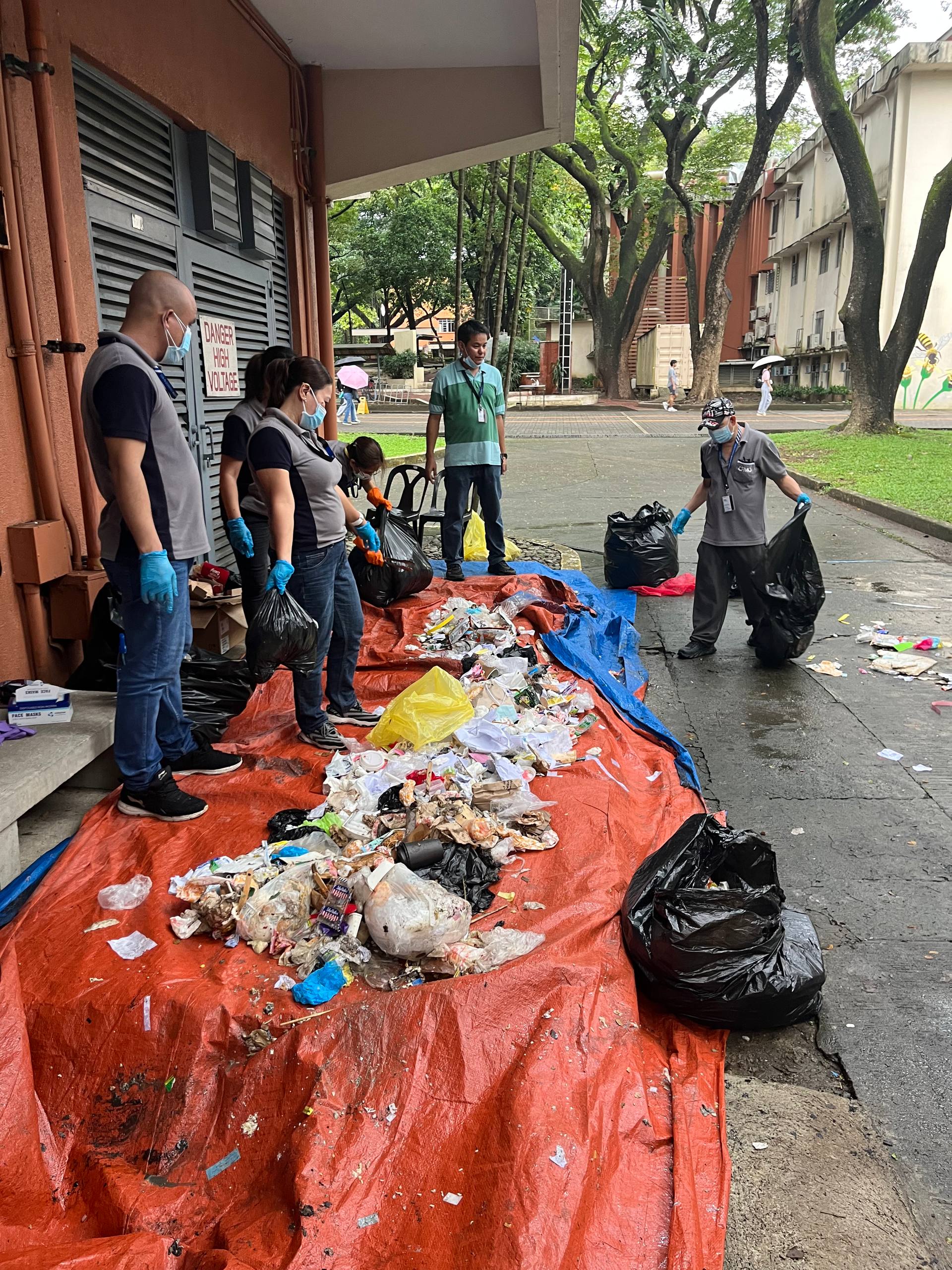
On each day of the audit, campus waste generated until mid-afternoon was brought to a designated MRF for sorting. The audit process involved three key roles: weighers to determine the volume of each waste type, sorters to separate trash by category, and data loggers to record the results. Despite the presence of designated garbage bins, much of the waste collected was improperly segregated and required further sorting before measurement. Schools and units were encouraged to participate as weighers, sorters or data loggers, or to observe the activity for their awareness on waste management.
Through the processes involved in Waste Audits, recyclable materials entering the MRF could be gathered by accredited third-party collectors and/or repurposed. This could help divert our wastes and reduce the institution’s contributions to landfills, further promoting a more sustainable and responsible way of waste disposal.
The Waste Audit forms part of Ateneo’s broader commitment to integral ecology and environmental stewardship. Aligned with the vision of Laudato Si’, the initiative hopes to pave the way for a more sustainable Ateneo through improving waste practices. Another round of waste audit is scheduled for the first half of 2026 to represent waste patterns during the dry season.
Recent News
You may also like these articles
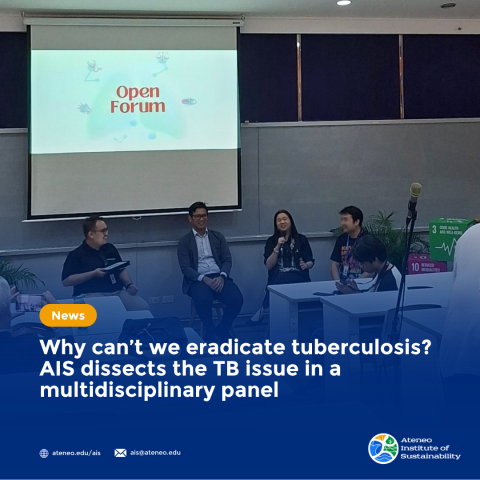
Why can’t we eradicate tuberculosis? AIS dissects the TB issue in a multidisciplinary panel
On 24 March 2026, the Ateneo Institute of Sustainability (AIS), through its Sustainable Development Goals (SDGs) Program, hosted a multidisciplinary panel in observance of World
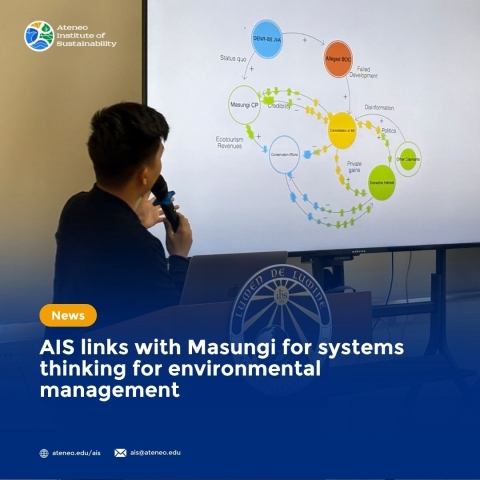
AIS links with Masungi for systems thinking for environmental management
Last 23-24 March 2026, the Ateneo Institute of Sustainability (AIS) , which manages the My Climate Risk – Ateneo de Manila University Regional Hub
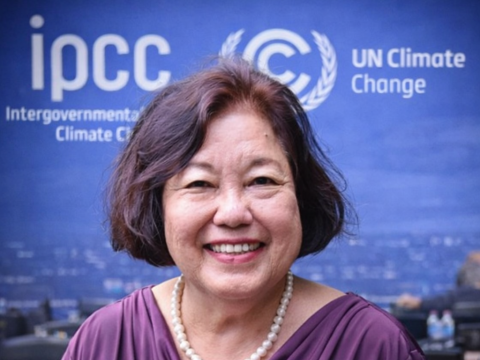
Mangroves as shields of history and resilience: Insights from Dr Emma Porio
Mangrove forests have long shaped both the history and survival of coastal communities in the Philippines. According to Dr Emma Porio, Professor Emeritus (Sociology -
Professor Emeritus Dr Emma Porio to deliver keynote address at Regional Dialogue: Schools Climate Action Project
Dr Emma Porio, Professor Emeritus at Ateneo de Manila University's Dr Rosita G Leong School of Social Sciences (RGLSOSS) and Lead Author of UNFCCC-IPCC Climate
Klim@Musika
For most Filipinos, music is inseparable from daily existence. Music playlists accompany Filipinos in their commutes be it through walks, jeepneys, trains, or their private
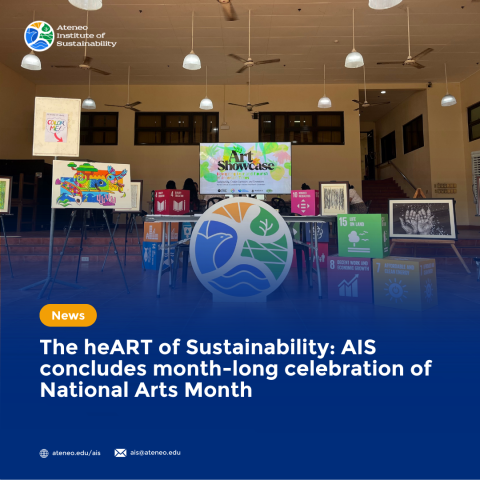
The heART of Sustainability: AIS concludes month-long celebration of National Arts Month
With the desire to make sustainability more accessible and promote its interdisciplinarity, the Ateneo Institute of Sustainability (AIS) hosted a month-long National Arts Month celebration