From WILD to MILD: taming environmental health threats through a public health lens
09 Oct 2025 | Dr Rafael Antonio Emmanuel S Garcia, MD MBA MPH, Sean La Torre, Gilian Noble, Patricia Ocampo



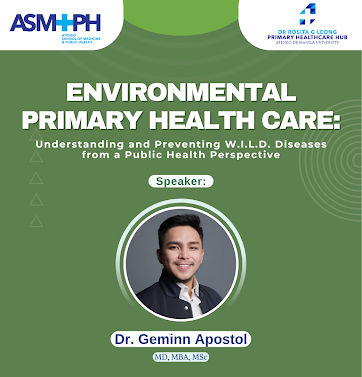
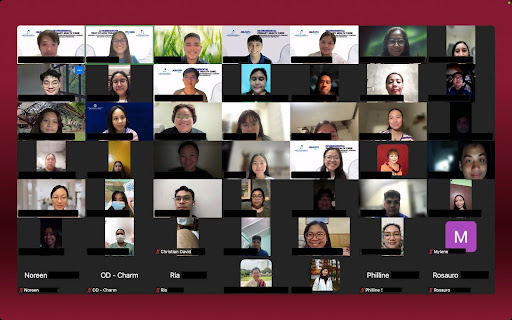
Last 25 September 2025, the Dr Rosita G Leong Primary Healthcare Hub held a critical public health webinar titled “Understanding and Preventing W.I.L.D. Diseases from a Public Health Perspective”. Led by Dr Geminn Louis C Apostol, the session provided a comprehensive, actionable framework aimed at transforming the prevalent threat of W.I.L.D. diseases (Water-borne, Influenza-like illnesses/ILI, Leptospirosis, and Dengue) into manageable or MILD health concerns within vulnerable communities.
The central theme of the webinar was clear: effectively combating these four endemic diseases, which frequently peak during seasonal changes and extreme weather events, requires shifting the focus from curative care to proactive environmental and systemic prevention, particularly in urban and rural areas with limited resources across the Philippines.
The Challenge: A Multi-Dimensional Environmental Threat
Dr Apostol initiated the discussion by dissecting the term W.I.L.D., explaining that while these diseases present diverse clinical challenges, they share common, interwoven environmental roots. Viewing them through a public health lens necessitates understanding the environment not just as a physical space, but as a complex interplay of physical, social, and economic determinants.
Shifting from W.I.L.D. to MILD: A Three-Tiered Action Framework
To move beyond perpetual emergency response, Dr Apostol introduced a practical, tiered action framework designed for immediate impact and sustained systemic change. This framework empowers practitioners to tailor interventions based on time horizon and scope.
Tier 1: Immediate Action (0–7 Days) - Individual/Household Level
The initial focus targets the household unit for rapid protection. Actions such as proper water storage, cross-ventilation, and removal of vector breeding sites, among others, are straightforward and meant for immediate risk reduction.
Tier 2: Short-Term Action (Weeks) - Community Level
The next level focuses on mobilization and strengthening existing community infrastructures. Key actions include actively engaging Barangay Health Workers, Environmental Health Monitors, and Educators. Establishing a simple community surveillance and reporting system allows the community to secure resources to provide sustainable prevention.
Tier 3: Sustained Action (1+ Months) - Systems Level
The highest tier targets policy and long-term infrastructure improvements, recognizing that true resilience requires system-level reform. Practitioners are urged to partner directly with local government units (LGUs) environmental health offices, connect communities to formal water districts and waste management services, and actively advocate for critical infrastructure upgrades (like improved housing and drainage systems).
The webinar concluded by emphasizing the power of multi-sectoral collaboration tailored to each disease type. Combating water-borne illness requires partnership with the Water District and women’s groups, while tackling leptospirosis necessitates collaboration with Disaster Risk Reduction and Management committees and farmers' associations. For dengue, the Department of Education and youth organizations are key partners in mobilization, and for ILI, the workplace and housing authorities are essential.
The core guiding philosophy presented serves as the mandate for all future environmental health efforts: Environment First + Community Ownership + Systems Thinking = Sustainable Prevention.
Recent News
You may also like these articles
ASOG’s Tobacco Control initiatives spotlighted in DOH National Technical Working Group for Tobacco Prevention and Control
On March 10 to 12, 2026, the Ateneo School of Government (ASOG), through its research and public policy unit, the Ateneo Policy Center, participated in
ASMPH welcomes incoming VPHE, honors the service of VP Marlu Vilches
The Ateneo School of Medicine and Public Health (ASMPH) recently held a transition meeting marking an important leadership shift within the University’s Higher Education cluster
Why can’t we eradicate tuberculosis? AIS dissects the TB issue in a multidisciplinary panel
On 24 March 2026, the Ateneo Institute of Sustainability (AIS), through its Sustainable Development Goals (SDGs) Program, hosted a multidisciplinary panel in observance of World
Vertical integration in ASMPH: A shared neurology preceptorial experience
In the Ateneo School of Medicine and Public Health (ASMPH), the commitment to vertical integration continues to grow stronger. This meaningful collaboration brings together YL6
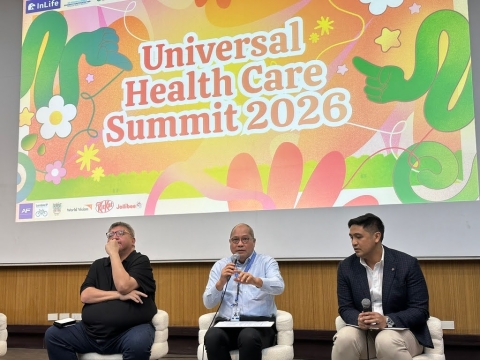
Interweaving disciplines for a healthier future together: Highlights from the UHC Summit 2026
The Rosita G Leong Primary Healthcare Hub (RGL Hub) co-presented the flagship initiative of Project LAAN, the Universal Health Care Summit (UHC Summit), on 14
ASOG meets with Department of Health—Bureau of International Health Cooperation to strengthen institutional partnership
On 27 February 2026, the Ateneo School of Government (ASOG), through its research and public policy unit, the Ateneo Policy Center, held a courtesy meeting