MCR-Ateneo shares journey, honors Dr Gemma Teresa Narisma at the GTN Memorial Lectures
13 Nov 2025 | Lorenzo Miguel P Gutierrez and Nathan Luis S Jordan



From 25 to 26 September 2025, the Manila Observatory held the Gemma Teresa Narisma Memorial Lectures as part of the institution’s 160th anniversary celebration. Dr Narisma was a Filipino climate scientist and science communicator who dedicated her work to building resilience against climate change in vulnerable communities. She was among the four pioneers of the Ateneo Institute of Sustainability in 2013, and became the first Program Manager for Climate Change and Disaster Risk. The memorial lectures were held at The Loft, Areté, in the Ateneo de Manila University, in honor of her memory.
The event consisted of three lecture sessions, each delivered by guest speakers and followed by a panel discussion. Session 2 of the event, “Impact on Society”, focused on best practices in actionable climate science, highlighting the importance of science-based decision-making. In this session, Mr Daniel C Ratilla, Program Head for Climate and Disaster Resilience (the current name of the original program once led by Dr Narisma) at the Ateneo Institute of Sustainability, delivered a talk entitled “Bridging and Becoming: Reflections from My Climate Risk.”
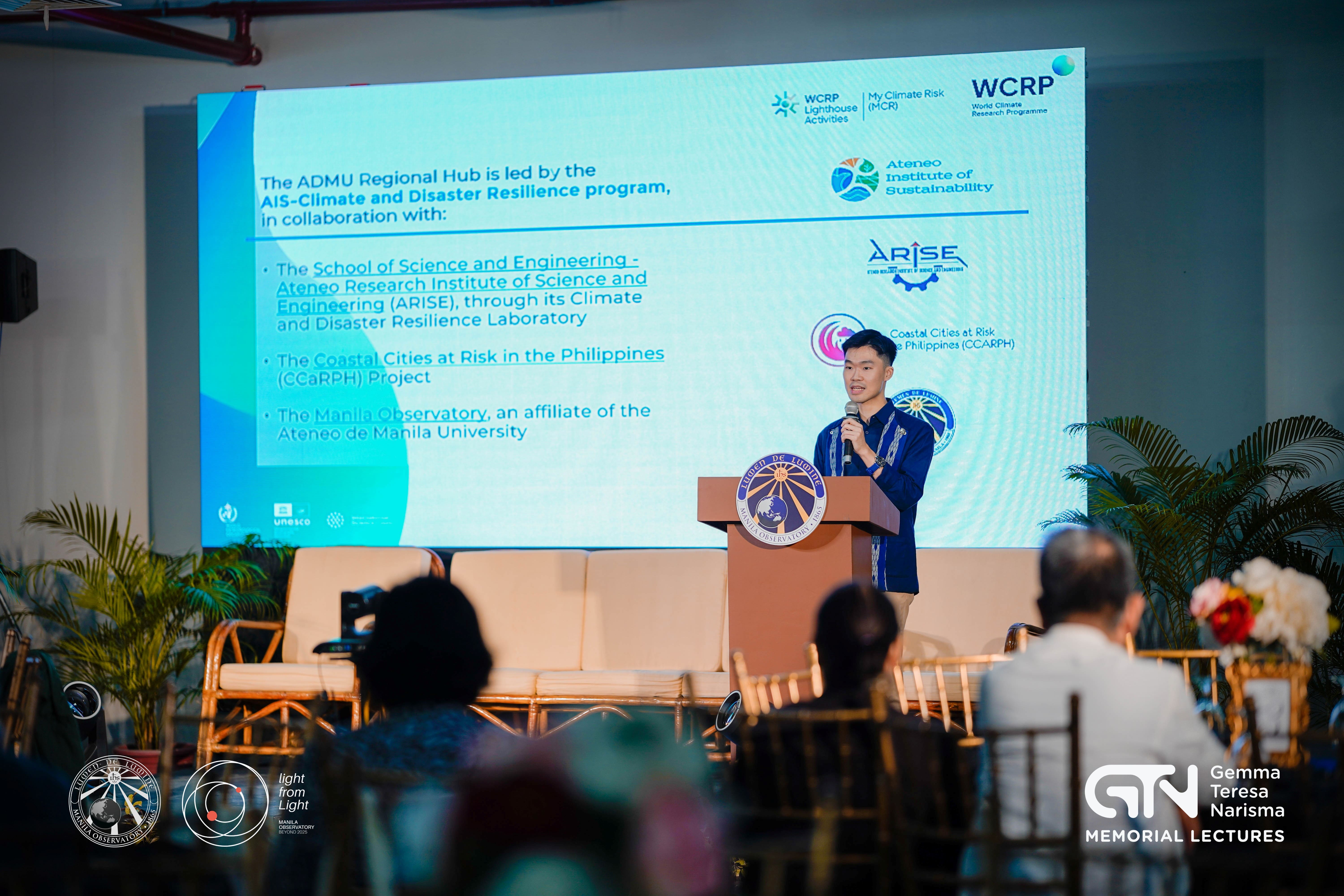
Mr Ratilla began by discussing the My Climate Risk (MCR) Lighthouse Activity of the World Climate Research Programme (WCRP), as well as the journey of Ateneo de Manila University as one of the pioneer hubs of MCR.
The talk went on to reflect on climate research as a journey of listening and dialogue, highlighting the need for science communication that is contextualized and that truly responds to the needs of communities. Mr Ratilla discussed systems thinking as an “intermediate” technology to understand climate risk and communicate worldviews through a holistic approach. Systems thinking was presented as a practical and accessible tool to “bridge” the gap between science and society, involving stakeholders and citizens in the process of understanding climate risk and forming solutions from the bottom-up. Ultimately, the talk emphasized the need for repositioning research and researchers as being embedded in stakeholders’ social contexts and to practice “research as care” for ecosystems, culture, and communities as a whole.
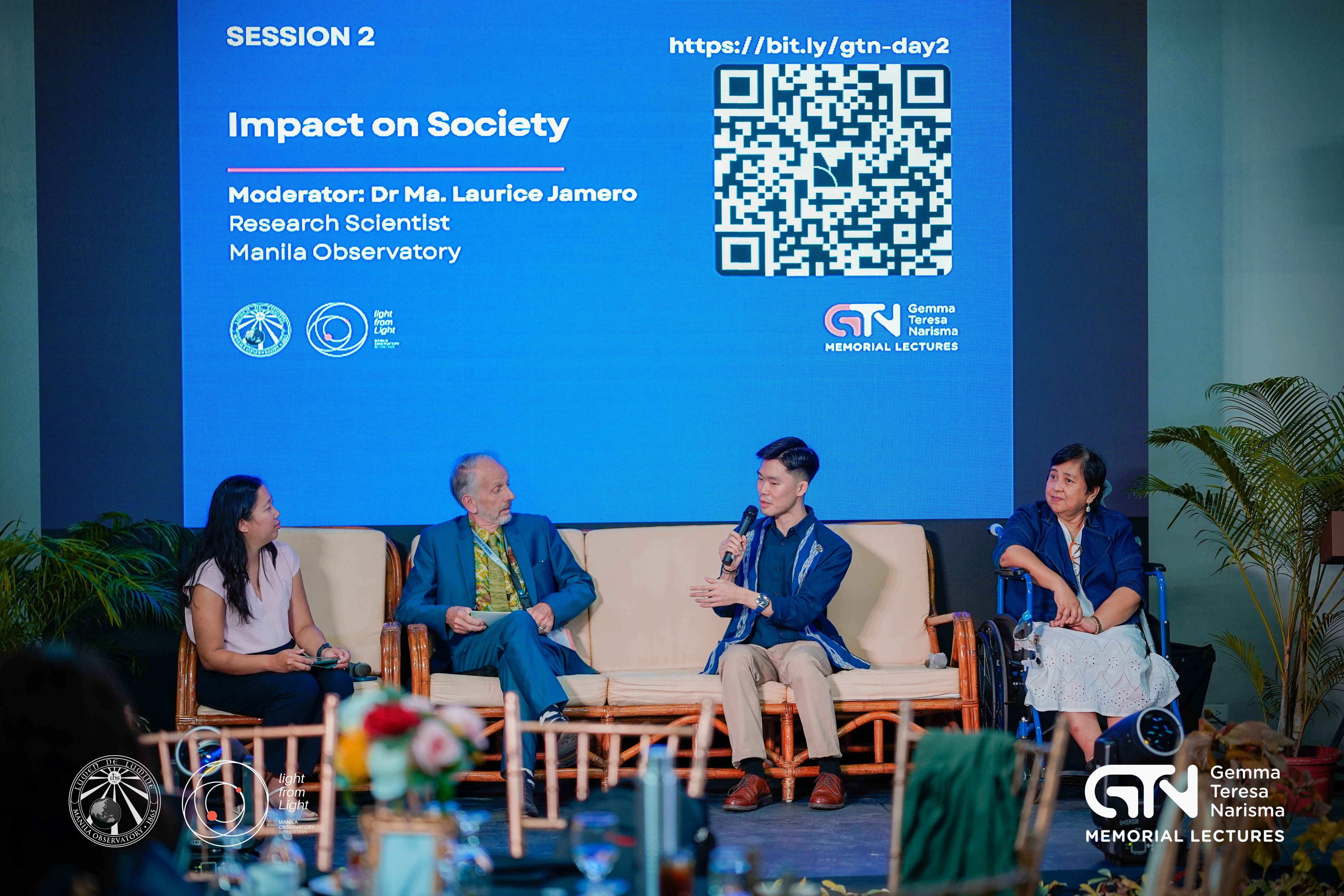
The session concluded with a panel discussion moderated by Dr Ma Laurice Jamero, a Research Scientist at the Manila Observatory, a Collaborator of the MCR–Ateneo Hub, and a member of the Steering Committee of the WCRP Academy. Mr Ratilla was joined by Dr Richard Jones, a Science Fellow at the UK Met Office, who delivered a talk titled “Climate Information for Society: From Global to Local,” and Ms Jessica Dator-Bercilla, a Science Resilience Fellow with the National Resilience Council, who presented “Lessons from the Science–Policy–Practice Nexus: Journey Toward Actionable Science in Local Governance.”
Recent News
You may also like these articles
Why can’t we eradicate tuberculosis? AIS dissects the TB issue in a multidisciplinary panel
On 24 March 2026, the Ateneo Institute of Sustainability (AIS), through its Sustainable Development Goals (SDGs) Program, hosted a multidisciplinary panel in observance of World
AIS links with Masungi for systems thinking for environmental management
Last 23-24 March 2026, the Ateneo Institute of Sustainability (AIS) , which manages the My Climate Risk – Ateneo de Manila University Regional Hub
Mangroves as shields of history and resilience: Insights from Dr Emma Porio
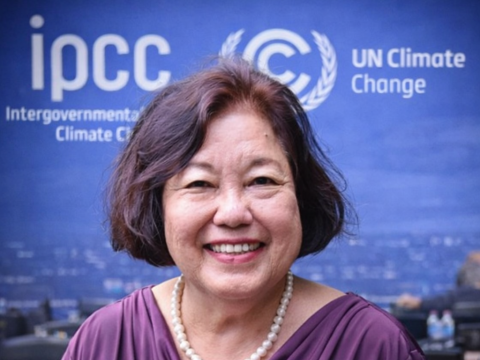
Mangrove forests have long shaped both the history and survival of coastal communities in the Philippines. According to Dr Emma Porio, Professor Emeritus (Sociology -
Professor Emeritus Dr Emma Porio to deliver keynote address at Regional Dialogue: Schools Climate Action Project
Dr Emma Porio, Professor Emeritus at Ateneo de Manila University's Dr Rosita G Leong School of Social Sciences (RGLSOSS) and Lead Author of UNFCCC-IPCC Climate
Klim@Musika
For most Filipinos, music is inseparable from daily existence. Music playlists accompany Filipinos in their commutes be it through walks, jeepneys, trains, or their private
The heART of Sustainability: AIS concludes month-long celebration of National Arts Month
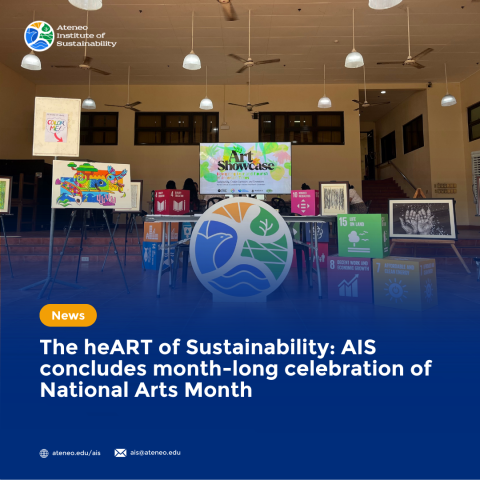
With the desire to make sustainability more accessible and promote its interdisciplinarity, the Ateneo Institute of Sustainability (AIS) hosted a month-long National Arts Month celebration