ACRI Leads Strengthening of Evidence-Informed One Health Policymaking in Alcantara, Romblon
26 Feb 2026 | Noelle Anne Santos Cubacub

Health challenges today do not exist in isolation. Zoonotic diseases, climate variability, environmental degradation, and changing food systems all demonstrate the interconnectedness of human, animal, and environmental health. This is One Health, an approach that recognizes these linkages and calls for a coordinated and multi-sectoral action.
While One Health is often discussed at the global and national levels, it calls for meaningful involvement at the local level, where risks are experienced and services are delivered firsthand.
In the Philippines, local governance is important given the country’s devolved governance system. Under decentralization, local government units (LGUs) are responsible for delivering health, agriculture, and environmental programs. This structure creates both an opportunity and a challenge: coordination across sectors is necessary, but not always evident.
In this context, the Strengthening Evidence-informed One Health Policymaking and Implementation in the Philippines (SOHIP) Project, in collaboration with the University of Glasgow - School of Biodiversity, One Health & Veterinary Medicine, and Field Epidemiology Training Program Alumni Foundation, Inc. (FETPAFI), seeks to understand and strengthen how One Health can be institutionalized and operationalized at the municipal level. This project is funded and supported by the British Academy.
Set in the Municipality of Alcantara, Romblon—one of only three municipalities in the Philippines with a formally enacted One Health Ordinance—the project works closely with local champions to understand how policy translates into practice.
Alcantara’s One Health Ordinance: From Policy to Practice
In Alcantara, One Health is manifested in lived challenges.
Dr. Jobin Maestro, the Municipal Health Officer, has observed changes in the past few years, citing the increasing cases of rabies, dengue, and paragonimiasis. For the human health sector, these cases brought renewed attention to the links between different sectors in the municipality.
Local officials also pointed out that earlier responses to African Swine Fever (ASF) had already required coordination across other sectors. Those past experiences made multi-sectoral collaboration more familiar with them, even before passing the One Health ordinance.
This ordinance established a Multi-Sectoral One Health Council (MSOHC), composed of representatives from the health, agriculture, disaster risk reduction, and security offices, along with local organizations. The Council’s reach also extends to the environmental sectors and academe to recognize the broad community engagement that the health protection requires.
This institutional structure represents an effort to move beyond the fragmented, sector-based responses in Alcantara. Instead of addressing human, animal, and environmental health concerns separately, the municipality created a formal platform for coordination and joint decision-making.
However, enacting an ordinance and establishing the council are only the first steps. The more complex work lies in implementation, including clarifying the roles of different offices and sectors involved, strengthening coordination mechanisms, ensuring consistent data sharing, and developing mechanisms to monitor progress and outcomes over time.
Understanding Evidence-Informed One Health Policymaking
A central objective of the SOHIP project is to operationalize Evidence-Informed Policymaking (EIPM) at the local level. The British Academy defines EIPM as “a structured approach that promotes the systematic and transparent use of the best available evidence, including research findings and administrative data to practitioner expertise and community knowledge, to inform public decision-making”. Rather than privileging a single type of knowledge, EIPM emphasizes plural, context-sensitive evidence and deliberative processes that connect evidence producers and users.
Building on this foundation, EIPM seeks to strengthen the production and accessibility of high-quality evidence, enhance institutional capacity to critically interpret and apply evidence in decision-making, and foster sustained relationships among researchers, policymakers, practitioners, and communities to support the co-production of knowledge.
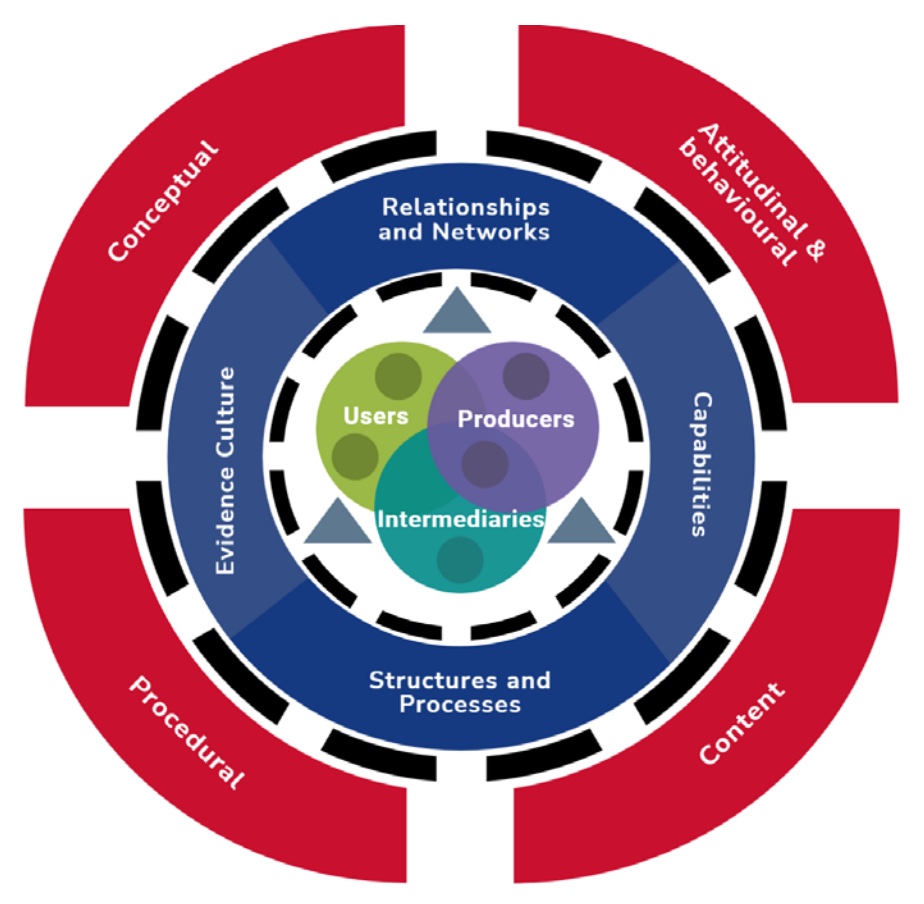
As illustrated in the EIPM Conceptual Framework developed by the British Academy, policymaking is understood as an ecosystem in which evidence production, institutional capacity, actor relationships, and broader contextual factors interact dynamically. Evidence use is therefore not linear, but occurs through multiple pathways that shape policy processes, behaviors, and outcomes.
In the context of SOHIP, evidence-informed policymaking refers to the systematic use of available data and knowledge, such as disease surveillance reports, program monitoring results, scientific studies, and community-level insights, to guide decision-making across sectors under a One Health framework. For example, rabies surveillance data alone does not immediately determine action. Decisions are shaped by how different offices in Alcantara interpret the data, how regularly they communicate, the resources available, and even community perceptions of emerging risks.
However, in Alcantara, “evidence” is not limited to formal datasets or published studies. During engagements with the MSOHC, stakeholders articulated their own understanding of what counts as evidence in their local context. For some, it is the increasing cases of rabies in social media and community interactions.
“In Alcantara, evidence is what people are seeing and talking about every day, like increasing rabies cases shared in informal community interactions or even through their social media group chats. Those everyday observations matter. They shape how people understand One Health issues and how they respond to it,” as observed by Noelle Anne Cubacub, Social Scientist of SOHIP.
These locally grounded observations form part of the evidence base that informs action. In this sense, evidence-informed policymaking is not solely about introducing new data systems, but about strengthening how existing knowledge is documented, shared across sectors, and translated into coordinated responses.
Engaging Local Actors and the Multi-Sectoral One Health Council
SOHIP engages directly with local policymakers and implementers in Alcantara, including the Mayor, Vice Mayor, Municipal Health Officer, Municipal Agriculture Officer, and members of the MSOHC.
Engagements have taken the form of key informant interviews, consultation meetings, and observations of MSOHC sessions. These interactions provide insights into how the One Health Ordinance was developed, how coordination functions in practice, and where implementation challenges and opportunities remain.
During the discussions, important reflections emerged. As Mr. Larry R. Campos, the Municipal Agriculture and Fisheries Council (MAFC) Chairman shared, One Health is “closely linked to food security, including ensuring stable food production, maintaining livestock health, preventing crop and animal diseases, and safeguarding the quality and safety of food entering the market.”
Schools were also identified as critical actors, particularly in ensuring student safety and promoting preventive practices among young people. Barangay Health Workers (BHWs), meanwhile, were recognized as frontline implementers, not only in delivering human health services, but also as connectors within their barangays. Because of their close engagement with households, BHWs often bridge communication gaps across sectors, linking surveillance, reporting, and community education efforts.
Building on these engagements, the SOHIP team facilitated a Milestones and Lessons Learned Workshop with members of the MSOHC last November 2025. This earlier session provided space for the Council to reflect on its multi-sectoral efforts over the past three years: what has worked, what has been challenging, and what gaps remain in coordination, surveillance, community engagement, and capacity-building.
The workshop surfaced important cross-cutting issues, including infectious disease risks, environmental sanitation concerns, and funding limitations. These reflections laid the groundwork for a more structured conversation on how the Council could strengthen its collective direction moving forward.

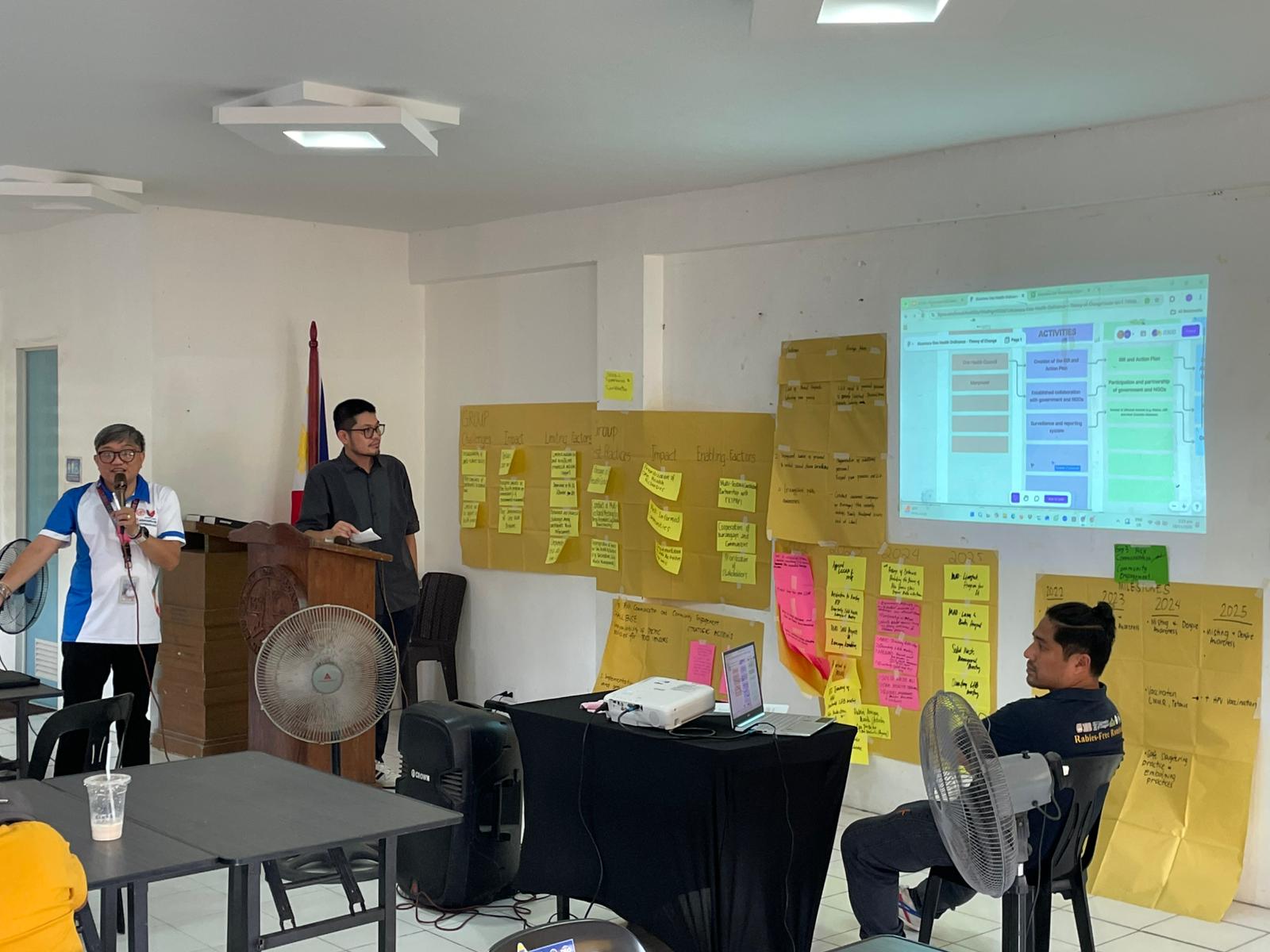
One of the initial steps introduced during this process was a Theory of Change exercise. This activity supported council members in articulating how their day-to-day activities connect to short-term outputs, intermediate outcomes, and longer-term health and environmental goals. Rather than focusing solely on activities, participants were encouraged to think about the changes they aim to achieve as a council.
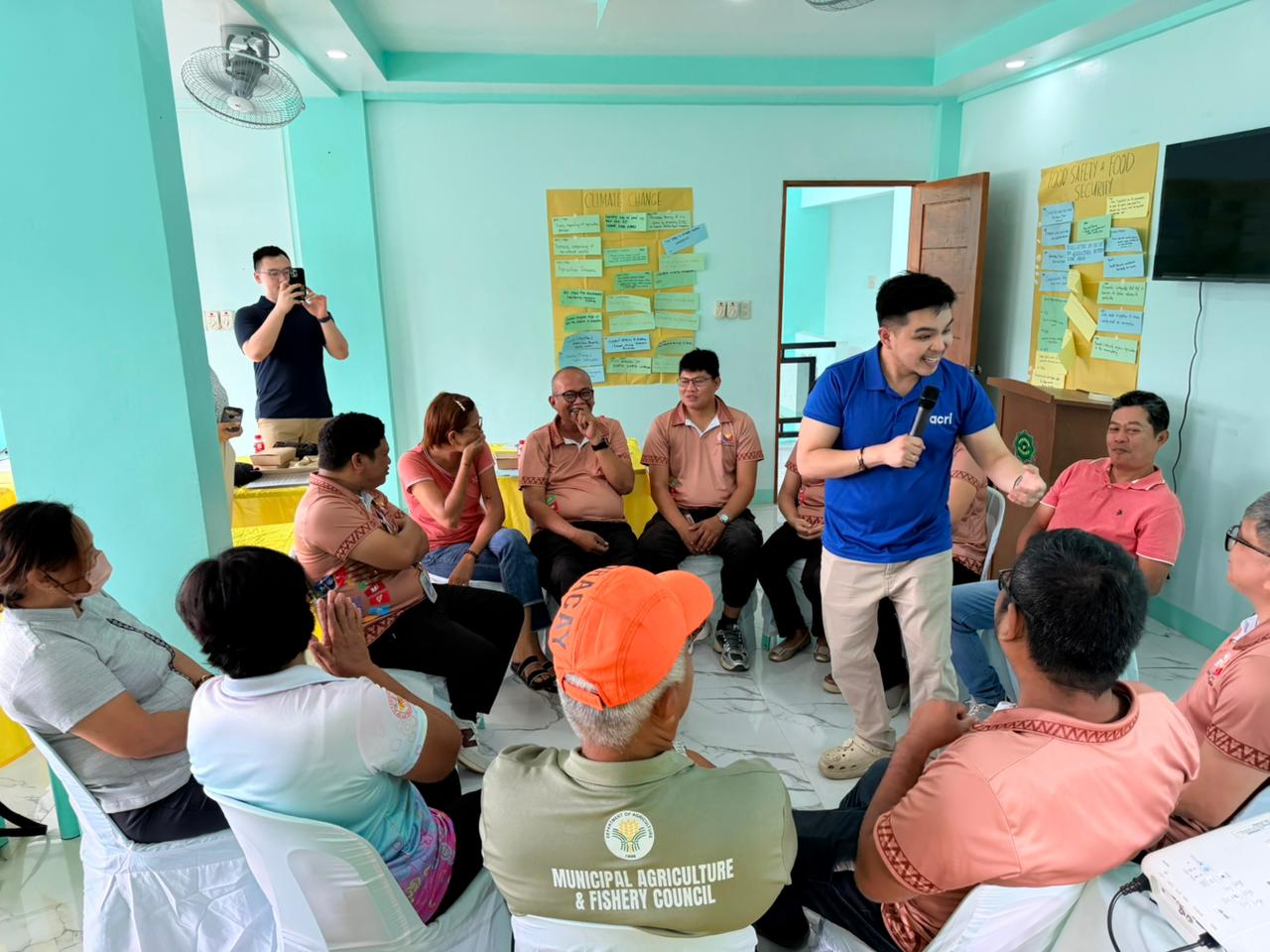
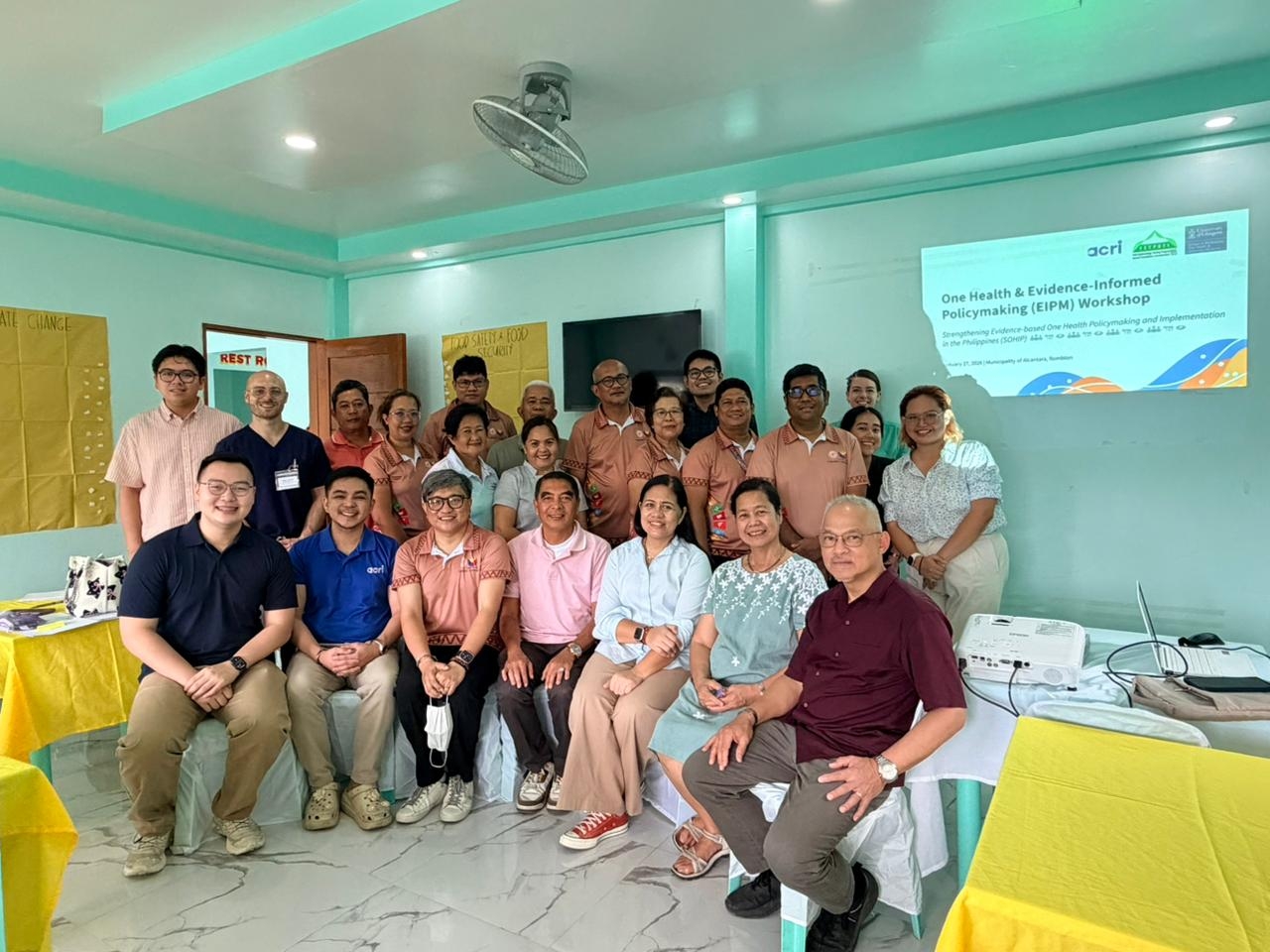
Building on this reflection, the SOHIP team conducted a follow-up capacity-building session last January 27, 2026 with a One Health and Evidence-Informed Policymaking Workshop for the MSOHC. This workshop reintroduced the One Health principles and discussed how evidence can be more systematically integrated into local planning and prioritization.
During the session, Dr. Gelo Apostol (Philippine Principal Investigator) emphasized that One Health collaboration exists along a spectrum. “With One Health, working together needs to be strategic and intentional—it’s like a healthy relationship, “ he explains, “we don’t always need to be working together all the time,” he explained.
There are different levels of working together, from simple information sharing to full integration of plans and systems. He outlined five levels, from interaction and coordination to cooperation, collaboration, and integration, adding, “The goal is not always to reach the highest level, but to choose the kind of collaboration that fits the One Health problem.”
Toward Institutionalized and Operational One Health
Alcantara’s journey toward One Health did not happen all at once. It began with recognizing the need for a more coordinated response to emerging health risks. This led to the formation of a Multi-Sectoral One Health Council and, eventually, the passage of a local ordinance that formally anchored the approach within the municipality.
Through its engagements under the SOHIP project, these foundations have been revisited and strengthened. The Council is now developing its implementing rules and regulations, clarifying roles across offices, and working through how coordination and evidence-sharing can function more consistently in practice. These steps signal a shift from commitment in principle to commitment in implementation.
The SOHIP project is led by PI’s Dr. Geminn Louis Apostol (ACRI) and Dr. Nai Rui Chng (University of Glasgow) and Dr. Mary Elizabeth G. Miranda (Field Epidemiology Training Program Alumni Foundation, Inc.). ACRI leads data collection and analysis through Prof, Veincent Pepito, Dr. Percival Ethan Lao (Program Manager), and Noelle Anne Santos Cubacub (Social Scientist). Advising the project are Dr. Katie Hampson and Dr. Noel Lee Miranda.
Recent News
You may also like these articles
ASOG’s Tobacco Control initiatives spotlighted in DOH National Technical Working Group for Tobacco Prevention and Control
On March 10 to 12, 2026, the Ateneo School of Government (ASOG), through its research and public policy unit, the Ateneo Policy Center, participated in
ASMPH welcomes incoming VPHE, honors the service of VP Marlu Vilches
The Ateneo School of Medicine and Public Health (ASMPH) recently held a transition meeting marking an important leadership shift within the University’s Higher Education cluster
Why can’t we eradicate tuberculosis? AIS dissects the TB issue in a multidisciplinary panel
On 24 March 2026, the Ateneo Institute of Sustainability (AIS), through its Sustainable Development Goals (SDGs) Program, hosted a multidisciplinary panel in observance of World
Vertical integration in ASMPH: A shared neurology preceptorial experience
In the Ateneo School of Medicine and Public Health (ASMPH), the commitment to vertical integration continues to grow stronger. This meaningful collaboration brings together YL6
Interweaving disciplines for a healthier future together: Highlights from the UHC Summit 2026
The Rosita G Leong Primary Healthcare Hub (RGL Hub) co-presented the flagship initiative of Project LAAN, the Universal Health Care Summit (UHC Summit), on 14
ASOG meets with Department of Health—Bureau of International Health Cooperation to strengthen institutional partnership
On 27 February 2026, the Ateneo School of Government (ASOG), through its research and public policy unit, the Ateneo Policy Center, held a courtesy meeting