ACRI study identifies financing and resource gaps hindering Universal Health Care implementation in the Philippines
28 Jan 2026


A newly published study by researchers from the Ateneo Center for Research and Innovation (ACRI) and the University of the Philippines - Manila has found that persistent financing shortfalls, weak fund pooling mechanisms, and inefficient purchasing systems continue to slow the full implementation of the Philippines’ Universal Health Care (UHC) Act, limiting its impact on health service delivery across the country.
The study, titled “Financing and Resource Constraints Hindering the Optimal Implementation of the Universal Health Care Act in the Philippines,” was published in the peer-reviewed journal Health Systems & Reform in 2025. It was led by Theo Prudencio Juhani Capeding, with co-authors Veincent Christian Pepito, Leonard Thomas Lim, Ruth Shane Legaspi, Madeline Mae Ong, Arianna Maever Loreche, and Manuel M Dayrit.
Drawing on perspectives from policymakers, health workers, and patients, the research provides a ground-level assessment of why universal health coverage remains uneven years after the law’s passage. The study analyzed data from 17 focus group discussions and 19 in-depth interviews conducted between September 2023 and May 2024 across multiple regions in the Philippines. Participants included national and local government officials, public and private health providers, and health service users.
Using the World Health Organization’s health financing framework, the researchers identified critical weaknesses across three core areas:
- Revenue raising: Local government units reported insufficient and unpredictable funding for health services. Collecting insurance contributions from workers in the informal sector remains a major challenge, weakening the financial base of the UHC system.
- Pooling of funds: The Special Health Fund, intended to consolidate national and local health resources, has been underutilized due to unclear operational guidelines and delayed fund releases, limiting effective risk sharing across regions.
- Purchasing of services: Health facilities cited slow procurement processes and delayed PhilHealth reimbursements, resulting in shortages of medicines, operational bottlenecks, and disruptions in service delivery.
The study emphasizes that these issues are interconnected, with weaknesses in one area amplifying problems in others—particularly within the country’s decentralized health system.
According to the authors, addressing these constraints is essential not only for expanding health coverage, but also for strengthening trust in public health services and sustaining long-term reform.
The study recommends:
- Improving the predictability and adequacy of health financing,
- Clarifying guidelines and accountability mechanisms for pooled funds,
- Reforming PhilHealth’s contribution collection and reimbursement processes, and
- Streamlining procurement and purchasing systems to reduce delays at the facility level.
More than five years after the UHC Act was signed into law, the findings underscore that legislation alone is not enough. Effective implementation, the study argues, depends on stable financing, efficient resource management, and stronger coordination between national and local health systems.
As the Philippines continues to pursue universal health care, the authors stress that closing these financing and resource gaps will be critical to ensuring that the law’s promise translates into real, equitable health gains for all Filipinos.
Access the full study here: https://doi.org/10.1080/23288604.2025.2596404
Recent News
You may also like these articles

ASOG’s Tobacco Control initiatives spotlighted in DOH National Technical Working Group for Tobacco Prevention and Control
On March 10 to 12, 2026, the Ateneo School of Government (ASOG), through its research and public policy unit, the Ateneo Policy Center, participated in

ASMPH welcomes incoming VPHE, honors the service of VP Marlu Vilches
The Ateneo School of Medicine and Public Health (ASMPH) recently held a transition meeting marking an important leadership shift within the University’s Higher Education cluster
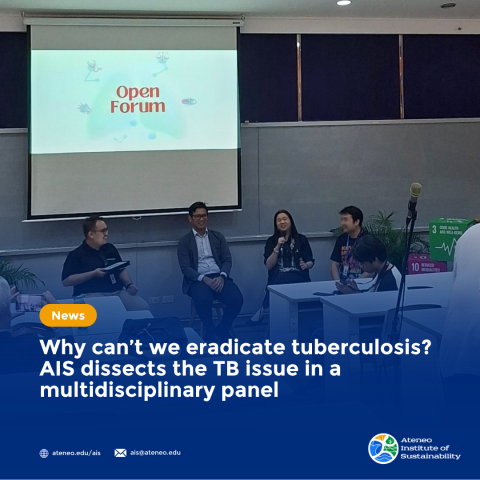
Why can’t we eradicate tuberculosis? AIS dissects the TB issue in a multidisciplinary panel
On 24 March 2026, the Ateneo Institute of Sustainability (AIS), through its Sustainable Development Goals (SDGs) Program, hosted a multidisciplinary panel in observance of World

Vertical integration in ASMPH: A shared neurology preceptorial experience
In the Ateneo School of Medicine and Public Health (ASMPH), the commitment to vertical integration continues to grow stronger. This meaningful collaboration brings together YL6
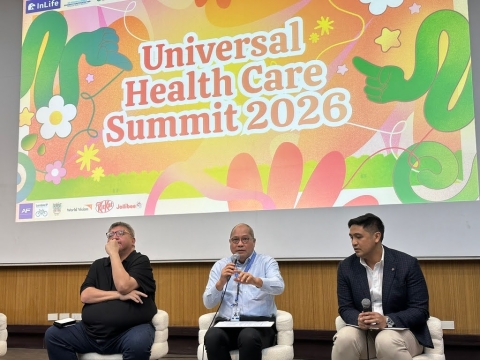
Interweaving disciplines for a healthier future together: Highlights from the UHC Summit 2026
The Rosita G Leong Primary Healthcare Hub (RGL Hub) co-presented the flagship initiative of Project LAAN, the Universal Health Care Summit (UHC Summit), on 14

ASOG meets with Department of Health—Bureau of International Health Cooperation to strengthen institutional partnership
On 27 February 2026, the Ateneo School of Government (ASOG), through its research and public policy unit, the Ateneo Policy Center, held a courtesy meeting